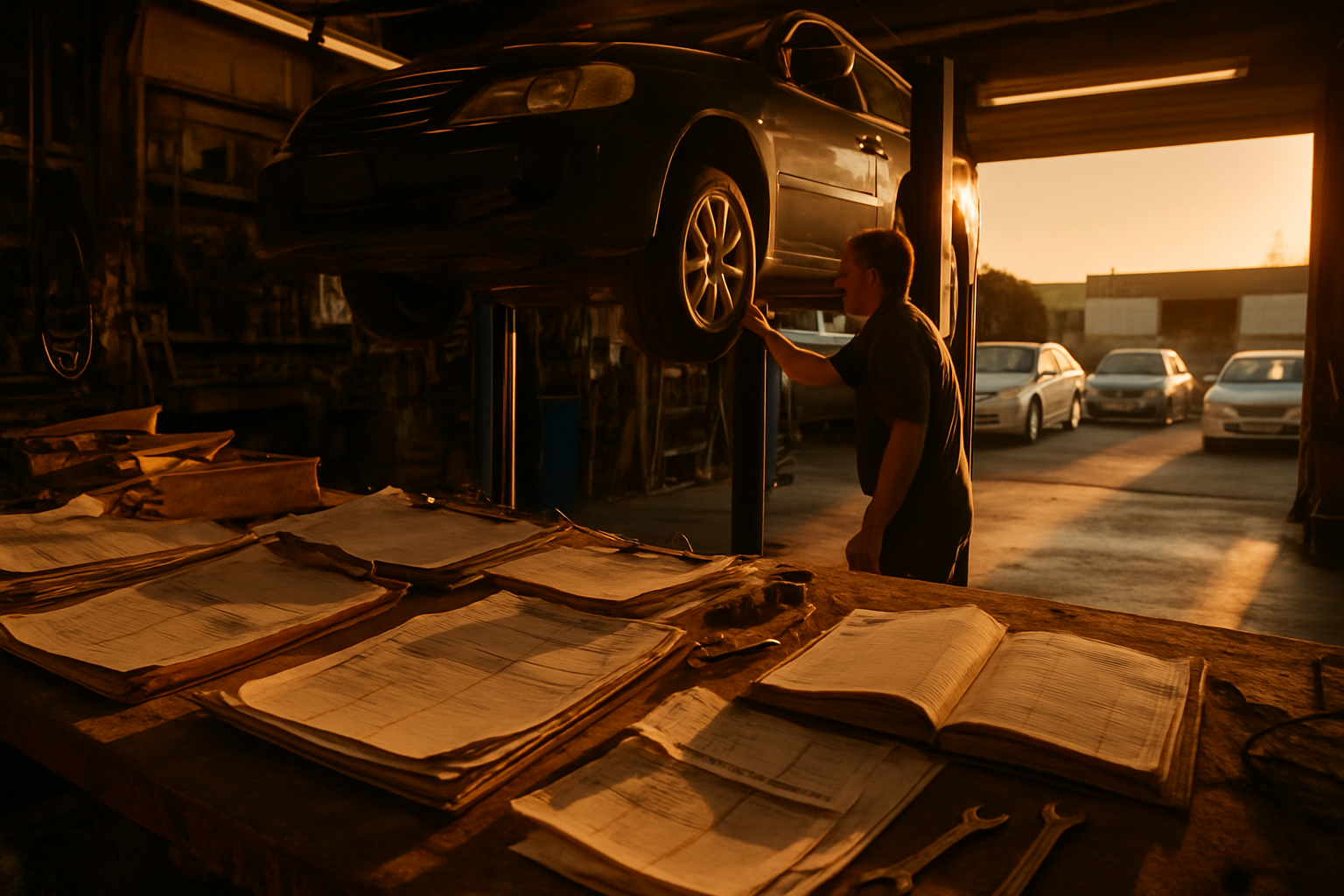
The Numbers Don't Lie: New Zealand's Workshop Reality
Here's a statistic that might make you pause over your morning flat white: New Zealand has 4.59 million registered vehicles and approximately 3,200 WoF agents scattered from Cape Reinga to Bluff. That's roughly 1,434 vehicles per WoF provider. Now, if you're still tracking these inspections with paper job cards and handwritten appointment books, you're probably feeling that pressure every single day.
Whether you're running a workshop in Auckland's industrial zones, servicing utes in Hamilton's rural outskirts, or keeping Christchurch's post-earthquake fleet roadworthy, the maths is the same: too many vehicles, too much paperwork, and not enough hours in the day.
The thing is, Kiwi workshops have always been practical, no-nonsense operations. We fix what's broken, we don't muck about, and we get the job done. But somewhere along the way, we've accepted that admin has to be a pain in the backside. It doesn't.
WoF: Your Biggest Opportunity (If You're Organised)
Let's talk about the elephant in the workshop: Warrant of Fitness inspections. Every vehicle in New Zealand needs one, and here's where it gets interesting for your business. New cars get a three-year exemption, then it's annual inspections for the life of the vehicle. That's a guaranteed customer touchpoint every single year.
But here's the kicker – most workshops are terrible at capitalising on this opportunity. They complete the WoF, hand over the paperwork, and wave goodbye until the customer randomly shows up again next year. Meanwhile, that same customer might be getting their oil changes and repairs done elsewhere because, frankly, they forgot about you.
Automated WoF reminders aren't rocket science, but they're business gold. Imagine sending a friendly text or email six weeks before a customer's WoF expires: "Hi John, your Hilux is due for its WoF next month. Book online or give us a call." Simple, professional, and it brings customers back to YOUR workshop instead of whoever they happen to drive past when they remember.
The CoF Side of Things
If you're dealing with heavier vehicles, the Certificate of Fitness system works the same way – regular inspections mean regular customer contact opportunities. Whether it's a tradesman's truck in Tauranga or a tour bus in Queenstown, these inspections are your chance to build lasting relationships, not just tick boxes.
Paper Job Cards: The Silent Profit Killer
Walk into most workshops across New Zealand and you'll still see the same setup: carbon copy job cards, handwritten invoices, and filing cabinets stuffed with paperwork from 1987. It's familiar, it's what Dad used, and it sort of works. Sort of.
But let's be honest about what "sort of works" actually costs you:
- Time: How long does it take to write out a job card by hand, calculate labour and parts, then transfer everything to an invoice? Ten minutes? Fifteen? Multiply that by every job, every day.
- Errors: Handwritten part numbers, smudged customer details, calculations done on the back of a cigarette packet. Every mistake costs time to fix and makes you look unprofessional.
- Lost customers: When Mrs. Henderson calls asking when her Corolla was last serviced, can you find that information in under two minutes? If not, she's probably calling the workshop down the road next time.
- Cash flow: Paper invoices get lost, forgotten, or "accidentally" misplaced by customers. Digital invoices with automated follow-ups get paid faster.
"The workshop that can find a customer's service history in 30 seconds wins more business than the one with the cheapest hourly rate."
GST, IRD Numbers, and Getting Paid Properly
Every invoice you write needs to show GST at 15% and include your IRD number. Seems simple, but when you're handwriting invoices or using basic templates, it's surprisingly easy to mess up. Missing GST details, incorrect calculations, or forgotten IRD numbers can cause headaches with both customers and the tax department.
Digital invoicing systems handle this automatically. They calculate GST correctly every time, include all required details, and create professional-looking invoices that customers actually want to pay. Plus, they're stored digitally forever – no more hunting through filing cabinets when the IRD comes knocking.
Professional Presentation Matters
Here's something many workshop owners don't realise: your invoice is often the last impression you leave with a customer. A handwritten invoice on carbon paper says "small-time operation." A clean, professional digital invoice says "established business that has its act together."
Which workshop do you think gets recommended to friends and family?
The Japanese Import Challenge
New Zealand's right-hand drive market means we see plenty of Japanese imports rolling through workshop doors. Sometimes it's a common model like a Nissan Skyline or Toyota Caldina. Other times, it's something you've never heard of with a model name you can't pronounce.
When a customer brings in their 2003 Mitsubishi Delica Space Gear (yes, that's a real model), you need to know engine specs, service intervals, common issues, and parts compatibility. Trying to look this up manually eats time and creates uncertainty.
Modern workshop management systems include comprehensive vehicle databases covering the weird and wonderful world of Japanese imports. VIN lookups can identify specifications for models that never officially made it to New Zealand but somehow ended up in Rotorua or Invercargill.
This isn't just about convenience – it's about accuracy. Quote the wrong part or miss a crucial service requirement, and you're either losing money or losing face with the customer.
From Auckland to Queenstown: The Same Problems Everywhere
Whether you're in a busy Auckland suburb dealing with European luxury cars, or in rural Canterbury keeping farming equipment moving, the core challenges are identical:
Auckland workshops face high rent, time pressure, and customers who expect everything yesterday. Efficiency isn't just helpful – it's survival.
Wellington workshops deal with government fleet vehicles and professional customers who notice details. Professional invoicing and accurate record-keeping matter.
Christchurch workshops often handle everything from daily drivers to classic car restorations. Flexibility in job management and detailed service records are crucial.
Hamilton workshops serve both urban and rural customers, meaning everything from city runabouts to heavy-duty farm vehicles. Versatile systems that handle diverse work types are essential.
Tauranga workshops balance tourist rental vehicles with local trade work. Quick turnarounds and clear communication are key.
The common thread? Everyone's drowning in admin and wishes they had more time to actually work on cars instead of shuffling paper.
Digital Service History: The Trade Me Advantage
Here's something most workshop owners never think about: verified digital service history adds serious value when customers sell their vehicles. Anyone who's browsed Trade Me knows the difference between listings that say "full service history available" versus "serviced regularly."
When you maintain digital service records, you're not just helping yourself – you're adding value to your customer's vehicle. A comprehensive, verifiable service history can add thousands to a vehicle's resale value, especially on higher-end cars.
Smart customers are starting to ask for digital service records specifically because they know it makes selling easier. The workshop that can provide professional service summaries, complete with dates, mileage, and work performed, becomes the preferred choice.
Building Customer Loyalty Through Value
Think about it: if you helped a customer get an extra NZ$2,000 for their vehicle sale because of your detailed service records, where do you think they'll take their next car for servicing? It's not just about fixing cars anymore – it's about being part of the customer's entire vehicle ownership experience.
The "Too Hard Basket" Software Myth
Many Kiwi workshop owners avoid digital systems because they think it means weeks of training, complicated interfaces, and frustrated staff. This might have been true ten years ago, but modern workshop management software is designed for actual mechanics, not IT specialists.
The best systems work like smartphones – intuitive enough that you can figure them out without reading a manual. Your apprentice should be able to create a job card in under two minutes, and your experienced techs shouldn't need a computer science degree to book a WoF inspection.
Implementation Reality Check
Good workshop management software shouldn't disrupt your business. You should be able to run both systems (paper and digital) during transition, gradually moving everything across as you get comfortable. No "big bang" changeovers, no panicked phone calls to tech support, no drama.
Sweet As: Time to Give It a Go
Look, every workshop in New Zealand faces the same choice: keep doing things the way they've always been done, or embrace tools that actually make life easier. The numbers don't lie – 4.59 million vehicles need servicing, and the workshops that can manage this efficiently will thrive.
Professional invoicing with automatic GST calculation, WoF reminders that bring customers back, service histories that add resale value, and vehicle databases that handle everything from Honda Civics to obscure Japanese imports – these aren't luxury features anymore. They're business essentials.
If you're ready to spend less time on paperwork and more time turning wrenches, why not give Mekavo a go? Seven days free, no credit card required, no complicated setup. Just practical workshop management that actually works for Kiwi mechanics.
Because you deserve tools that are as reliable as the vehicles you fix.