English
 Español
 Deutsch
 FI
FI
 PT
PT
 BR
BR
 FR
FR
 AR
AR
 ZH
ZH
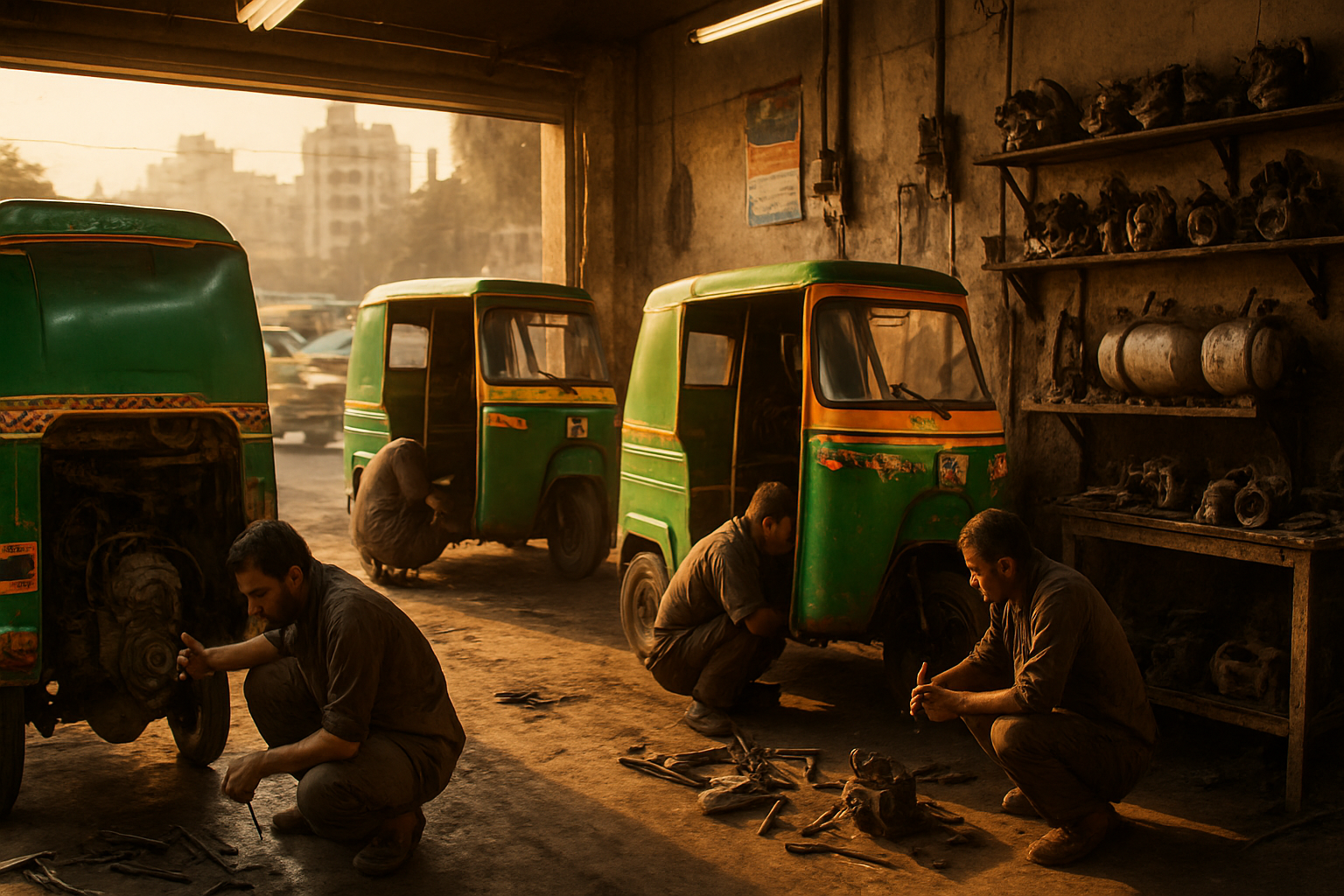
Stand at any chowk in Karachi — Saddar, Gulshan, Nazimabad, Korangi — and count the rickshaws. Green ones, yellow ones, painted ones with Bollywood heroes on the back. They weave through traffic like water through rocks. And every single one of them is held together with wire, prayers, and a mechanic's skill.
Pakistan has over 2 million registered auto-rickshaws. Karachi alone has 200,000+. They run 14–18 hours daily, covering 100–200 km on CNG (Compressed Natural Gas). The CNG system, the 2-stroke or 4-stroke engine, the suspension, the electrical — everything takes a beating.
And when a rickshaw breaks down, the driver loses PKR 2,000–4,000 per day in fares. They need it fixed NOW. Not tomorrow. Now.
The Numbers That Will Change Your Mind
Most workshop owners in SITE area or Shershah look at rickshaws and think: "Chhota kaam. Not worth my time." But let us count:
- CNG kit maintenance: Mixer cleaning, regulator adjustment, cylinder inspection. PKR 1,500–3,000 per rickshaw × 5–8 per day = PKR 7,500–24,000/day
- Engine tune-up: Valve adjustment, timing, piston rings. PKR 3,000–8,000 × 3–4 per day = PKR 9,000–32,000/day
- Electrical repairs: Starter motor, generator, wiring (rickshaw wiring is always a mess). PKR 1,000–5,000 × 4–5 per day = PKR 4,000–25,000/day
- Suspension: Leaf springs, shock absorbers, bushings. PKR 2,000–6,000 × 2–3 per day = PKR 4,000–18,000/day
- Full engine overhaul: PKR 15,000–35,000 × 1–2 per week = PKR 15,000–70,000/week
Conservative total: PKR 200,000–350,000 per month from rickshaw work alone. And the work is FAST — most rickshaw jobs take 30 minutes to 2 hours. Compare that to a car engine rebuild that takes 3 days.
CNG: The Skill That Pays
Every rickshaw in Pakistan runs on CNG. That means every rickshaw needs CNG system maintenance:
- Mixer cleaning and adjustment — the most common issue. Dirty mixer = poor performance = rickshaw driver loses passengers because the rickshaw is too slow on hills.
- Regulator service — pressure regulation fails, causing rough running or stalling at idle.
- Cylinder testing — CNG cylinders need hydrostatic testing every 5 years. Many are overdue. Safety issue.
- Leak detection — CNG leaks are dangerous. Soap water test on all connections.
If you specialise in CNG systems, every rickshaw driver in your area will know your name within a month. CNG expertise is rare — most roadside mechanics just "adjust" things without understanding the system.
Building a Rickshaw Customer Base
Rickshaw drivers are creatures of habit. They park at the same stands, eat at the same dhabas, and go to the same mechanic. Once you have one driver, you have access to every driver at his stand.
The approach:
- Fix one rickshaw properly. Give the driver a fair price.
- He tells 5 other drivers at his stand.
- They come to you. You fix their rickshaws properly.
- Within 2 months, you have 30–50 regular rickshaw customers.
- Each one comes every 2–3 weeks for something. That is 50–75 visits per month.
The Invoice Advantage
Rickshaw owners (not drivers — many rickshaws are owned by someone who hires a driver) need records for their own accounting. A clean invoice showing what was repaired, what parts were used, and what it cost helps the owner track their expenses per vehicle.
When you provide this — and most mechanics do not — you become the owner's preferred workshop. And owners often have 5–10 rickshaws. That is 5–10 vehicles all coming to you.
Mekavo generates invoices in PKR from your phone. Track every rickshaw by its registration number, every repair, every part. Free for Pakistani workshops — no subscription, no hidden costs.
The rickshaws are already on the road. The question is whether they are coming to your workshop or someone else's.