English
 Español
 Deutsch
 FI
FI
 PT
PT
 BR
BR
 FR
FR
 AR
AR
 ZH
ZH
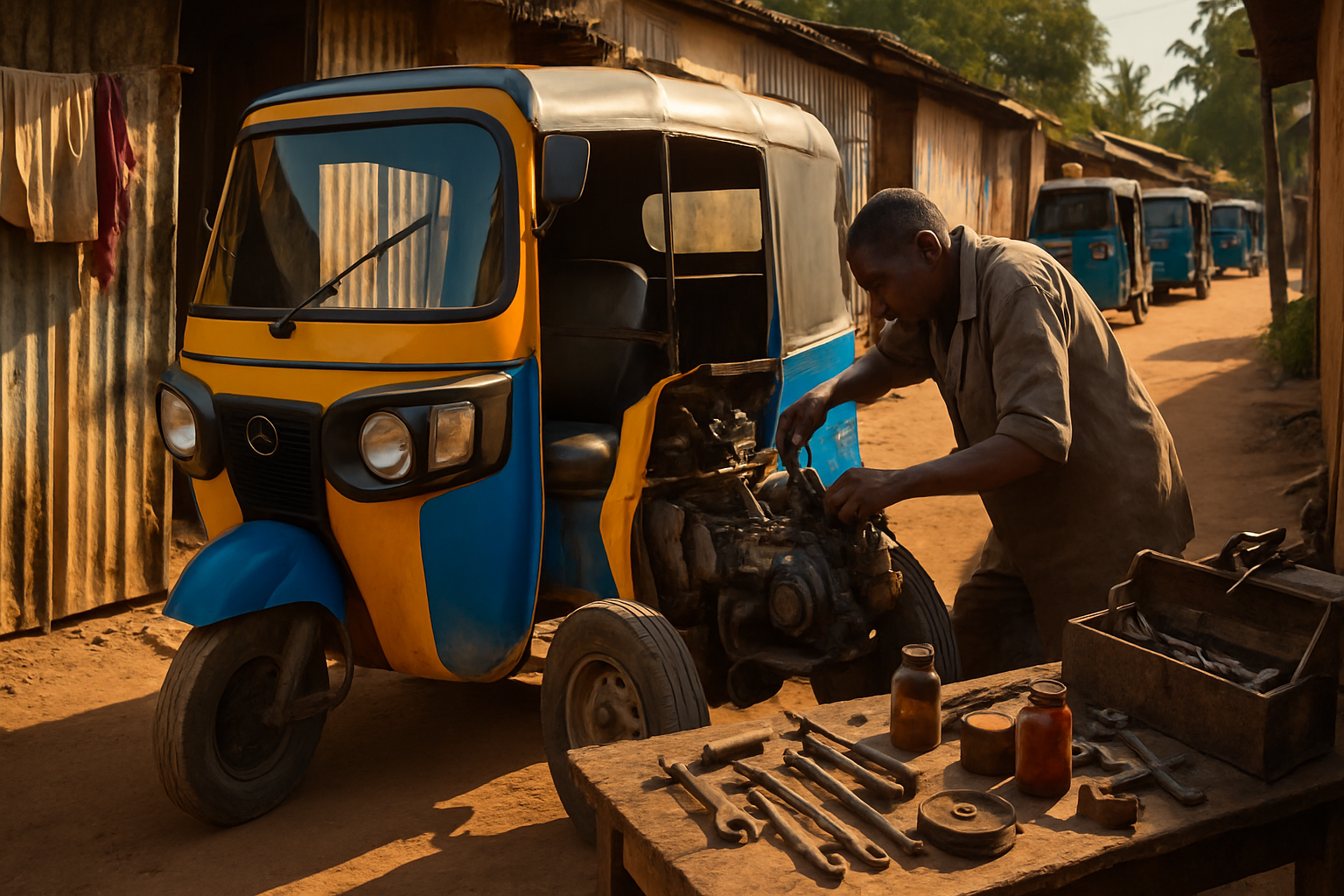
If you have visited any town in Tanzania outside Dar es Salaam — Arusha, Mwanza, Mbeya, Morogoro, Dodoma — you have seen them. Bajaji. Three-wheeled auto-rickshaws made by Bajaj and TVS, painted yellow or blue, carrying passengers through streets too narrow for cars.
Tanzania has an estimated 200,000+ bajaji operating across the country. They cost TSh 5,000,000–8,000,000 new and pay for themselves in 6–12 months. They run 12–16 hours daily on roads that were never designed for motorised transport.
And they break down. Constantly.
What Bajaji Need
- Engine oil change every 2 weeks: TSh 15,000–25,000 (small 200cc engines, but they run hot all day)
- Brake shoes monthly: TSh 20,000–40,000 (constant stopping)
- Clutch cable/adjustment monthly: TSh 10,000–30,000
- Chain and sprocket every 3 months: TSh 40,000–70,000
- Electrical repairs monthly: TSh 15,000–40,000 (lights, horn — police enforcement)
- Engine overhaul every 12 months: TSh 200,000–400,000
One bajaji = TSh 80,000–150,000 per month. A stage with 30 bajaji = TSh 2,400,000–4,500,000 per month. And the work is fast — most bajaji repairs take 20–45 minutes.
The Stage System
Like boda-bodas, bajaji operators gather at stages — specific locations where they queue for passengers. Each stage has 15–40 operators. Win one operator's trust, and the entire stage shifts to your garage within weeks.
The key: be close to the stage (operators will not ride far with a broken bajaji), be fast (every hour off-road = TSh 10,000–20,000 lost), and charge fairly.
Parts Stocking Strategy
Bajaji parts are simple and cheap. Stock these and you never turn a customer away:
- Spark plugs (Bajaj RE, TVS King): TSh 5,000 each, stock 20
- Brake shoes (set): TSh 15,000, stock 10 sets
- Clutch cables: TSh 8,000, stock 10
- Chain + sprocket sets: TSh 35,000, stock 5
- Engine oil (20W-50, 1L): TSh 8,000, stock 20 litres
Total stock investment: TSh 500,000. Turns over every 2–3 weeks. Simple, fast cash flow.
From Bajaji to Cars
Bajaji operators save money and eventually buy cars — for personal use or to start a taxi business. When they do, they go to the mechanic who has been maintaining their bajaji for 2 years. You already have the relationship. The bajaji customer of today is the car customer of tomorrow.
Mekavo tracks both — bajaji and cars in the same system. Free for Tanzanian garages. Every operator, every service, every part. Build relationships now that pay dividends for years.