English
 Español
 Deutsch
 FI
FI
 PT
PT
 BR
BR
 FR
FR
 AR
AR
 ZH
ZH
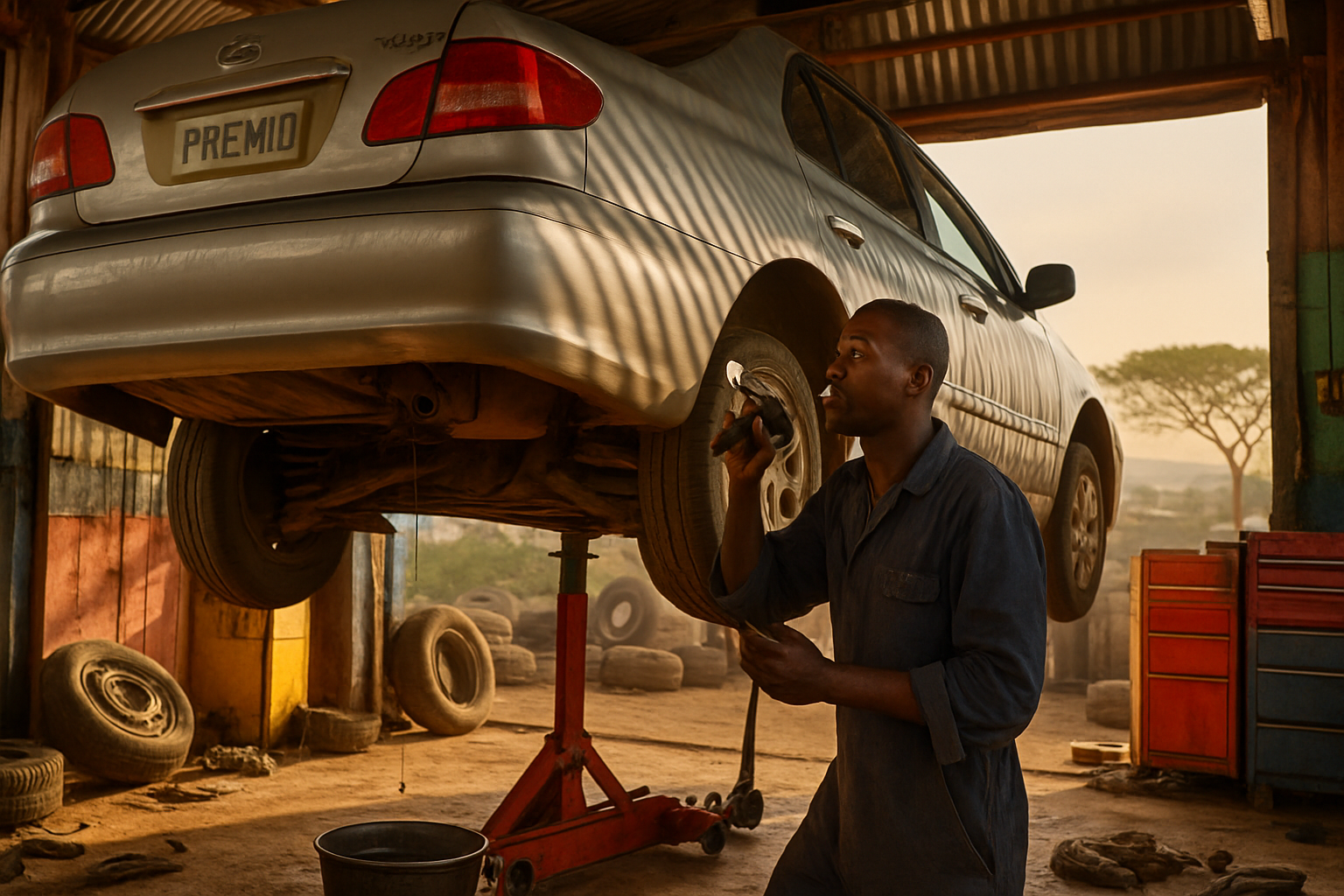
Most cars in Uganda arrive the same way: shipped from Japan to Mombasa, cleared through Ugandan customs, and trucked to Kampala on the Northern Corridor. Toyota Premio, Harrier, Wish, RAV4, Subaru Forester — beautiful cars with low mileage and clean Japanese service records.
But Japan has smooth highways. Uganda has the Kampala–Jinja Highway with potholes that swallow motorcycles. Japan has mild weather. Uganda has 30–35°C heat and monsoon rains. A car that ran perfectly in Osaka for 8 years can start failing in Kampala within months.
As a mechanic, this is your opportunity. Every imported car needs preparation before the new owner uses it daily. Here are the 5 non-negotiable checks.
1. Suspension — USh 300,000–1,000,000
Japanese roads have no potholes. Ugandan roads are more pothole than tarmac. Check every bushing, ball joint, shock absorber, and CV boot. Replace anything that shows wear — it will fail within weeks on Ugandan roads.
2. Cooling System — USh 100,000–400,000
Japanese coolant is often 5+ years old. Uganda's heat pushes cooling systems harder. Flush coolant, check thermostat, inspect hoses, clean radiator fins. A stuck thermostat in Kampala traffic = overheated engine = USh 2,000,000+ repair.
3. Brakes — USh 200,000–600,000
Kampala driving = constant braking. Boda-bodas, pedestrians, speed humps every 100 metres. Replace pads if less than 40% remaining. Flush brake fluid. Check discs for minimum thickness.
4. Air and Fuel Filters — USh 50,000–150,000
Kampala dust levels are 10x Japan. Replace both filters immediately. A clogged air filter in dusty conditions reduces engine life dramatically.
5. Underbody Rust — USh 100,000–300,000
Japanese coastal cities have salt air that causes underbody rust. Put the car on a lift, inspect, wire brush surface rust, apply underbody sealant. Check exhaust system — rust-weakened exhausts fail quickly on rough roads.
The Import Arrival Package
Bundle all 5 checks into an "Import Ready Package": USh 500,000–800,000 for inspection and basic work. Major repairs extra. Market this to car dealers on Kisekka Market and importers — they buy 5–10 cars per month each.
Track every imported car with Mekavo. Record the preparation work done. When the owner returns for their first service, you already know the car's history. Free for Ugandan garages.