English
 Español
 Deutsch
 FI
FI
 FR
FR
 AR
AR
 ZH
ZH
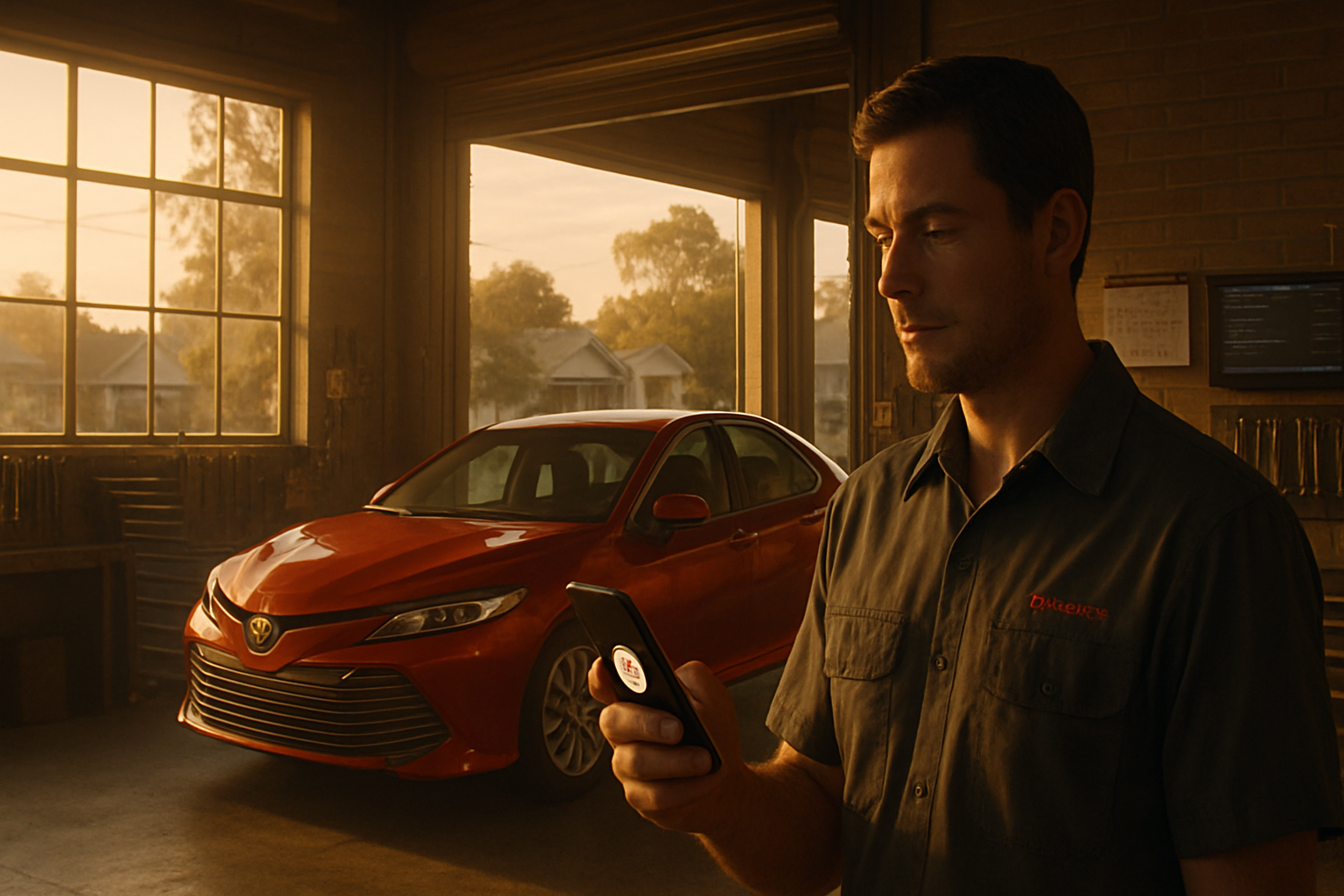
The $3,000 Customer Who Slipped Away
Dave runs a workshop in Brisbane's western suburbs, and last month he discovered something that made his stomach drop. Sarah Chen, a regular customer who'd brought her Camry in every six months for three years, had her rego expire in February. She never called. When Dave finally rang her in April to check in, Sarah mentioned she'd found a new workshop closer to her work—one that had sent her a text reminder about her upcoming rego renewal back in January.
"That reminder made me think they actually cared about my car," Sarah told him. "Your place always seemed too busy to notice when I was due."
Dave calculated what he'd lost: Sarah typically spent about A$500 per visit, twice yearly. Over her remaining driving years, she represented roughly A$15,000 in lifetime value. All gone because another workshop got organised about rego renewals while Dave waited for the phone to ring.
Sound familiar? You're not alone. Across Australia, workshops are hemorrhaging loyal customers during rego season—not because they provide bad service, but because they're playing defence when they should be playing attack.
The Rego Goldmine Hiding in Plain Sight
Here's what Dave didn't realise: vehicle registration renewals are the most predictable revenue opportunity in the automotive industry. Unlike mechanical failures or accidents, rego renewals happen on fixed dates. In most states, they're every 12 months. In Queensland, heavy vehicles renew every six months. The dates never change, and the need is mandatory.
Yet most workshops treat rego season like Christmas shopping—they know it's coming, but they're somehow always scrambling at the last minute.
Tony Castellano runs three workshops across Melbourne's northern suburbs, and he cracked this code five years ago. "I started tracking when each customer's rego was due," he explains. "Then I set up automated reminders to go out six weeks before expiry. Within twelve months, my February and August revenue jumped by 35%. But here's the kicker—customer retention went up even more."
The Psychology Behind the Procrastination
Why do customers delay their rego renewals? It's not laziness—it's psychology. Dr. Sarah Mitchell, who studies consumer behaviour at Griffith University, explains it this way: "Rego renewal feels like a tax, not a service. People postpone unpleasant tasks, even when delay creates bigger problems."
This creates three distinct customer types during rego season:
- The Planners (20%): Book 4-6 weeks ahead, often combining with scheduled services
- The Procrastinators (65%): Know it's due but keep putting it off until the last minute
- The Panickers (15%): Suddenly realise their rego expired yesterday and need urgent help
Smart workshops like Tony's don't just wait for these groups to sort themselves out. They actively nudge customers from procrastination to planning—and capture the business before competitors get a chance.
Building Your Rego Radar System
The foundation of any successful rego strategy is knowing exactly when each customer's registration expires. Sounds obvious, but you'd be surprised how many workshops don't track this systematically.
Emma Rodriguez discovered this the hard way when she took over her father's workshop in Adelaide. "Dad kept customer info in his head," she laughs. "He'd remember that Mrs. Johnson's Corolla was due 'sometime in March,' but we had no system. When I digitised everything, I found we were missing about 40% of our regular customers' rego dates."
Emma implemented a simple but effective tracking system through her workshop software:
Essential Data Points to Capture
- Registration expiry date
- Last rego-related service date
- Vehicle inspection requirements (varies by state)
- Preferred contact method (SMS, email, phone)
- Typical service bundle preferences
- Customer's usual booking lead time
"Once we had this data, everything changed," Emma says. "We could predict our workload months ahead and reach out to customers when they were ready to think about their renewal, not when they were stressed about an expired rego."
The Art of the Rego Reminder
Timing is everything with rego reminders. Too early, and customers ignore it because it feels irrelevant. Too late, and they've already booked somewhere else or worse—they're panicking about an expired registration.
Mark Thompson in Perth has refined his reminder sequence over eight years of testing. His workshop now captures 78% of their existing customers' rego business, compared to the industry average of about 45%.
"The secret is multiple touchpoints with different messages," Mark explains. "First contact is educational, second is helpful, third is urgent. Each one serves a different psychological need."
Mark's Proven Reminder Sequence
Week 8 Before Expiry - Educational Email:
"Hi [Name], just a heads up that your [Vehicle] rego expires on [Date]. We'll be in touch closer to the date about booking your safety check. In the meantime, here's what's changed in roadworthy requirements this year..."
Week 4 Before Expiry - Booking SMS:
"[Name], your rego expires in 4 weeks. Want to avoid the rush? We have appointments available [Date options]. Book now: [Link] or call [Number]."
Week 2 Before Expiry - Bundle Offer Email:
"Hi [Name], with your rego due on [Date], now's the perfect time for that service we discussed. Save A$50 when you combine your safety check with an oil change and tyre rotation. Book: [Link]"
Week of Expiry - Urgent SMS:
"[Name], your rego expires this week! We have last-minute slots available. Call now [Number] to avoid driving unregistered."
This sequence converts 78% of existing customers and generates an average job value 23% higher than standalone rego work, because customers often add other services when prompted.
The Bundle Breakthrough
Here's where most workshops miss a huge opportunity. They think of rego renewal as a single service—get the safety certificate done and move on. But customers bringing cars in for rego are often thinking about vehicle maintenance more broadly than any other time of year.
Lisa Park realised this when she noticed something odd at her Sunshine Coast workshop. "Customers would book a rego safety check, then come back two weeks later for an oil change," she says. "They were making two trips for services that could easily be done together."
Lisa started offering "Rego Ready" packages that bundled common maintenance items with the required safety inspection:
| Package | Services Included | Price | Standalone Value | Savings |
|---|---|---|---|---|
| Rego Essentials | Safety check + oil change | A$189 | A$215 | A$26 |
| Rego Plus | Safety check + oil change + tyre rotation + battery test | A$279 | A$325 | A$46 |
| Rego Complete | Safety check + oil change + tyre rotation + battery test + brake inspection + air filter | A$389 | A$465 | A$76 |
"The bundles work because they solve the customer's real problem," Lisa explains. "They don't just want a safety certificate—they want peace of mind that their car is roadworthy and reliable."
Results? Lisa's average rego season job value increased from A$95 to A$247, and customer satisfaction scores jumped because people appreciated the proactive approach to vehicle care.
Pricing Psychology for Rego Bundles
Getting bundle pricing right is tricky. Price too high, and customers feel gouged during an already expensive time of year. Price too low, and you're leaving money on the table.
James Murphy, who runs workshops in Geelong and Ballarat, spent two years testing different pricing strategies. His breakthrough came when he stopped thinking about discounts and started thinking about value perception.
"I discovered that customers don't mind paying more during rego season if they feel they're getting extra value," James says. "But they hate feeling ripped off because they're 'trapped' into needing a safety certificate."
James's Pricing Framework
- Anchor on time savings: "Get everything done in one visit instead of three"
- Highlight convenience: "We handle your rego paperwork—no queuing at transport offices"
- Bundle genuine value: Only include services the vehicle actually needs or will need soon
- Offer choice: Three bundle levels so customers don't feel forced into one option
- Be transparent: Show the standalone value vs. bundle price clearly
"The key is making customers feel smart for choosing the bundle, not pressured," James explains. "When they see they're saving A$50 AND avoiding multiple trips, the value is obvious."
The Red Flag Alert System
Even with great reminder systems, some customers will slip through the cracks. The question is: how quickly do you notice, and what do you do about it?
Angela Foster's workshop software in Newcastle automatically flags customers who haven't booked within two weeks of their rego expiry. "This was the game-changer for customer retention," she says. "These flags often reveal problems before they become lost customers."
When Angela calls flagged customers, she discovers four main scenarios:
- Life happened (40%): Customer forgot, got busy, had family issues. Usually grateful for the follow-up call and books immediately.
- Price shopping (25%): Customer is comparing options. This gives Angela a chance to match or explain value difference.
- Bad experience (20%): Something went wrong with their last visit. Often fixable if caught quickly.
- Moved/changed cars (15%): Customer circumstances changed. Update records and maintain relationship for future.
"The customers in category 1 become your biggest advocates," Angela notes. "When you call to check they're not driving unregistered, they see it as genuine care for their wellbeing, not just chasing business."
Mastering Multi-Channel Campaigns
Different customers prefer different communication channels, and rego reminders are too important to rely on just one method. Rachel Kim's workshop in Darwin uses a multi-channel approach that adapts to customer preferences and response patterns.
"We track how each customer prefers to be contacted and what times they typically respond," Rachel explains. "Mrs. Chen always responds to morning emails. Jake the tradie only answers texts after 6pm. Personalising the channel and timing doubled our response rates."
Channel-Specific Best Practices
SMS Reminders:
- Keep under 160 characters
- Include specific dates and action items
- Send during business hours but not too early morning
- Use clickable phone numbers for easy callback
Email Campaigns:
- Subject lines with urgency but not panic ("Rego due soon" vs "URGENT: Rego expires!")
- Include vehicle-specific details to show you know their car
- Mobile-optimised design (60% of customers read on phones)
- Clear call-to-action buttons
Phone Follow-ups:
- Call established customers personally, not automated calls
- Lead with helpfulness: "Making sure you don't get caught with expired rego"
- Have appointment options ready when you call
- Leave specific voicemails if no answer
Rachel's multi-channel system now captures 84% of existing customers' rego business and has reduced customer churn by 31% year-over-year.
Tracking the Money
The financial impact of getting rego renewals right goes well beyond the immediate service revenue. When workshop owners start measuring the full picture, the numbers are eye-opening.
Consider the mathematics: If you have 500 regular customers and capture 45% of their rego business (industry average), you're doing 225 rego-related jobs. If improved systems bump that to 75%, you've added 150 jobs. At an average value of A$200 per job, that's A$30,000 in direct revenue.
But the real value is customer lifetime retention. Customers who use you for rego renewals typically stay with your workshop 3.2 times longer than those who only come for breakdowns or one-off repairs.
Paul Richards tracked this at his Wollongong workshop over three years:
| Customer Segment | Average Visits/Year | Average Spend/Visit | Retention Rate | 3-Year Value |
|---|---|---|---|---|
| Rego + Regular Service | 3.8 | A$285 | 87% | A$2,820 |
| Rego Only | 1.4 | A$195 | 52% | A$425 |
| No Rego History | 0.8 | A$245 | 31% | A$183 |
"The difference is staggering," Paul says. "Customers who trust us with their rego become long-term relationships. Customers who don't see us as essential tend to drift away."
Implementation Roadmap
Ready to stop losing customers to the rego renewal trap? Here's a practical 90-day implementation plan that works for workshops of any size:
Days 1-30: Foundation Setup
- Audit existing customer database for missing rego expiry dates
- Set up automated reminder sequences in your workshop software
- Design 3-tier bundle packages for your market
- Create template messages for SMS and email campaigns
Days 31-60: System Testing
- Run reminder campaigns for customers with rego expiring in next 8 weeks
- Track response rates and booking conversion by channel
- Refine bundle pricing based on initial customer feedback
- Train staff on how to present bundles during reminder calls
Days 61-90: Performance Optimisation
- Implement red flag alert system for customers who don't respond
- Analyse which reminder messages get best response
- Calculate ROI and customer lifetime value improvements
- Scale successful tactics to full customer base
The workshops that implement these systems consistently see 25-40% increases in customer retention and 15-30% increases in average job value during rego seasons. More importantly, they build stronger relationships with customers who see them as proactive partners in vehicle care, not just reactive repair shops.
Stop waiting for the phone to ring. Your customers' rego dates are sitting in your database right now—use them to build the predictable revenue stream your workshop deserves.