English
 Español
 Deutsch
 FI
FI
 PT
PT
 BR
BR
 FR
FR
 AR
AR
 ZH
ZH
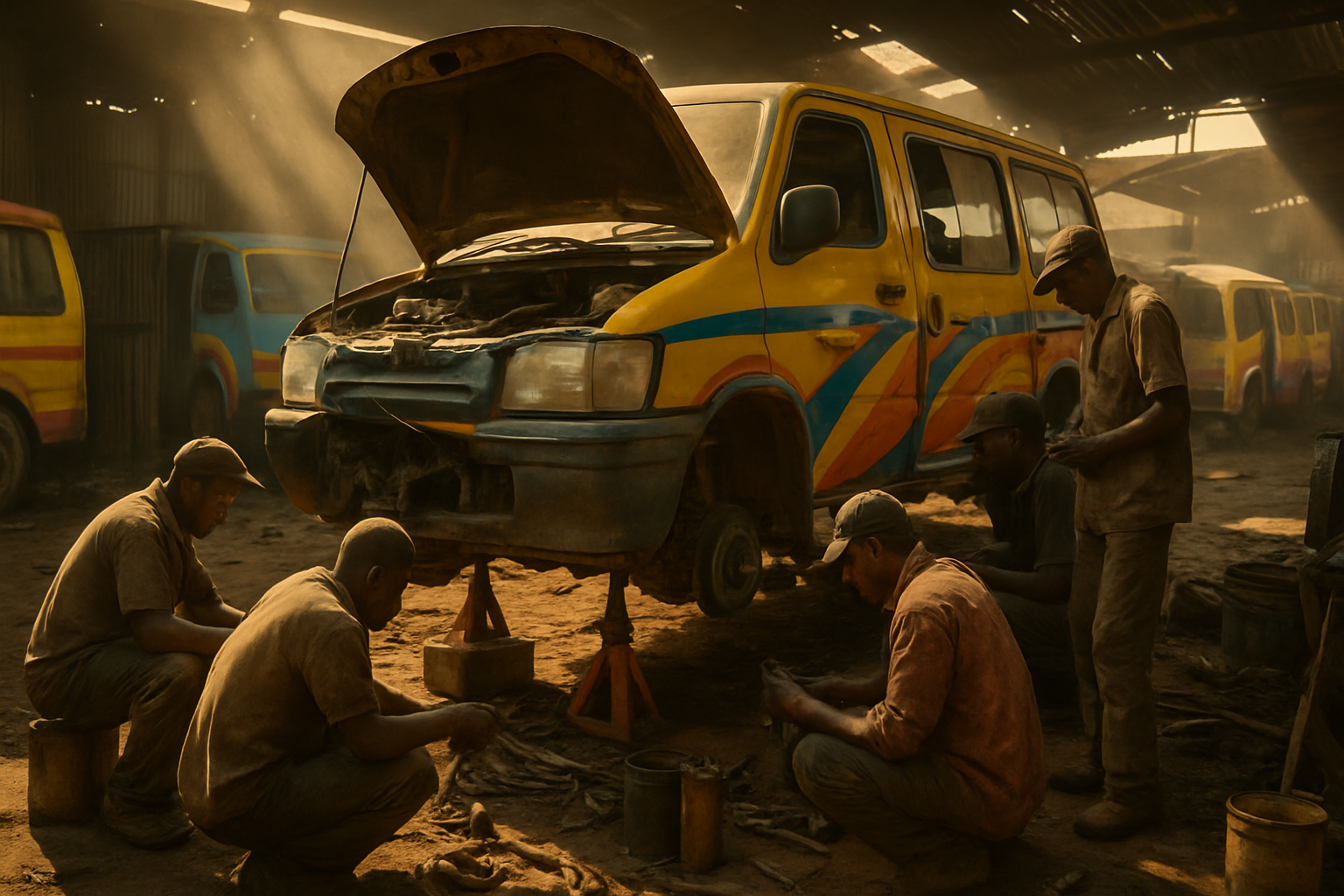
Stand at any stage in Nairobi — Koja, Railways, Kencom — and count the matatus. In 5 minutes you will see over 100. Now multiply that across every route in Nairobi, Mombasa, Kisumu, Nakuru, Eldoret, Thika, and every town in between.
Kenya has over 100,000 registered matatus and thousands more operating without papers. Every one of them runs 12–18 hours daily, covering 200–400 km. That is brutal on engines, brakes, suspension, and tyres. They need servicing constantly — and they have the money to pay for it.
Yet most garages in Industrial Area, Ngong Road, and Likoni focus on private cars. They see matatus as "too much trouble" — demanding owners, tight deadlines, constant breakdowns. But trouble is where the money is.
The Matatu Maintenance Math
A typical 14-seater matatu needs:
- Oil change every 2 weeks: KSh 3,500–5,000 (they run 5,000–8,000 km per month)
- Brake pads every 6–8 weeks: KSh 8,000–15,000 (constant stopping at stages)
- Suspension bushings every 3–4 months: KSh 12,000–25,000 (Nairobi potholes)
- Tyre replacement every 4–6 months: KSh 15,000–25,000 per tyre × 4
- Engine service every 3 months: KSh 15,000–35,000
- NTSA inspection preparation: KSh 5,000–10,000 per vehicle per year
One matatu = KSh 30,000–50,000 per month in maintenance. A fleet owner with 5 matatus = KSh 150,000–250,000 per month. Ten matatus = KSh 300,000–500,000.
And matatu owners are loyal. When they find a fundi who knows their vehicles, does quality work, and does not waste their time — they stay forever. Because downtime = lost revenue. Every hour a matatu is in the garage is KSh 3,000–5,000 in lost fares.
Why Matatu Owners Leave Your Garage
The number one complaint from matatu owners is not price — it is time. "I brought the car at 7am, you said it will be ready by 2pm, I came at 5pm and you are still working on it."
The second complaint: "You fixed the brakes but did not tell me the suspension is about to go. Now the car broke down on Mombasa Road with 14 passengers."
Both problems come from the same root: no system. No record of what was checked, what was found, what was recommended. Just memory and handwritten notes.
How to Win Matatu Fleet Contracts
Step 1 — Inspection checklist: Create a standard checklist for every matatu that comes in. Brakes, suspension, steering, tyres, lights, engine, exhaust, body. Check everything, every time. Takes 30 minutes but saves hours of comebacks.
Step 2 — Digital records: When you find something that needs attention but the owner says "not now," record it. Next time the matatu comes in, you say: "Remember that rear suspension arm I mentioned last month? It is worse now. Let us fix it before it fails on the highway." The owner trusts you because you remember.
Step 3 — Maintenance schedule: Set up a schedule for each vehicle. Oil change every 2 weeks. Brake check every month. Full service every 3 months. Send the owner a reminder via push notification or WhatsApp. They do not have to think about it — you manage it for them.
Step 4 — Professional invoices: Fleet owners need records for their accountant, for NTSA, and for insurance. A clean invoice in KSh with itemised parts and labour is not a luxury — it is a requirement. The fundi under the tree cannot provide this. You can.
The NTSA Advantage
Every matatu must pass annual NTSA inspection. Smart garages offer a pre-inspection package: check everything NTSA will check, fix what needs fixing, and send the matatu to inspection confident it will pass first time.
Failing NTSA inspection costs the owner KSh 5,000–10,000 in re-inspection fees plus days of lost revenue. A garage that guarantees first-time pass becomes invaluable to fleet owners.
Start With One Fleet Owner
You do not need to transform your entire business overnight. Start with one matatu owner. Service their vehicles properly. Keep records. Send reminders. Give professional invoices. Within 3 months, they will introduce you to other owners. That is how matatu garage businesses grow — by reputation.
Mekavo helps you manage this — free. Track every vehicle, every service, every part. Set reminders for scheduled maintenance. Generate invoices in KSh. All from your phone. No subscription, no payment, no catch.
The matatus are already on the road. The money is already being spent on maintenance. The only question is whether it is being spent at your garage or someone else's.