English
 Español
 Deutsch
 FI
FI
 PT
PT
 BR
BR
 FR
FR
 AR
AR
 ZH
ZH
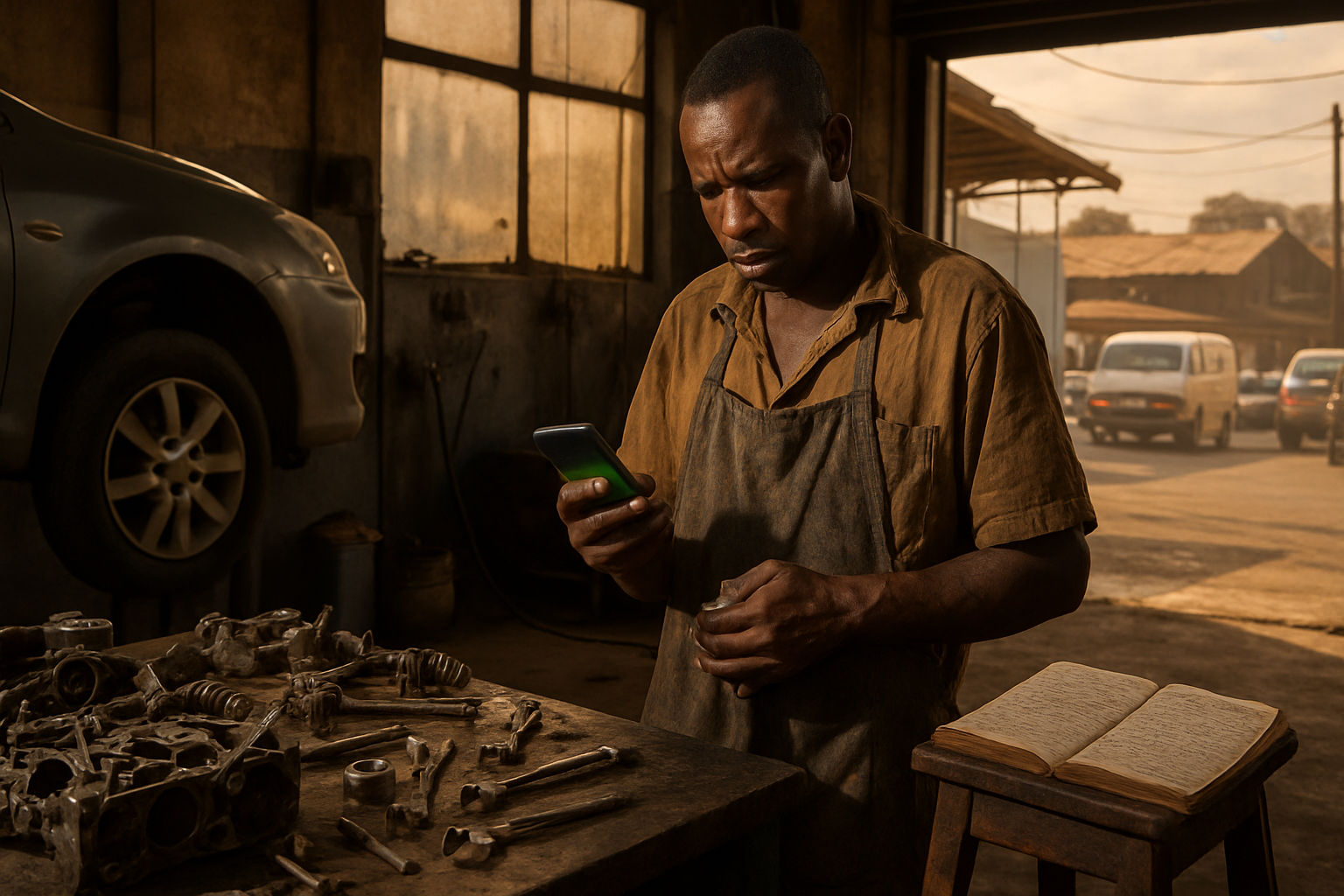
Kenya leads the world in mobile money. M-Pesa processes over KSh 35 trillion per year. Your mama mboga accepts M-Pesa. The bodaboda rider accepts M-Pesa. The shoe shiner at Kencom accepts M-Pesa.
But walk into most garages in Industrial Area, Ngong Road, or Mombasa's Changamwe — and payment is still a mess. "Fundi, I will M-Pesa you later." "I only have cash, but not enough — let me come back tomorrow." "Can I pay half now and half when I collect?"
The result? Every garage owner in Kenya has a mental list of customers who owe them money. KSh 5,000 here. KSh 12,000 there. KSh 8,000 from that guy with the white Fielder. That is KSh 50,000–150,000 sitting in other people's pockets at any given time.
The "I Will Send Later" Epidemic
It works like this: the customer collects their car, promises to M-Pesa the balance "by evening." Evening comes — nothing. You send a polite text. No reply. You call — "Oh sorry fundi, I forgot. I will send tomorrow." Tomorrow becomes next week. Next week becomes "that customer who never paid."
Sound familiar? Every mechanic in Nairobi has this story. And it is costing you real money.
Let us count: if 20% of your customers leave without paying the full amount, and the average unpaid balance is KSh 5,000 — with 40 customers per month, that is 8 customers × KSh 5,000 = KSh 40,000 per month in delayed or lost payments. That is KSh 480,000 per year. Enough to buy a new engine hoist.
Why Professional Invoices Solve This
Here is the psychology: when a customer receives a handwritten note saying "brake pads + labour = 12,000," it feels informal. Negotiable. Payable later.
When they receive a typed invoice on their WhatsApp with their name, car registration, itemised parts and labour, date, and your business name — it feels official. Like a bill that must be paid. Because it IS a bill.
The shift is subtle but powerful. Professional invoices reduce "I will pay later" by 50–70% according to every garage owner who has made the switch. Not because you are being aggressive — but because the customer takes it seriously.
Tracking Who Owes What
The other side of the problem: even when customers DO owe you money, can you prove it? If a customer says "I already paid you KSh 8,000 last month," do you have a record? Or is it your word against theirs?
With a digital system, every payment is recorded. Cash, M-Pesa, bank transfer — logged with date and amount. When there is a dispute, you open the customer's record: "Here — you paid KSh 5,000 on March 15. Balance remaining: KSh 3,000." No argument. No guessing.
The M-Pesa Receipt Trick
Smart garages do this: when a customer pays via M-Pesa, they record the M-Pesa confirmation code on the invoice. Now you have double proof — your invoice record AND the M-Pesa transaction. If there is ever a question, both records match.
Getting Paid Before Collection
The best practice for Kenyan garages: do not release the car until payment is complete. This sounds obvious, but most mechanics are too polite to enforce it. "The customer is a regular, he will pay." Famous last words.
When you have a professional system, it is easier. "The invoice is KSh 15,000. You can M-Pesa to this number. Once I confirm receipt, the car is ready." It is not personal — it is business.
Start Tracking Today
Mekavo is free workshop management software that tracks every job, every payment, and every balance. When a customer owes you money, you know exactly how much and since when. Generate professional invoices from your phone and share via WhatsApp in one tap.
Free for Kenyan garages. No subscription. No M-Pesa charges. Just a tool that helps you get paid for the work you have already done.
Because the best engine repair in the world means nothing if you do not get paid for it.