English
 Español
 Deutsch
 FI
FI
 PT
PT
 BR
BR
 FR
FR
 AR
AR
 ZH
ZH
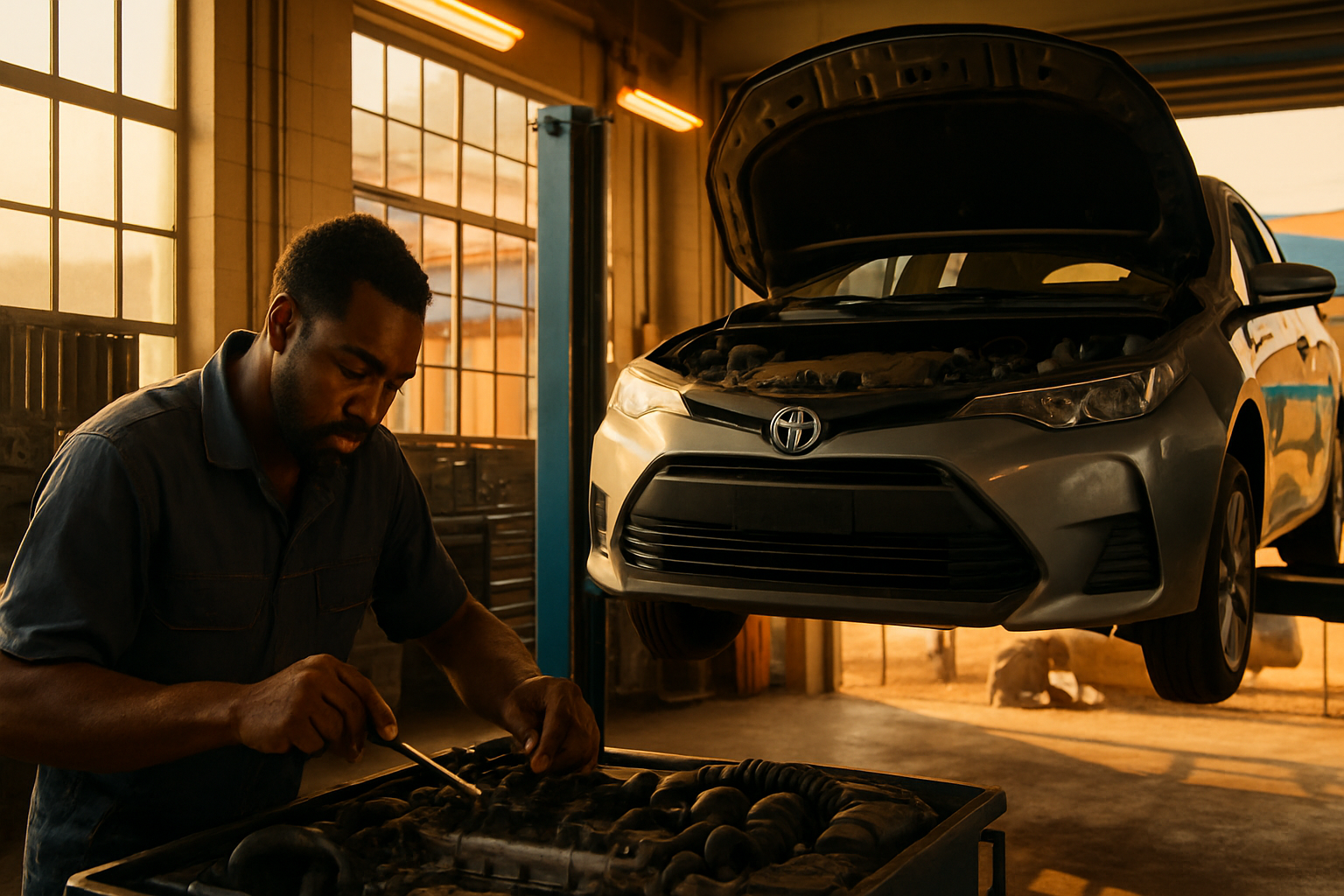
Nigeria runs on tokunbo. Every week, ships dock in Lagos, Tincan Island, and Onne Port carrying thousands of used Toyota Corollas, Honda Accords, Lexus RX350s, and Mercedes C-Classes from Europe, America, and the Middle East.
These cars arrive with 80,000–150,000 km on the clock. They need servicing immediately — timing belts, brake fluid changes, coolant flushes, suspension checks. The Nigerian heat and road conditions mean they will need constant maintenance for years.
This should be a goldmine for workshops. But here is the problem: 7 out of 10 tokunbo owners take their cars to roadside mechanics. Not because roadside mechanics are better — but because they are familiar, they are cheap, and they do not make the customer feel stupid.
Why Customers Choose the Roadside Over Your Workshop
Let us be honest. When a car owner drives into a workshop with painted walls and a reception area, they immediately think: "This place is expensive." Even if your prices are only ₦2,000–₦5,000 more than the roadside mechanic.
The roadside mechanic wins because:
- Transparency: He opens the bonnet in front of you and shows you the problem. You watch him work. You feel involved.
- Flexible payment: "Oga, pay me half now, bring the rest next week." No invoice, no pressure.
- Personal relationship: He remembers your name, your car, your last problem — because he has only 5–10 regular customers.
Your workshop can beat all of this. Not by lowering prices — but by being MORE professional, MORE organised, and MORE personal. Yes, more personal than the roadside mechanic. How? With records.
The Customer History Advantage
Imagine this: Chief Obi drives in with his 2016 Lexus RX350. Before he even parks, you check your phone and know:
- He came 4 months ago for front brake pads (₦45,000)
- You recommended replacing the rear pads next time
- His AC condenser was making noise — you quoted ₦85,000 but he said he would think about it
- His last oil change was 6 months ago — he is overdue
"Chief! Welcome back. How is the AC — still making that noise?" Now he knows you remember him. You are not just a workshop — you are HIS mechanic. The roadside guy cannot compete with that.
Professional Invoices Change Everything
When a tokunbo owner gets a WhatsApp photo of a handwritten receipt, they think: "Can I trust this?" When they get a clean, typed invoice with itemised costs in Naira, company name, and phone number — they think: "This is a real business."
The difference in trust is massive. Customers share professional invoices with friends. "See the receipt from my mechanic — very organised." That is free marketing you cannot buy.
Tokunbo-Specific Services That Print Money
Every tokunbo car needs these within the first 3 months of arrival:
- Full inspection report: ₦15,000–₦25,000 — buyers want to know what they bought
- Timing belt replacement: ₦35,000–₦80,000 depending on the car
- AC regas and check: ₦15,000–₦25,000 — Lagos heat makes this urgent
- Suspension overhaul: ₦50,000–₦150,000 — Nigerian roads destroy everything
- Brake system refresh: ₦25,000–₦60,000 — pads, fluid, sometimes discs
If you service 10 tokunbo cars per month with a proper inspection package, that is ₦150,000–₦250,000 in new revenue — just from the initial inspection. The follow-up repairs are where the real money is.
Track It or Lose It
None of this works if you do not record it. The customer who came for a timing belt — did you tell them their brake pads have 20% left? Did you note it somewhere? Will you remember in 3 months?
Mekavo is free workshop management software that does exactly this. Log every job, every recommendation, every quote that was not accepted. When the customer comes back — or when you send them a reminder — you know exactly where you left off.
Free. No subscription. No trial. Just a mechanic and a tool that remembers what your head cannot.