English
 FR
FR
The Phone Call That Never Comes
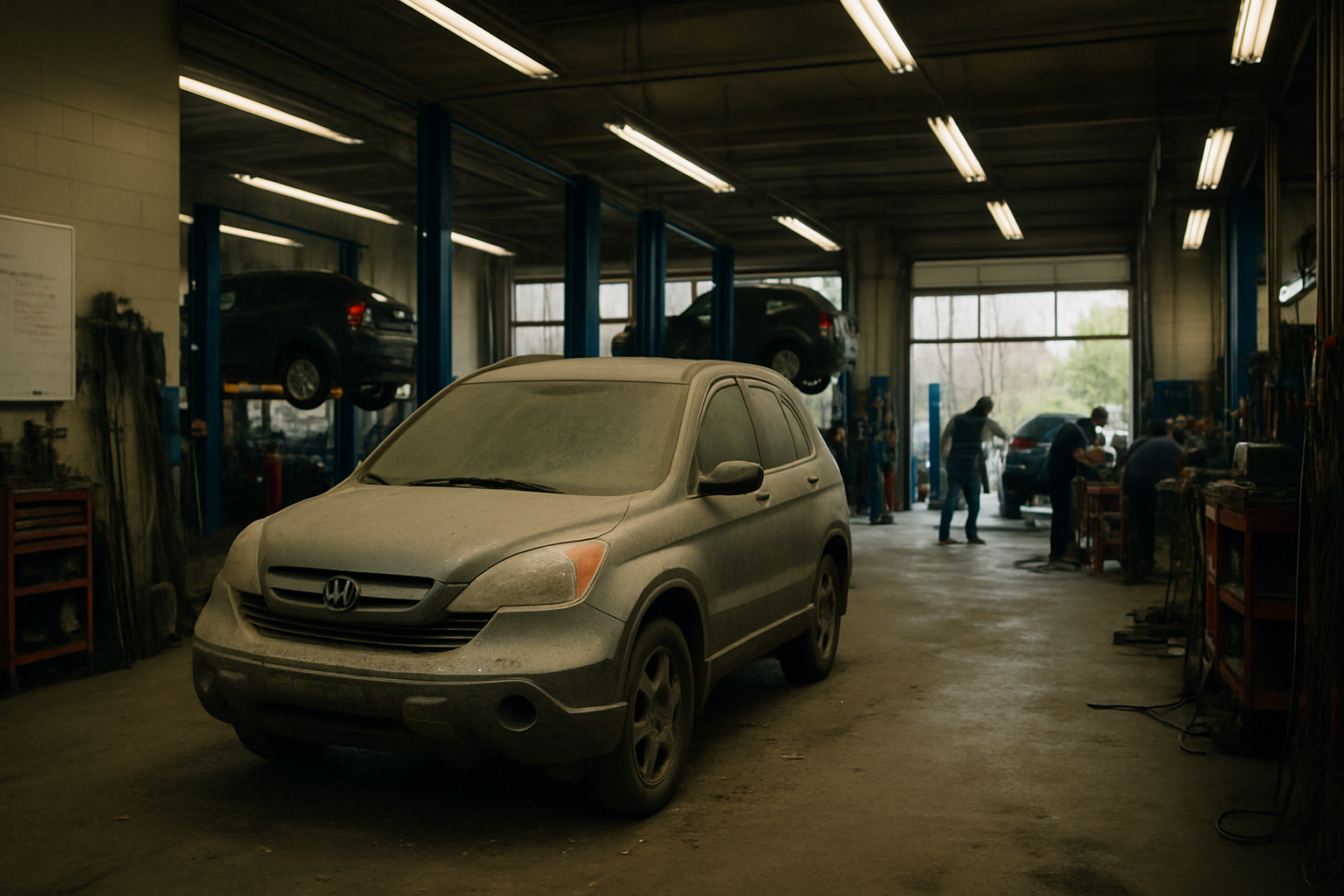
Dave Kowalski runs a three-bay shop in Winnipeg, and last March he thought he'd hit the jackpot when a customer dropped off a 2019 RAM 1500 for transmission work. The estimate was $4,200—a solid week's revenue. Three months later, that truck is still sitting in bay two, the customer's phone is disconnected, and Dave's out $300 a month in lost revenue plus insurance headaches he never saw coming.
"I've got people calling every day wanting transmission work, and I'm telling them it's a two-week wait because I've got this ghost truck eating up space," Dave tells me over coffee at a Tim Hortons near his shop. "Spring hits and every shop in the city is slammed, but I'm playing storage unit for some guy who probably bought another truck and forgot about this one."
Dave's story isn't unique. Across Canada, auto shops are discovering that abandoned vehicles aren't just an inconvenience—they're a significant drain on cash flow that gets worse every year.
The Real Cost of Dead Inventory
When Jennifer Park ran the numbers at her Vancouver shop last spring, she was shocked. Two abandoned vehicles—a 2017 Honda Civic and a 2015 F-150—were costing her operation nearly $600 monthly in lost revenue.
"People think it's just about the bay space, but it's way more than that," Jennifer explains. "That Honda was taking up my alignment bay during cherry blossom season when everyone wants their cars serviced. I was turning away $180-200 jobs daily because of a car worth maybe $8,000 that nobody wanted back."
Here's the breakdown most shop owners don't calculate:
- Lost bay revenue: $150-300 per month depending on your market and bay utilization
- Insurance exposure: Your liability coverage still applies even when vehicles sit unclaimed
- Property tax implications: Some municipalities assess abandoned inventory
- Storage costs: Security, climate control, and maintenance of storage areas
- Administrative time: Tracking down owners, legal paperwork, disposal coordination
The math is brutal: a single abandoned vehicle can cost a shop $1,800 to $3,600 annually in direct losses and opportunity costs.
Know Your Provincial Rights (They're Different Everywhere)
Canada's patchwork of provincial regulations makes abandoned vehicle laws a minefield for shop owners. What works in Toronto won't fly in Calgary, and the timeline differences can trap unsuspecting shops.
| Province | Minimum Hold Period | Notice Requirements | Key Differences |
|---|---|---|---|
| Ontario | 60 days | Registered mail + newspaper ad | Must attempt contact every 30 days |
| British Columbia | 30 days | Registered mail only | Can charge storage after 7 days |
| Alberta | 45 days | Registered mail + local posting | Requires specific lien documentation |
| Quebec | 30 days | Registered mail (French required) | Must offer vehicle return before disposal |
"I learned the hard way that BC and Ontario rules are completely different," says Mike Chen, who owns shops in both Vancouver and Hamilton. "In BC, I can start charging storage fees after a week and dispose of vehicles in 30 days. In Ontario, I'm stuck for two months minimum, and the paperwork requirements are way more complex."
The Quebec Twist
Quebec shop owners face additional challenges with language requirements. All notices must be in French, and the Civil Code has specific provisions about abandoned property that don't exist in other provinces.
"I had a customer from Ottawa drop off a Camry at my Gatineau shop," recalls Pierre Dubois. "When he disappeared, I had to send all the legal notices in French, even though we'd been dealing in English. Cost me an extra $200 in translation fees on top of everything else."
Red Flags: Spotting Trouble Before It Starts
After 15 years running shops in Calgary, Sarah Mitchell has developed an almost supernatural ability to spot customers who'll disappear. She keeps a mental checklist that's saved her thousands in abandoned vehicle costs.
"The guy who says 'whatever it takes' without asking about price? That's your first red flag. People who actually plan to pay ask questions about cost."
Here are the warning signs experienced Canadian shop owners watch for:
Payment Method Red Flags
- Cash deposits only: Customers who insist on paying cash but won't provide credit card for final payment
- Prepaid credit cards: Often untraceable and suggest temporary financial arrangements
- "I'll pay when I pick it up" with no deposit: Classic abandonment setup
- Bounced check history: If they've had payment issues before, they will again
Communication Patterns
- Phone numbers that go straight to voicemail with generic messages
- Email addresses that look temporary (lots of numbers, obvious fake names)
- Reluctance to provide emergency contact information
- Inconsistent stories about their situation or timeline
Vehicle and Job Scope Warnings
"I've noticed that certain combinations are almost guaranteed trouble," explains Tom Rodriguez from his Mississauga shop. "High-mileage luxury cars with major engine work? The repair often costs more than the car's worth, and owners just walk away. Same with collision damage where insurance has been denied."
Other problematic scenarios:
- Vehicles with existing damage that wasn't disclosed
- Jobs that expand significantly during diagnosis
- Cars that have been to multiple shops for the same problem
- Vehicles with obvious modification or abuse history
Payment-Before-Work: The Nuclear Option That Actually Works
Two years ago, Lisa Thompson's Edmonton shop was sitting on $12,000 worth of abandoned vehicles. Today, she hasn't had a single abandonment since implementing her "50-50-Out" payment policy.
"Fifty percent down on estimates over $500, fifty percent before delivery, and the car doesn't leave without full payment," Lisa explains. "I thought I'd lose customers, but the opposite happened. The customers I kept were the ones who actually pay their bills."
Making Payment Policies Customer-Friendly
The key is positioning payment requirements as professional business practice, not distrust of customers. Here's how successful Canadian shops frame it:
- "We require deposits to order parts specific to your vehicle" (better than "we need money upfront")
- "Our payment policy helps us keep labor rates competitive" (positions it as customer benefit)
- "Final payment is due before delivery to ensure immediate pickup" (focuses on shop efficiency)
"I tell customers that requiring deposits lets me offer better pricing because I'm not carrying bad debt costs," says Robert Kim from his Toronto shop. "Most people appreciate the honesty, and the ones who don't weren't going to pay anyway."
Service Agreements That Actually Protect You
Most shop service agreements are worthless when abandonment happens because they don't address the specific scenarios that create problems. Lawyers who work with automotive businesses recommend including these specific clauses:
Storage and Holding Provisions
- Daily storage fees that kick in after completion (typically $25-50/day)
- Maximum holding period before disposal rights activate
- Customer responsibility for towing and disposal costs
- Right to complete minimal repairs to make vehicle roadworthy for removal
Communication Requirements
- Customer must provide current phone number and emergency contact
- Agreement to respond to shop communications within 48 hours
- Authorization for shop to contact insurance company if customer becomes unreachable
- Acknowledgment that abandoned vehicles may be disposed of per provincial law
"The magic words are 'authorization to dispose.' If that's not in your agreement, you're stuck following the full legal process even when the customer obviously isn't coming back," explains automotive lawyer Michael Patterson, who practices in Toronto.
The Escalation Process: From Phone Call to Pink Slip
When a customer goes silent, time is money. Canadian shops that handle abandoned vehicles efficiently follow a structured escalation process that protects them legally while minimizing costs.
Week 1: Friendly Contact Phase
- Day 1-3: Phone calls and text messages with repair updates
- Day 4-5: Email with photos of completed work and pickup scheduling
- Day 6-7: Contact emergency contact person if provided
Week 2-3: Formal Notice Phase
- Day 8-10: Registered mail notice with storage fee disclosure
- Day 11-14: Insurance company contact if information is available
- Day 15-21: Second registered mail notice with disposal timeline
Week 4+: Legal Process Phase
This is where provincial differences matter most. Ontario shops must wait longer and do more paperwork than BC or Alberta shops. Quebec requires French notices. Every province has specific requirements for newspaper advertisements or public posting.
"I keep a checklist for each province I work with," says Maria Santos, whose shop in Ottawa serves customers from both Ontario and Quebec. "Missing one step means starting the whole process over, and that's another month of lost bay space."
What to Do After the Waiting Period
Once you've followed proper provincial procedures, you have several options for disposing of abandoned vehicles. The choice often depends on the vehicle's condition and value.
Auction Services
For vehicles worth more than $5,000, auction services can recover some of the money owed. Most auction houses charge 10-15% commission but handle all paperwork.
"I use Ritchie Bros for anything decent," says Dave from Winnipeg. "They picked up that RAM truck I mentioned—got $11,000 for it, kept $1,800 for commission and disposal fees, and I recovered most of what the customer owed me."
Scrap and Parts Recovery
Vehicles beyond economical repair can still generate revenue through parts sales or scrap metal value. Current scrap prices in Canada range from $200-400 per vehicle depending on size and local market conditions.
Charitable Donation
Some provinces offer tax advantages for donating abandoned vehicles to registered charities. The charity handles pickup and disposal, and shops can claim the donation value against business income.
Spring Cleanup: When Every Bay Counts
The abandoned vehicle problem peaks in spring when shops desperately need bay space for seasonal work. That's when the true cost becomes obvious.
"March through May, I'm booked solid with winter damage, safety inspections, and tune-ups," explains Jennifer from Vancouver. "Having even one bay tied up with an abandoned car means I'm turning away $500-800 daily in work. It adds up fast."
Smart shop owners use the winter slowdown to clean house. January and February are perfect months to start disposal processes for vehicles that have been sitting since fall.
Prevention is Better Than Cure
The best abandoned vehicle strategy is prevention. Shops that rarely deal with abandonment share common practices:
- Thorough customer vetting: ID verification, insurance confirmation, emergency contacts
- Clear payment policies: Deposits required, payment terms explained upfront
- Regular communication: Daily updates on major repairs, photos of problems found
- Firm completion deadlines: "Your car will be ready Friday, pickup by Monday or storage fees apply"
- Trust your instincts: If a customer feels off, require full payment upfront
"I'd rather lose a questionable customer than spend three months trying to collect money and dispose of their car. My time and bay space are worth more than any single job," says Lisa from Edmonton.
As spring approaches and shops across Canada gear up for their busiest season, abandoned vehicles represent an expensive distraction that's entirely preventable. The shop owners who've solved this problem share one thing: they treat abandoned vehicles as a business issue, not a customer service problem. Sometimes the best customer service is saying no to customers who won't pay their bills.