English
 Español
 Deutsch
 FI
FI
 PT
PT
 BR
BR
 FR
FR
 AR
AR
 ZH
ZH
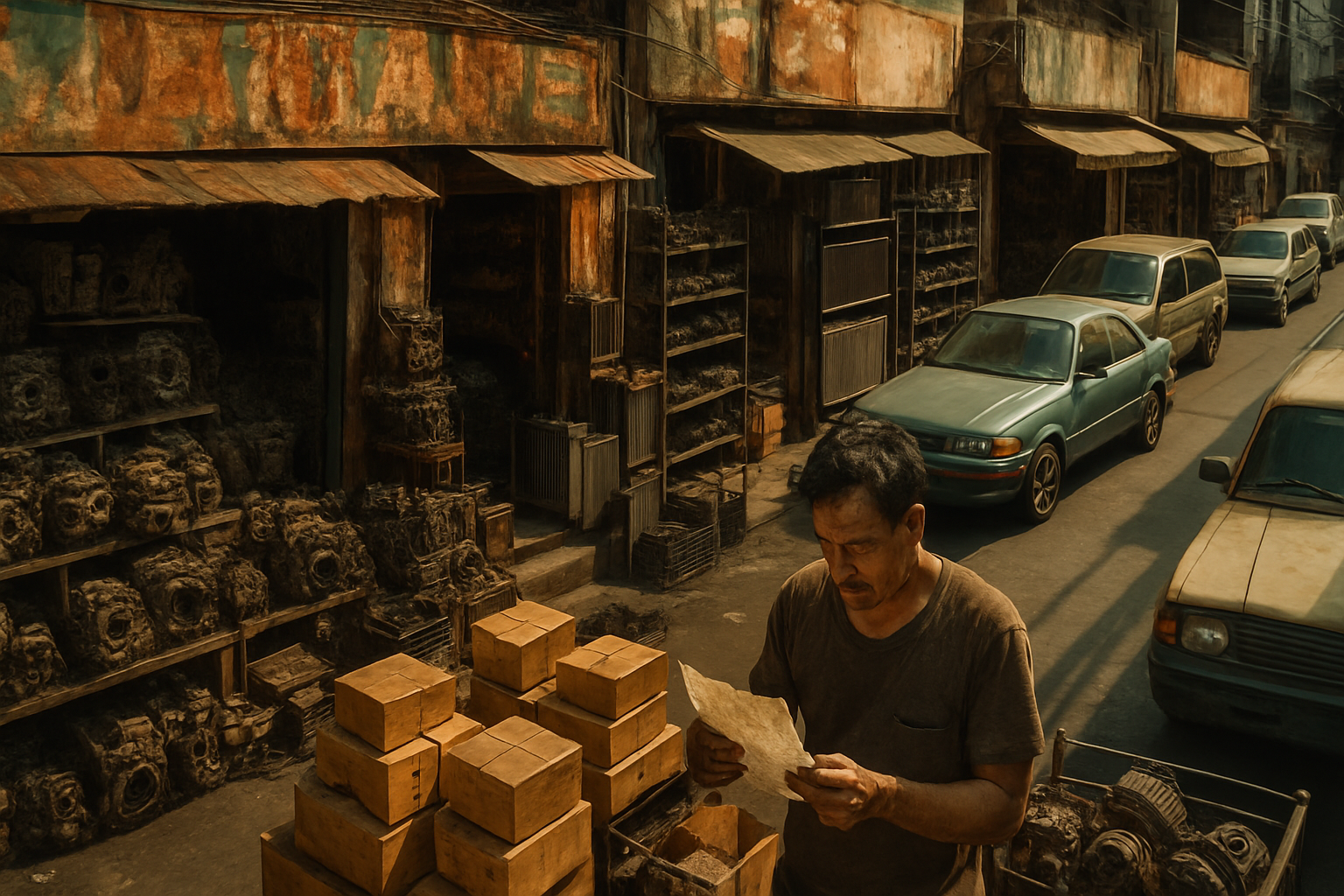
Ask any mechanic in Metro Manila where to buy car parts, and the answer is always the same: "Banawe." Banawe Street in Quezon City is legendary — over 500 auto parts shops crammed into a few blocks. Brand new, surplus, reconditioned, used, copy, original — if the part exists, Banawe has it.
But here is the dirty secret: even with 500 shops, Filipino mechanics waste an average of 3–5 hours per week looking for parts. Wrong part numbers. Shops that had the part yesterday but sold out today. "Surplus" parts that turned out to be damaged. Compatible parts that are not actually compatible.
That is 12–20 hours per month — 2 full working days — spent shopping instead of fixing cars. At ₱500/hour labour rate, that is ₱6,000–10,000 per month in lost productivity.
The Three Banawe Problems
Problem 1: Nobody remembers which shop sold what. Last month you bought an excellent alternator for a Vios from a shop near the corner of Banawe and Kaliraya. Which shop exactly? What was the owner's name? How much did you pay? You cannot remember. So you walk up and down Banawe for an hour, checking 10 shops for the same part.
Problem 2: Price memory is unreliable. You think you paid ₱3,500 for that alternator. The shop owner says ₱4,200. Without a receipt or record, you have no way to verify. You either pay more or argue without proof.
Problem 3: Quality tracking does not exist. That brake pad set from Shop A lasted 6 months. The identical-looking set from Shop B lasted 3 weeks. But you did not record which shop supplied which set. So next time, you might buy from Shop B again and have the same problem.
The Simple Fix: Log Every Purchase
Every time you buy parts from Banawe (or Evangelista in Makati, or Paco in Manila), record four things:
- What you bought (part name, brand if visible, part number)
- Which shop (name, location, owner's name, contact number)
- How much you paid
- Which car/customer the part was for
After 3 months, you have a personal database of Banawe. "Vios alternator — Jun's Auto Parts, ₱3,500, good quality." "Innova brake pads — never buy from that shop near Mercury Drug — lasted 3 weeks." "Fortuner radiator — Mang Tony, ₱6,800, genuine Denso."
The Markup Calculation
Most talyers mark up parts 30–50% and guess at the selling price. But without knowing your exact cost, your markup is a guess too.
Example: You bought brake pads for ₱1,800 and charged the customer ₱3,000. That is a 67% markup — good. But you also spent ₱200 on parking and ₱150 on gas going to Banawe. Your actual cost was ₱2,150. Your real markup is only 40%.
When you track costs properly, you know your REAL profit per job. Some jobs you thought were profitable are actually barely breaking even. Some simple jobs you underpriced are actually your most profitable.
The Surplus Parts Gamble
Surplus parts from Japan are a huge part of Filipino automotive culture. They are cheaper than new and often better quality than aftermarket. But surplus is a gamble — the part might have 80,000 km of use, or it might have 180,000 km.
Track your surplus parts results. If a surplus compressor from a specific shop lasts 2+ years, that shop sells good surplus. If another shop's surplus parts fail within 6 months, stop buying from them. Without records, you are gambling every time.
Build Your Supplier Network
The best talyers in Manila do not walk around Banawe looking for parts. They have 5–8 trusted suppliers on speed dial. "Boss Jun, I need a Vios 2014 alternator. Magkano?" The part arrives at their workshop within an hour. No wasted time, no guessing, no wrong parts.
Building that network takes time and records. Track every good experience. Track every bad experience. Within 6 months, you have a supplier list that saves you 10+ hours per month.
Mekavo tracks every part on every job — supplier, cost, vehicle. Build your Banawe database from your phone. Free for Filipino workshops — no subscription, no payment.
Banawe has 500 shops. You only need 5 good ones. Records help you find them.