English
 Español
 Deutsch
 FI
FI
 PT
PT
 BR
BR
 FR
FR
 AR
AR
 ZH
ZH
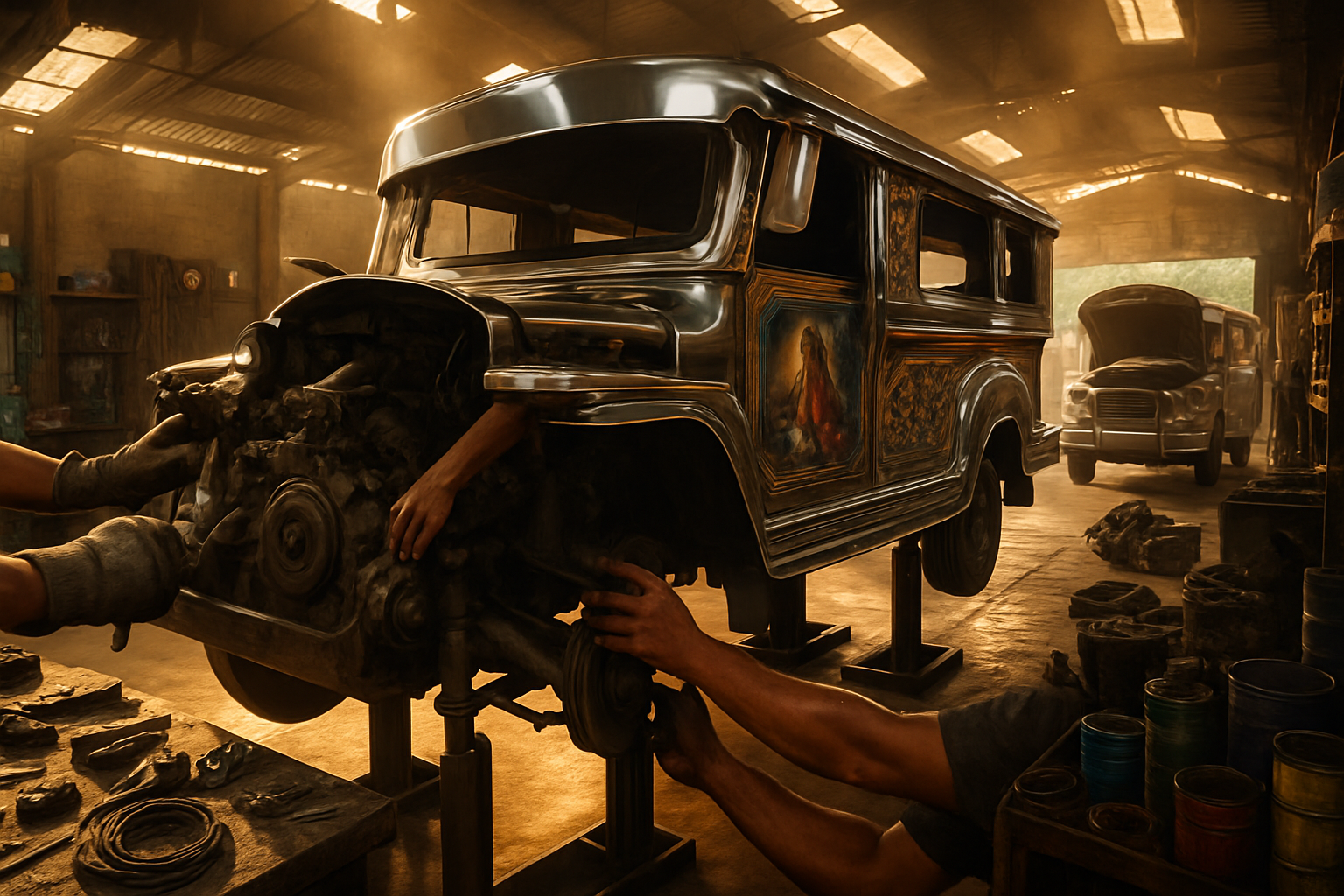
The jeepney is the Philippines. From Quiapo to Cubao, from Cebu to Davao, these colourful machines carry millions of Filipinos daily. And behind every running jeepney is a talyer — a workshop — that keeps it alive.
There are over 200,000 jeepneys in the Philippines. Traditional jeepneys run on surplus Isuzu 4JB1 or Mitsubishi 4D56 diesel engines, many with 500,000+ kilometres on the clock. The new modern PUV (Public Utility Vehicle) jeepneys run on Euro 4 diesel or electric — but the traditional ones still dominate, and they need CONSTANT maintenance.
Why Jeepney Work Is the Best Work
Private car owners visit their mechanic 3–4 times per year. A jeepney operator? Every 2 weeks. Sometimes every week. Here is why:
- Engine hours: A jeepney runs 14–18 hours daily, 6–7 days per week. That is equivalent to driving a private car for 5 years — every single month.
- Passenger load: 20–24 passengers at full capacity, on roads with potholes and speed bumps. Suspension, brakes, and drivetrain take punishment that private cars never experience.
- Stop-and-go: A jeepney stops 50–100 times per route. Brakes wear out in weeks, not months.
- LTFRB compliance: Operators must keep vehicles roadworthy or risk losing their franchise. They NEED proper maintenance — it is not optional.
The Revenue Per Jeepney
- Oil change every 2 weeks: ₱1,500–2,500 × 2/month = ₱3,000–5,000
- Brake shoes/pads monthly: ₱3,000–6,000
- Clutch adjustment/replacement every 2–3 months: ₱5,000–15,000
- Electrical repairs monthly: ₱2,000–5,000 (lights, horn, wipers — LTFRB requirements)
- Engine tune-up every 3 months: ₱5,000–10,000
- Suspension work every 3–4 months: ₱8,000–20,000
- Major engine overhaul yearly: ₱30,000–80,000
One jeepney = ₱15,000–35,000 per month in maintenance. An operator with 5 jeepneys = ₱75,000–175,000 per month. Ten jeepneys = ₱150,000–350,000.
And operators are LOYAL. When downtime means lost boundary (daily earnings), they need a talyer they trust to work fast and work right. Find that operator, earn their trust, and you have a customer for life.
The Modern PUV Opportunity
The government's PUV Modernisation Program is replacing traditional jeepneys with new Euro 4 diesel and electric models. These modern jeepneys have:
- Electronic fuel injection — needs diagnostic skills
- Automatic transmission — different from the old manual
- Air conditioning — additional maintenance requirement
- GPS and dashcam — electrical systems to maintain
Most traditional talyers are afraid of modern PUVs. "We do not know computers." But the mechanics who learn these systems now will own the market in 5 years when most jeepneys are modern.
Building Your Jeepney Client Base
Jeepney operators talk to each other at terminals. Cubao, Monumento, SM North — operators wait together, eat together, complain together. If you do good work on one operator's jeepney, every operator at that terminal knows by next week.
The key: speed and honesty. An operator brings a jeepney at 6am. If it is not running by noon, they lose ₱2,000–3,000 in boundary. The talyer that can diagnose fast, fix efficiently, and charge fairly wins all the business.
Track every jeepney, every repair, every part with Mekavo — free for Filipino workshops. When the operator asks "how much have I spent this year?" you pull up the complete history. Professional. Trustworthy. The kind of talyer operators recommend.