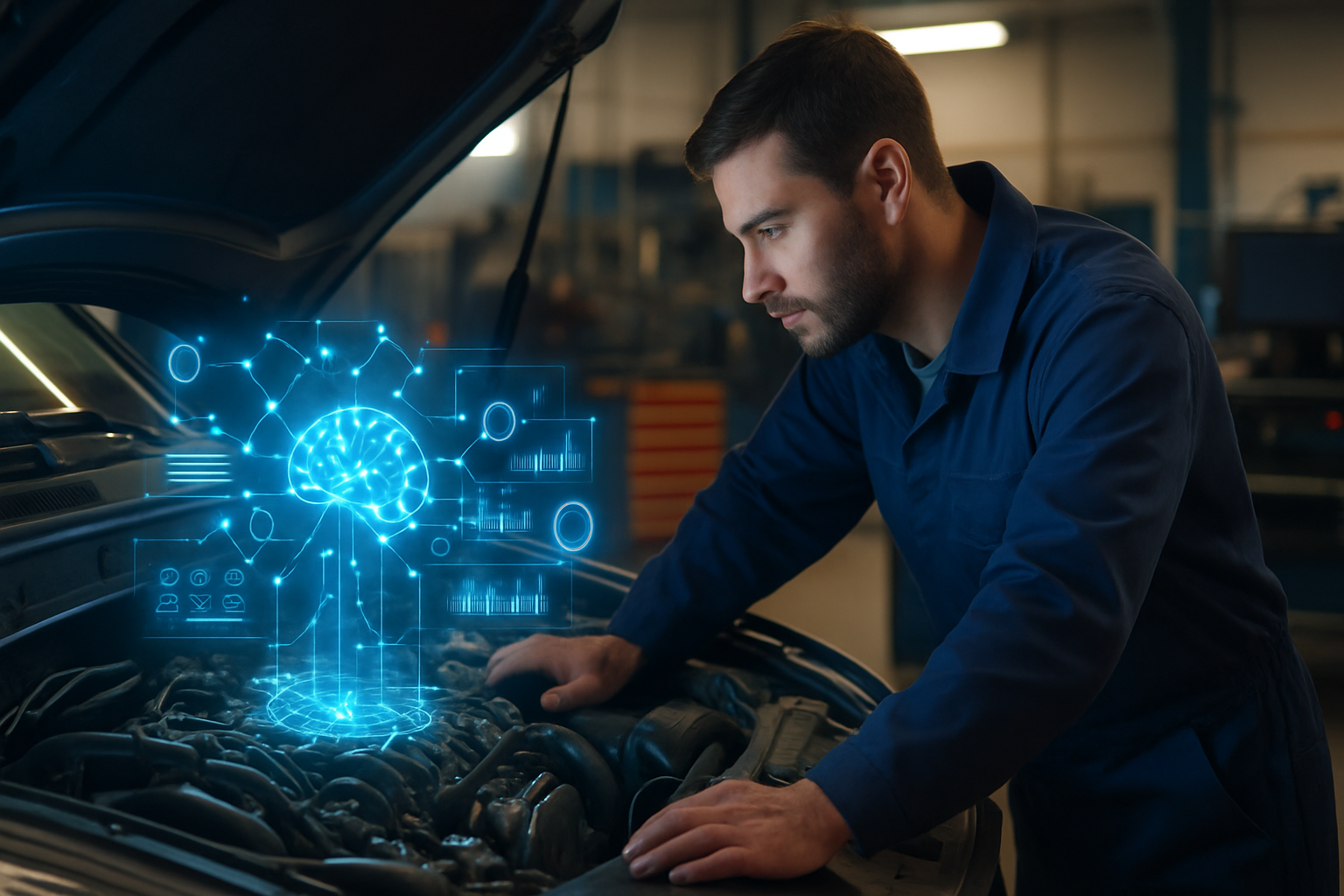
The AI Revolution in American Auto Repair
Artificial Intelligence is no longer a futuristic concept—it's actively reshaping the American automotive repair industry today. From coast to coast, forward-thinking shop owners are discovering that AI isn't just about robots and sci-fi movies; it's about practical tools that can dramatically improve efficiency, accuracy, and profitability in their daily operations.
According to recent industry reports, auto repair shops that have adopted AI-powered solutions are seeing an average of 25% improvement in diagnostic accuracy and 30% reduction in labor time for complex repairs. These aren't just statistics—they represent real dollars saved and customers served more effectively.
1. Revolutionary Diagnostic Capabilities
Gone are the days when mechanics had to rely solely on experience and intuition to diagnose complex vehicle problems. AI-powered diagnostic systems are now capable of analyzing thousands of data points from a vehicle's onboard computer systems, cross-referencing this information with vast databases of known issues and solutions.
What this means for your shop:
- Faster identification of intermittent problems that traditionally took hours to diagnose
- Reduced comebacks due to misdiagnosed issues
- Ability to handle more complex modern vehicles with confidence
- Detailed diagnostic reports that customers can easily understand
"AI diagnostic tools have cut our average diagnostic time from 2 hours to 45 minutes, and our accuracy rate has improved from 85% to 98%." - Mike Thompson, Owner of Thompson Auto Repair, Austin, TX
Popular AI Diagnostic Solutions
Leading platforms like Bosch ADS and Launch X431 now incorporate machine learning algorithms that become smarter with each diagnostic session. These systems can even predict potential failures before they occur, allowing shops to offer proactive maintenance services.
2. Intelligent Inventory Management
One of the biggest headaches for auto repair shop owners is managing inventory—knowing what parts to stock, when to order, and how much to keep on hand. AI is transforming this challenge into a competitive advantage.
Modern AI inventory systems analyze historical data, seasonal patterns, local vehicle demographics, and even weather patterns to predict which parts you'll need and when. This means no more emergency runs to the parts store or customers waiting days for repairs.
Key Benefits Include:
- Predictive Ordering: AI algorithms forecast demand based on multiple variables
- Cost Optimization: Minimize carrying costs while avoiding stockouts
- Supplier Integration: Automated ordering from preferred suppliers
- Obsolescence Prevention: Identify slow-moving parts before they become dead inventory
Shops using AI inventory management report an average inventory cost reduction of 20-35% while improving parts availability by 40%.
3. Enhanced Customer Experience Through Automation
Today's customers expect Amazon-level service experiences, even from their local auto repair shop. AI is making this possible through sophisticated customer relationship management and communication systems.
AI-powered customer service includes:
- Automated appointment scheduling that considers technician skills and bay availability
- Real-time repair status updates via SMS and email
- Personalized service reminders based on vehicle age, mileage, and maintenance history
- Intelligent pricing recommendations based on local market conditions
The Digital Service Advisor
Some shops are now using AI chatbots as "digital service advisors" that can handle initial customer inquiries, schedule basic services, and even provide preliminary estimates. This frees up human staff to focus on complex customer needs while ensuring 24/7 availability.
4. Predictive Maintenance Services
AI is enabling auto repair shops to shift from reactive to proactive service models. By analyzing vehicle data, driving patterns, and component wear rates, AI systems can predict when specific parts are likely to fail.
This creates new revenue opportunities through:
- Scheduled Maintenance Programs: Customers pay monthly fees for predictive maintenance
- Fleet Services: Especially valuable for commercial customers with multiple vehicles
- Warranty Extensions: Confidence in predictions allows offering extended warranties
- Customer Retention: Proactive service keeps customers coming back
| Traditional Model | AI-Powered Predictive Model |
|---|---|
| Wait for breakdown | Predict and prevent failures |
| Emergency repairs | Scheduled maintenance |
| Customer inconvenience | Planned service visits |
| Higher repair costs | Lower maintenance costs |
5. Streamlined Operations and Workflow Optimization
AI is revolutionizing how auto repair shops manage their daily operations. From scheduling technicians to optimizing bay utilization, AI systems can identify inefficiencies that human managers might miss.
Operational AI Applications:
Smart Scheduling: AI considers technician skills, job complexity, parts availability, and customer preferences to create optimal work schedules. This can increase shop productivity by 15-20%.
Quality Control: AI-powered cameras and sensors can verify that repairs are completed correctly, reducing comebacks and improving customer satisfaction.
Performance Analytics: Real-time dashboards show key performance indicators and suggest improvements based on data analysis.
How to Stay Ahead: Your Action Plan
The shops that will thrive in the AI era are those that start preparing now. Here's your roadmap to staying competitive:
Phase 1: Foundation Building (Months 1-3)
- Assess Your Current Technology: Inventory existing systems and identify integration opportunities
- Train Your Team: Invest in AI literacy for key staff members
- Start Small: Begin with one AI application, such as diagnostic tools or customer communication
Phase 2: Strategic Implementation (Months 4-12)
- Choose Your AI Partners: Research and select AI solution providers that integrate with your existing systems
- Data Collection: Ensure you're capturing quality data that AI systems need to function effectively
- Customer Education: Help customers understand the benefits of AI-enhanced services
Phase 3: Advanced Integration (Year 2+)
- Full System Integration: Connect diagnostic, inventory, and customer management systems
- Custom Solutions: Work with developers to create AI solutions specific to your shop's needs
- Industry Leadership: Share your success stories and become known as a tech-forward shop
"The shops that embrace AI now will be the industry leaders of tomorrow. Those that wait will find themselves struggling to catch up." - Sarah Johnson, Automotive Technology Consultant
Overcoming Common Concerns
Many shop owners worry about the cost and complexity of AI implementation. However, modern AI solutions are designed to be user-friendly and cost-effective. Most systems pay for themselves within 12-18 months through improved efficiency and customer satisfaction.
Common concerns and solutions:
- "It's too expensive" - Start with affordable diagnostic tools that immediately improve accuracy
- "My technicians won't adapt" - Choose solutions that enhance rather than replace human skills
- "It's too complicated" - Modern AI tools are designed for non-technical users
The Future is Now
AI isn't replacing skilled technicians—it's making them more effective, more accurate, and more valuable to customers. American auto repair shops that embrace AI technologies today will build stronger relationships with customers, operate more efficiently, and create sustainable competitive advantages.
The question isn't whether AI will change the auto repair industry—it's already happening. The question is whether your shop will lead this transformation or be left behind by competitors who embrace these powerful new tools.
Start your AI journey today by evaluating which of these five areas offers the biggest opportunity for your shop. The future of auto repair is here, and it's powered by artificial intelligence.