The CFA 2 Million Problem Sitting in Your Yard
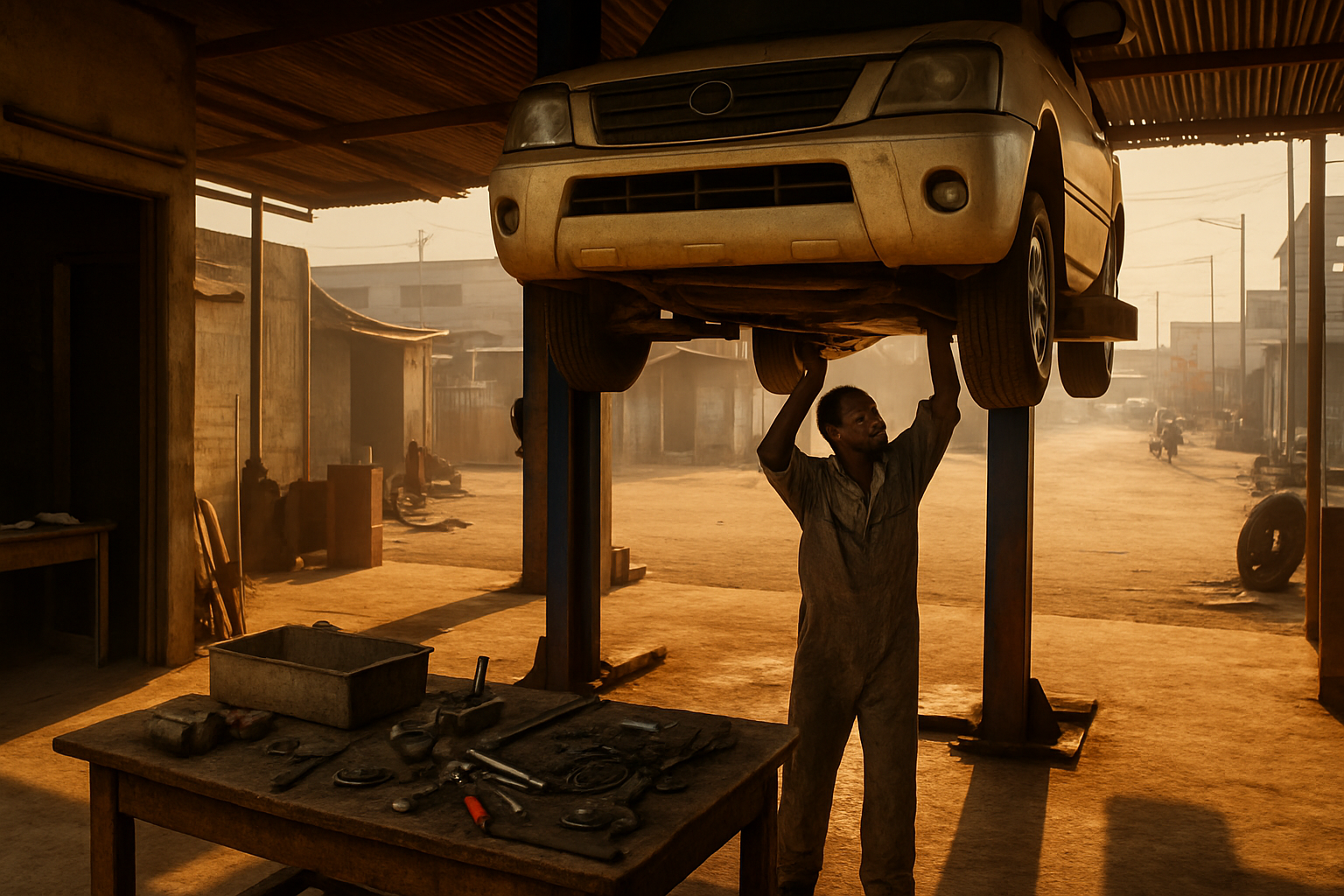
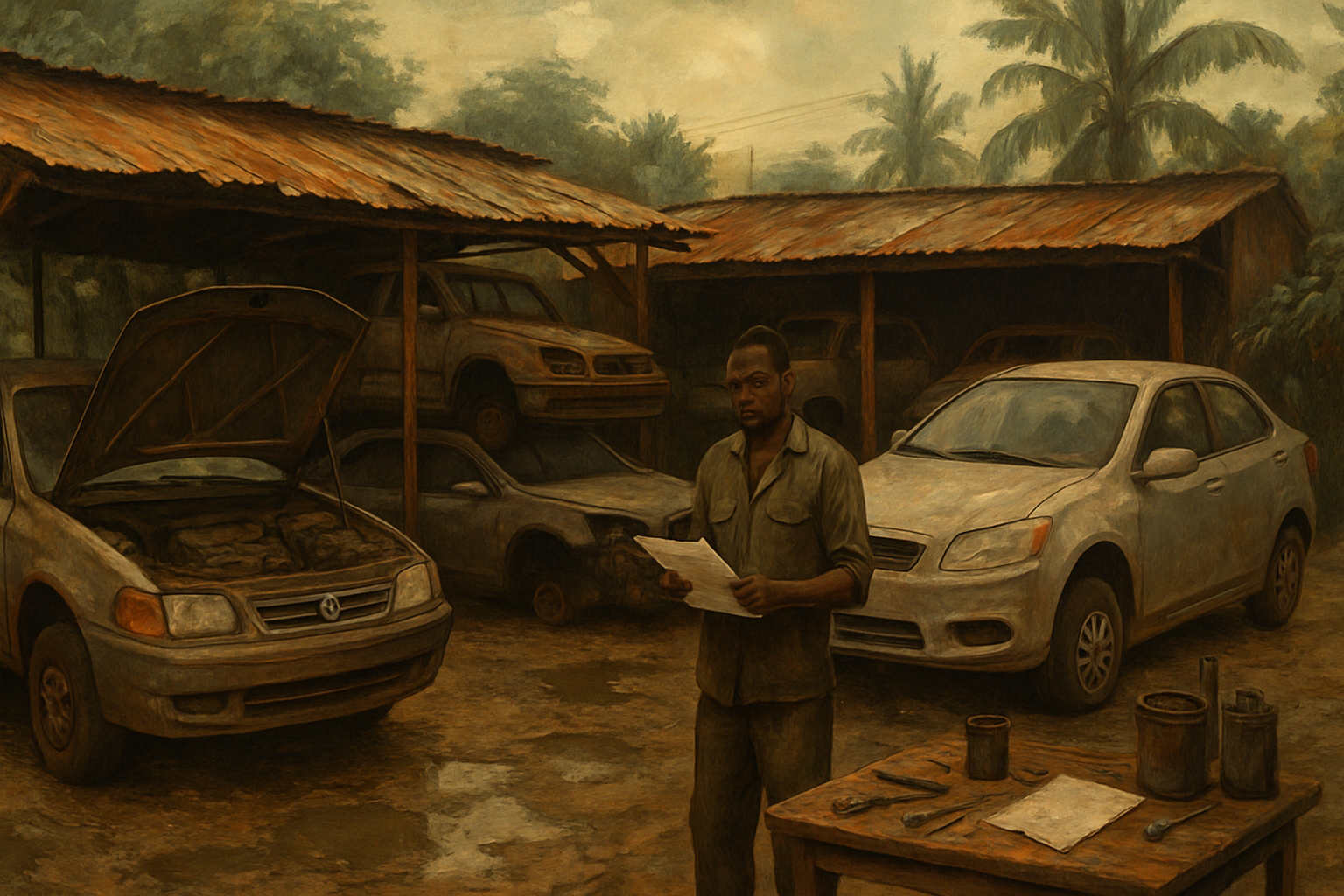
Jean-Paul Mbarga runs a small garage in Douala's Akwa district. Behind his workshop, six vehicles sit under a makeshift shelter — a 2008 Toyota Corolla with a seized engine, a Hyundai Accent with transmission problems, and four others. Combined, these cars represent nearly CFA 1.8 million in unpaid repair bills. The owners? Vanished after getting repair estimates, or simply stopped answering their phones after promising to "come back tomorrow" for three months running.
"I fix the car, customer says 'I'll bring money Friday,' then nothing," Jean-Paul explains, gesturing toward the abandoned fleet. "Now I have no space for paying customers, and I'm scared to touch these cars because what if the owner comes back angry?"
This scenario plays out in workshops across Cameroon daily. From Yaoundé to Bamenda, mechanics find themselves running unofficial car storage lots instead of profitable repair shops. The math is brutal: average repair bill CFA 350,000, storage space worth CFA 15,000 per month, and liability risks that keep shop owners awake at night.
Understanding Cameroon's Legal Framework for Vehicle Retention
The good news? Cameroon law actually protects mechanics more than most shop owners realize. Under the Civil Code and Commercial practices legislation, workshops have what's called a "mechanic's lien" — the right to hold a vehicle until payment is received.
Samuel Kouam, who operates three shops in Yaoundé, learned this the hard way after losing CFA 800,000 on a Range Rover repair in 2019. "I thought I had to release the car because the owner threatened legal action," he recalls. "My lawyer friend explained that mechanics have retention rights. Now every customer knows upfront — no payment, no car."
Your Legal Rights as a Mechanic in Cameroon
- Vehicle Retention: You can legally hold any vehicle until full payment is received
- Storage Charges: After 30 days, you can charge reasonable storage fees (typically CFA 2,000-5,000 per day)
- Parts Recovery: If a vehicle remains abandoned for 90+ days, you can recover costs by removing and selling parts used in repairs
- Disposal Rights: After six months with proper documentation, you can initiate disposal proceedings
However — and this is crucial — these rights only apply if you have proper documentation. Verbal agreements don't count. Your repair order must be written, signed, and include specific clauses about retention and storage.
The Smart Payment Structure That Prevents Abandonment
Marie-Claire Nkomo runs a transmission specialist shop in Bafoussam. Two years ago, she was losing CFA 1.2 million annually to abandoned vehicles. Today? Zero abandonments in the past 18 months. Her secret isn't complicated — it's a three-stage payment system she developed after watching too many customers disappear.
"First rule: no work starts without 60% deposit. Second rule: remaining 40% is due before keys are returned. No exceptions, no credit, no promises." — Marie-Claire Nkomo, Bafoussam
The Bafoussam Payment System
Marie-Claire's approach works because it shifts risk away from the shop:
- Diagnostic Fee (CFA 15,000-25,000): Non-refundable, paid upfront before any inspection
- Work Authorization Deposit (60% of estimate): Required before ordering parts or starting repairs
- Completion Payment (40% balance): Due on completion, before vehicle release
- Storage After Completion: CFA 3,000 per day after 72 hours
"Customers who can't pay 60% upfront usually can't pay the remaining 40% either," Marie-Claire explains. "This system filters out problem customers before I waste time and parts."
Documentation That Actually Protects You
Most Cameroon workshops use handwritten repair orders that wouldn't survive a legal challenge. After consulting with three different lawyers across Douala and Yaoundé, here's what your paperwork actually needs to include:
Essential Elements for Legal Protection
| Document Section | Required Information | Why It Matters |
|---|---|---|
| Customer Information | Full name, ID number, phone, address | Enables legal contact and enforcement |
| Vehicle Details | Make, model, year, VIN, license plate | Proves specific vehicle identity |
| Work Description | Specific repairs, parts list, labor hours | Justifies charges in disputes |
| Payment Terms | Deposit amount, balance due, payment deadline | Establishes payment obligations |
| Storage Clause | Daily storage fee after completion | Protects against long-term occupation |
| Abandonment Terms | Timeline for disposal after non-payment | Enables legal disposal of abandoned vehicles |
The document must be in both French and English if your customer base is mixed, and both parties must sign each page. Keep photocopies and store originals in a safe location.
The Contact Strategy That Actually Works
When a customer goes silent, most mechanics give up after a few phone calls. That's a mistake. Patrick Essomba in Limbé recovered CFA 650,000 from seemingly hopeless cases using a systematic contact approach.
"You have to understand Cameroon culture," Patrick explains. "Direct confrontation makes people hide. But systematic, polite pressure works. I recovered money from customers who hadn't answered calls for six months."
Patrick's 30-Day Contact System
- Days 1-3: Phone calls, SMS in French and English
- Days 4-7: WhatsApp messages with photos of completed work
- Days 8-14: Contact through mutual connections, family, or friends
- Days 15-21: Visit customer's home or workplace if local
- Days 22-30: Formal written notice delivered to last known address
"The key is documentation. Every phone call, every message, every visit gets recorded with date and time. If you end up in court or disposing of the vehicle, this record proves you made reasonable efforts to contact the owner."
Storage Fees: Your Legal Right to Compensation
After 30 days, Cameroon law allows mechanics to charge reasonable storage fees. But "reasonable" has specific meaning — you can't charge CFA 20,000 per day and expect a court to support you.
Based on discussions with legal experts and successful recoveries, here are defensible storage rates:
- Small cars (sedan, hatchback): CFA 2,000-3,000 per day
- Medium vehicles (SUV, pickup): CFA 3,000-4,000 per day
- Large vehicles (trucks, buses): CFA 4,000-5,000 per day
These rates reflect actual costs: security, insurance, space opportunity cost, and administrative time. Document your reasoning for the specific rate charged.
When to Scrap: The 90-Day Decision Point
After three months of non-payment and documented contact attempts, you face a decision: continue storing or begin recovery procedures. This is where many shops get stuck, afraid of legal consequences.
Roger Tchoumi in Maroua has successfully processed 12 abandoned vehicles over four years, recovering an average of CFA 180,000 per vehicle through parts sales. "The secret is following the process exactly," he emphasizes. "Rush it, and you're vulnerable to legal action. Follow the steps, and you're protected."
The Legal Disposal Process
- Month 3: Send formal abandonment notice by registered mail
- Month 4: File abandonment declaration with local authorities
- Month 5: Advertise intent to dispose in local newspaper (required by law)
- Month 6: Begin disposal — parts sales, scrap metal, or auction
"I've never had a legal challenge following this process," Roger notes. "Customers who abandon cars usually don't have money for lawyers anyway."
The Hidden Costs of Doing Nothing
Many shops underestimate the true cost of abandoned vehicles. It's not just the unpaid repair bill — it's the compounding losses from valuable yard space sitting idle.
Consider Jean-Baptiste Fouda's situation in Bertoua. He calculated that each abandoned vehicle costs his shop:
- Space opportunity cost: CFA 45,000/month (could service 3 additional vehicles)
- Security and insurance: CFA 12,000/month
- Administrative time: CFA 8,000/month (calling, documenting, worrying)
- Deterioration risk: CFA 25,000/month (rust, theft, weather damage)
"After six months, I'm losing more money storing the car than the original repair bill," Jean-Baptiste realized. "Now I start disposal procedures at 90 days, no exceptions."
Success Stories: Recovery Without Courts
The most encouraging aspect of this problem is how many shops have solved it completely. Here are three different approaches that work:
The Douala High-Volume Approach
Alain Kamdem operates near the port and sees 200+ vehicles monthly. His system: strict payment terms, immediate storage fees, and rapid disposal. Result: zero abandoned vehicles in 2023, CFA 2.8 million recovered through the disposal of 15 vehicles accumulated before implementing his system.
The Yaoundé Relationship Approach
Francine Bella focuses on building customer relationships and preventing abandonment through communication. Her innovation: SMS payment reminders starting three days before completion. Result: 95% first-contact payment rate, only two abandoned vehicles in three years.
The Bamenda Legal Approach
Ernest Njoh partnered with a local lawyer to create bulletproof documentation and rapid recovery procedures. His system recovers money faster than others but requires more paperwork. Result: average recovery time of 45 days, CFA 1.1 million recovered in 2023.
Building Your Recovery System
The key to solving abandoned vehicle problems isn't any single tactic — it's building a complete system that prevents abandonment and recovers money when it happens.
Week 1: Documentation Overhaul
- Create proper work orders with all legal elements
- Implement deposit requirements before starting work
- Set up storage fee structure
- Train staff on new procedures
Week 2: Contact Systems
- Set up systematic customer contact procedures
- Create document templates for formal notices
- Establish relationships with reliable process servers
- Begin proper record-keeping for all communications
Week 3: Legal Preparation
- Research local abandonment laws and procedures
- Identify newspaper for required legal advertisements
- Establish relationship with scrap dealers or parts buyers
- Create disposal timeline and stick to it
"The shops that solve this problem don't just recover money — they eliminate the stress and wasted space that comes with abandoned vehicles. It's like getting your business back." — Samuel Kouam, Yaoundé
The Bottom Line for Cameroon Shops
Abandoned vehicles represent one of the largest unrecognized profit drains in Cameroon's automotive service industry. The typical shop loses CFA 800,000-2 million annually to this problem, but the solution isn't complicated — it just requires systematic implementation of legal protections and recovery procedures.
The mechanics who have solved this problem share common characteristics: they document everything, they enforce payment terms consistently, and they view vehicle disposal as a business process, not a last resort. Most importantly, they've stopped thinking of abandoned vehicles as unavoidable losses and started treating them as recoverable assets.
Whether you're dealing with one abandoned vehicle or six, the framework is the same: legal documentation, systematic contact, proper storage fees, and timely disposal. The choice is between continuing to run an expensive car storage facility or operating a profitable repair shop.
The money is there to be recovered. The question is whether you'll implement the systems to get it back.