The Day Fake Brake Pads Nearly Shut Down Paul's Shop
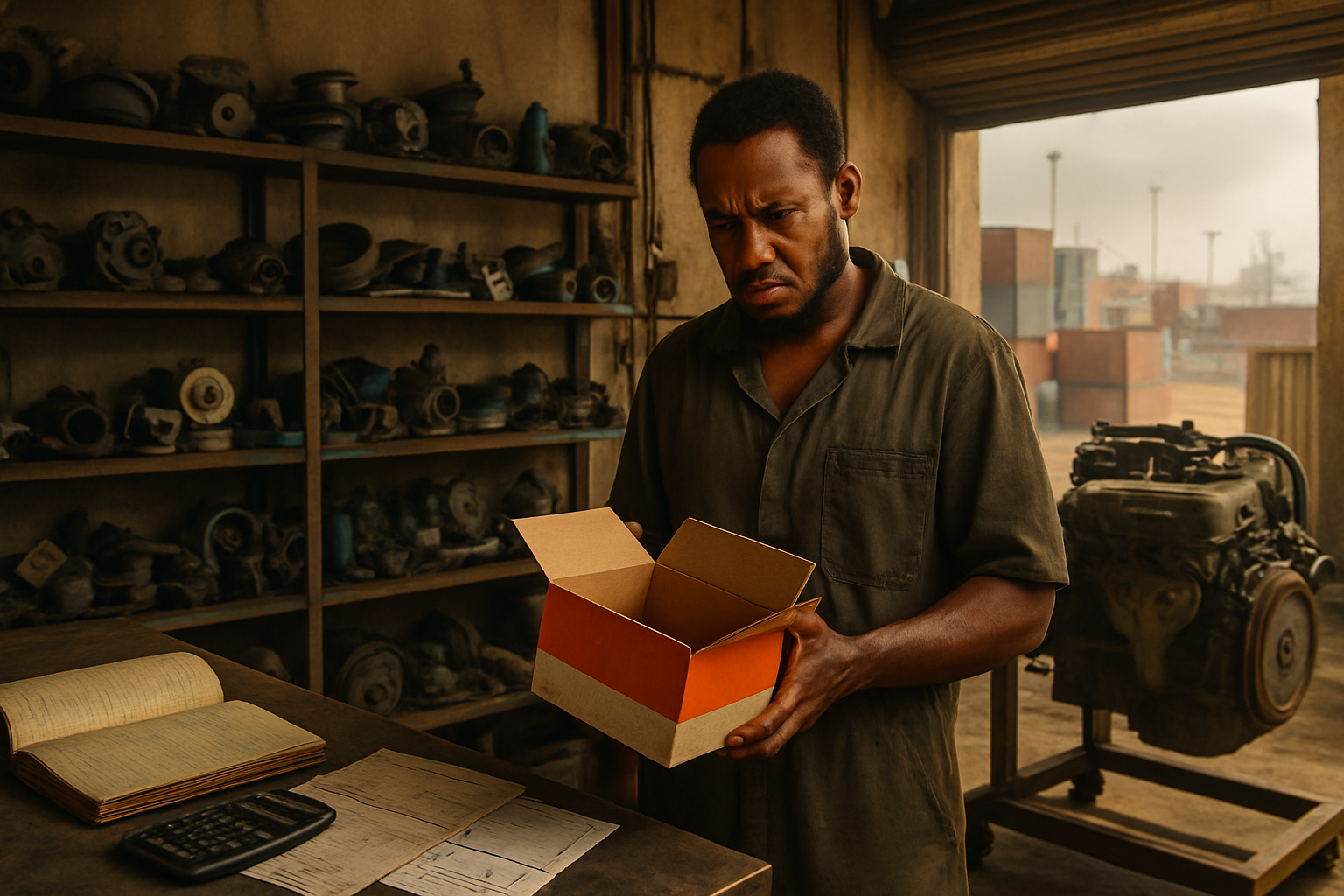
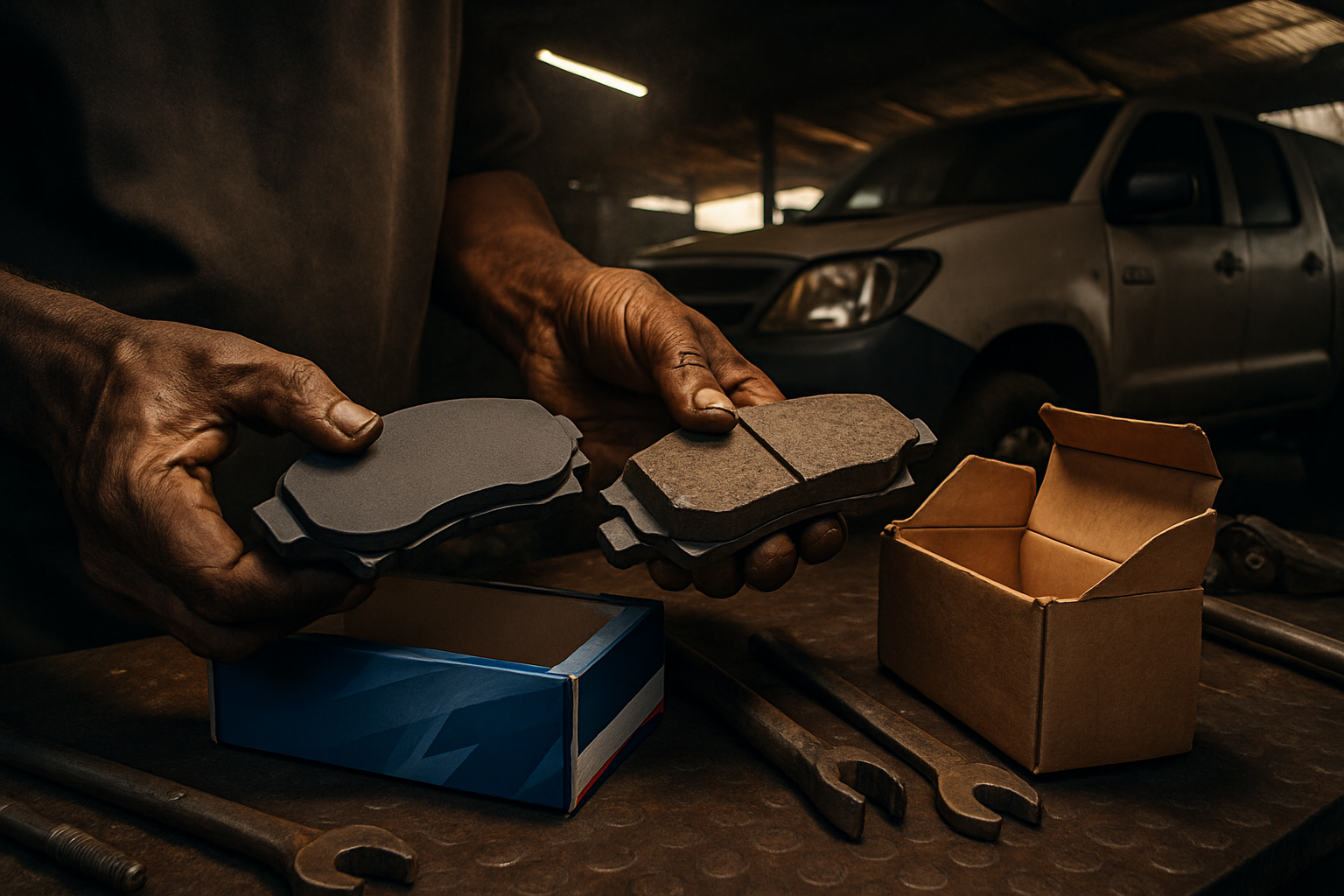
Paul Mbarga runs a small garage in Douala's Bonaberi district. Last October, a regular customer brought in his Toyota Hilux for brake pad replacement. Paul bought what looked like genuine Bosch pads from a supplier near the central market — the packaging was perfect, the price seemed reasonable at CFA 25,000 instead of the usual CFA 35,000.
Three weeks later, the customer was back. The brake pads had disintegrated, leaving metal grinding against the rotors. The repair bill: CFA 180,000. The customer refused to pay and left scathing reviews on local Facebook groups. Word spread quickly in Douala's tight-knit community. Within a month, Paul lost four regular customers who'd heard about the "faulty brakes at Mbarga's garage."
"I thought I was getting a good deal," Paul told me when I visited his shop last month. "Instead, I learned that saving CFA 10,000 on parts cost me CFA 400,000 in lost business and reputation damage."
The Real Cost of Counterfeit Parts in Cameroon
Paul's story isn't unique. Across Cameroon's fragmented automotive supply chain, shop owners face a daily gamble: genuine parts that eat into profit margins, or suspiciously cheap alternatives that might be sophisticated counterfeits.
The numbers are staggering. According to mechanics I've spoken with in Yaoundé and Douala, roughly 30-40% of automotive parts in local markets are either counterfeit or substandard. The problem is especially acute with:
- Brake components: Fake pads often use low-grade friction material that wears out in weeks instead of months
- Bearings: Counterfeit wheel bearings fail catastrophically, sometimes causing accidents
- Batteries: Fake batteries labeled as 70Ah might actually deliver 35Ah or less
- Oil filters: Poor-quality filter media that doesn't catch contaminants
- Alternators: Remanufactured units sold as new, with recycled components that fail quickly
But here's what many shop owners don't realize: when counterfeit parts fail, the customer blames you, not the part supplier. You become liable for the repair costs, refunds, and reputation damage.
The High-Risk Markets and Suppliers
During my visits to automotive markets in Yaoundé and Douala, certain patterns emerged. Samuel Teto, who's been selling parts in Douala's central market for 15 years, was surprisingly candid about the counterfeit problem.
"The fakes come through different channels," Samuel explained. "Some arrive mixed with genuine parts in containers from Dubai. Others come overland from Nigeria or Chad. The problem is, even honest suppliers sometimes don't know they're selling fakes."
Red Flag Locations and Scenarios
Based on conversations with mechanics and parts dealers, these situations warrant extra scrutiny:
- Roadside vendors selling parts from pickup trucks or small stalls
- Suppliers offering 30-50% discounts on normally expensive parts without clear explanation
- New suppliers with no established reputation in the community
- Parts without proper documentation or certificates of authenticity
- Mixed inventories where genuine and fake parts are sold side by side
"I learned to ask tough questions," says Marie Fonkeng, who runs a garage in Yaoundé's Mfoundi district. "If a supplier can't explain why his Bosch alternator costs CFA 40,000 when everyone else sells them for CFA 65,000, I walk away."
How to Spot Counterfeits: A Mechanic's Guide
The counterfeiters are getting sophisticated, but there are still telltale signs if you know what to look for.
Packaging Red Flags
Genuine parts packaging:
- Sharp, high-quality printing with consistent colors
- Holographic security features or watermarks
- QR codes or batch numbers that can be verified online
- Proper grammar and spelling in multiple languages
- Consistent font sizes and spacing
Counterfeit packaging often shows:
- Blurry or pixelated logos
- Slight color variations from genuine packaging
- Spelling mistakes or poor grammar
- Missing or non-functional QR codes
- Cheap, flimsy cardboard or plastic
Physical Inspection Techniques
Jean-Claude Abanda, a veteran mechanic in Douala with 20 years of experience, shared his inspection routine:
"Weight is the first clue," Jean-Claude demonstrated with two supposedly identical brake rotors. "This genuine one weighs 8.2kg. This fake weighs 6.8kg — they used thinner metal and cheaper alloys."
| Component | Genuine Characteristics | Counterfeit Warning Signs |
|---|---|---|
| Brake Pads | Consistent friction material, proper backing plate thickness | Uneven material, thin backing plates, unusual smell |
| Bearings | Smooth operation, proper lubrication, clear markings | Rough rotation, insufficient grease, poorly stamped numbers |
| Batteries | Heavy weight, solid terminals, clear date codes | Light weight, flimsy terminals, missing or fake date codes |
| Oil Filters | Quality filter media, proper seal materials | Cheap paper media, rubber seals that feel soft or sticky |
The Legal and Financial Reality
Cameroon's consumer protection laws place liability squarely on service providers. When counterfeit parts fail, customers can legally demand full compensation from the garage that installed them — not the parts supplier.
I spoke with Advocate Christine Njoya, who specializes in consumer law in Yaoundé. "The garage owner is considered the professional who should have verified the parts' authenticity," she explained. "Courts typically side with consumers who can prove they received substandard service."
The financial impact goes beyond immediate repair costs:
- Direct costs: Free repairs, part replacements, labor costs
- Reputation damage: Lost customers, negative word-of-mouth
- Legal fees: If customers pursue formal complaints
- Insurance implications: Some policies exclude coverage for counterfeit parts
Francine Ekomo learned this the hard way. Her garage in Yaoundé's Essos district faced a CFA 2.3 million lawsuit when a counterfeit alternator failure left a customer stranded during a business trip. "The court didn't care that I bought the part in good faith," Francine said. "They ruled I should have verified it was genuine."
Verification Strategies That Actually Work
Smart mechanics have developed practical systems to verify parts authenticity before installation.
Direct Manufacturer Verification
Many major brands now offer verification services:
- Bosch: Online authentication system using serial numbers
- Mann-Filter: QR code verification through their mobile app
- NGK: Security features on packaging that can be verified online
- Continental: Holographic labels with unique codes
"I spend 5 minutes verifying every major part before installation," says Robert Bassong, who runs a successful garage in Douala's Makepe district. "It's saved me from installing fakes dozens of times."
Building Relationships with Trusted Suppliers
The most successful garages develop relationships with 2-3 reliable suppliers rather than chasing the cheapest prices.
"I pay 15% more to my main supplier, but I sleep well at night," explains Emmanuel Fouda, whose garage in Yaoundé has built a reputation for reliability. "He provides authenticity certificates and stands behind every part. When something does go wrong, he handles the replacement costs."
Which Parts Are Worth the Premium?
Not every component needs to be premium genuine. Experienced mechanics develop a risk-based approach:
Critical Components (Always Buy Genuine)
- Brake pads and rotors: Safety critical, high liability risk
- Wheel bearings: Failure can cause accidents
- Timing belts: Failure can destroy engines
- Airbag components: Legal requirements for genuine parts
Medium Risk (Verify Carefully)
- Alternators and starters: Failures strand customers but aren't dangerous
- Water pumps: Can cause expensive engine damage if they fail
- Fuel pumps: Critical for vehicle operation
Lower Risk (Quality Aftermarket Acceptable)
- Air filters: Easy to inspect, low failure risk
- Spark plugs: Failures are obvious and non-dangerous
- Wiper blades: Performance issues are immediately apparent
Building Your Counterfeit Detection System
Successful garages treat parts authentication as a business process, not an afterthought.
Pre-Purchase Checklist
- Supplier verification: How long have they been in business? Can they provide references?
- Price reality check: If it's 40% cheaper, there's usually a reason
- Documentation review: Authentic certificates, proper invoices
- Physical inspection: Weight, finish quality, packaging integrity
- Online verification: Use manufacturer tools when available
Customer Communication
Smart mechanics also educate customers about parts choices. Marie Fonkeng explains her approach: "I show customers the price difference and explain the risks. Most choose genuine parts when they understand the liability issues. Those who insist on cheap parts sign a waiver acknowledging the risks."
The True Cost of Fake Parts
Let's return to Paul's story from Douala. After the brake pad incident, he implemented a strict authentication system. His parts costs increased by about 12%, but his customer retention improved dramatically.
"I track everything now," Paul showed me his records. "Last year, I had zero comebacks on major repairs. My customer base is growing because people trust that when I fix something, it stays fixed."
The math is clear: saving CFA 50,000 on questionable brake components can easily cost CFA 500,000 in repairs, refunds, and lost business. In Cameroon's competitive automotive service market, reputation is everything.
For garage owners navigating the counterfeit minefield, the solution isn't complicated — it's about building systems, relationships, and expertise to consistently identify authentic parts. Your customers' safety and your business's survival depend on it.