English
 Español
 Deutsch
 FI
FI
 FR
FR
 AR
AR
 ZH
ZH
The S$100,000 Decision That Changes Everything
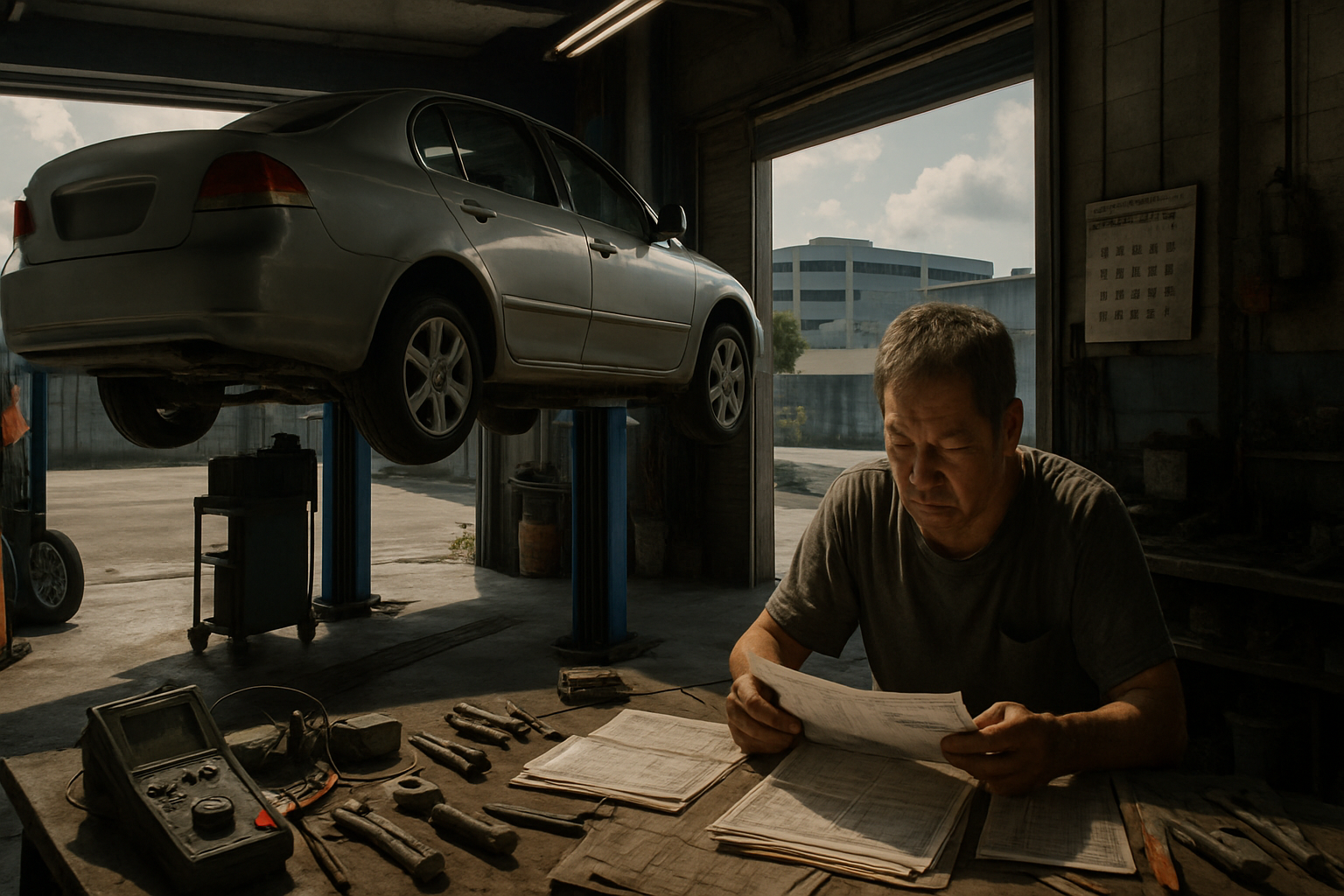
David Lim runs a workshop in Sin Ming and watched his regular customer base shrink by 30% last year. Not because his work wasn't good — his customers loved him. The problem? COE renewal season. "My customers would disappear for months, then suddenly call asking for a full inspection report. Half the time, they'd already decided to scrap the car," David tells me over coffee near his shop.
He's not alone. Across Singapore, workshop owners are struggling with the same pattern: customers vanish during COE renewal periods, only to resurface at the last minute asking for rush jobs or comprehensive reports they need for selling. Many never come back at all.
The mathematics are brutal. With COE premiums hitting S$106,000 for Category A cars and renewal cycles creating massive anxiety, Singapore drivers are making emotional, often rushed decisions about their vehicles. And if your workshop isn't positioned correctly during this critical period, you're losing customers to competitors who understand the psychology better.
Inside the Customer's Mind: The COE Renewal Timeline
Understanding when customers actually think about COE renewal versus when they act is crucial. Margaret Chen, who owns two cars approaching renewal, explains her thought process: "I started worrying about it eight months before expiry, but I didn't actually do anything until three months out. That's when the panic really set in."
This creates three distinct customer phases:
Phase 1: The Worry Stage (8-6 months before expiry)
Customers know renewal is coming but haven't acted. They're reading forums, checking COE prices, but not yet contacting workshops. This is when they're most receptive to educational content and gentle reminders.
Phase 2: The Action Stage (5-3 months before expiry)
Reality hits. Customers start calling workshops for quotes on major repairs, comprehensive inspections, and honest assessments about whether renewal makes financial sense. This is your golden window.
Phase 3: The Panic Stage (2-0 months before expiry)
Customers are making final decisions, often emotional ones. They need fast turnarounds, documentation for sale, or emergency repairs to pass VICOM. Margins are highest here, but customer relationships are most strained.
The trap most workshops fall into? Waiting for customers to call during Phase 3, when they're already stressed and price-shopping aggressively. Smart workshops reach out during Phase 2, when customers are still rational and relationship-focused.
The "Suddenly Important" Repairs: What Customers Actually Fix
Kenny Tan runs a workshop in Kaki Bukit and has tracked which repairs customers suddenly prioritize before COE renewal. "It's interesting — they'll ignore a noisy bearing for months, then suddenly it becomes urgent when renewal approaches. Not because it's worse, but because they're thinking about resale value."
Based on conversations with five workshop owners across Singapore, here are the issues that transform from "can wait" to "must fix" during COE renewal periods:
Cosmetic Issues That Affect Value
- Paint scratches and minor dents: Ignored for years, suddenly worth S$800-1,200 to fix
- Worn interior trim: Dashboard cracks, seat wear that customers want addressed for photos
- Headlight restoration: Cloudy lenses that suddenly matter for resale appeal
Mechanical Problems Customers Finally Address
- Air conditioning issues: Weak cooling that becomes a deal-breaker for potential buyers
- Suspension noise: Creaks and rattles that embarrass customers during test drives
- Engine mounts: Vibration issues that suggest expensive problems to buyers
Preventive Maintenance They Should Have Done
- Transmission service: Suddenly important when customers realize smooth shifting affects value
- Brake system refresh: Not just pads, but fluid changes and component inspection
- Engine diagnostics: Clearing codes and ensuring everything runs perfectly
The key insight? Customers aren't suddenly discovering these problems — they're suddenly motivated to fix them. Your job is being ready with the right services at the right time.
Pricing Pre-COE Packages: The Goldilocks Problem
Vincent Ng learned this lesson the hard way. His Ubi workshop offered comprehensive pre-renewal inspections for S$150, thinking the low price would attract customers. "I was busy but making no money. Customers assumed cheap meant basic, so they'd take my report and go elsewhere for the actual work."
After adjusting his approach, Vincent now offers tiered packages that solve the psychological pricing problem:
| Package | Price (SGD) | What's Included | Target Customer |
|---|---|---|---|
| Basic Assessment | S$280 | Visual inspection, VICOM prep, basic report | Definitely selling/scrapping |
| Renewal Ready | S$450 | Full diagnostic, minor adjustments, detailed report | Likely renewing |
| Resale Premium | S$680 | Comprehensive service, cosmetic fixes, presentation prep | Selling for maximum value |
"The middle package sells best because customers feel they're being responsible without overspending," Vincent explains. "But here's the trick — each package includes a credit toward future work. If they choose the Basic and then want repairs, they get S$280 off. Keeps them in-house."
The Psychology of Package Pricing
Singapore customers are value-conscious but suspicious of prices that seem too low. Workshop owner Sarah Lim discovered this when she tested different price points: "At S$120, customers worried we'd miss something important. At S$600, they felt gouged. S$450 feels like professional service without premium pricing."
The key is building packages that feel comprehensive but not overwhelming. Include services customers understand (brake check, battery test) alongside technical diagnostics they can't do themselves (computer scans, emissions testing).
Software Solutions: Turning Data Into Dollars
Most Singapore workshops track basic customer information, but few are using their data strategically for COE renewal opportunities. Ahmad Rahman changed this at his workshop using systematic customer management.
"We input every customer's COE expiry date and set automatic reminders," Ahmad explains. "Three months out, they get a friendly call. Two months out, we send a detailed service proposal. One month out, we offer emergency booking slots."
Setting Up Proactive COE Tracking
Modern workshop management software can automate much of this process, but the setup requires thought:
- Data capture: Record COE expiry dates during every service visit
- Customer segmentation: Flag high-value customers for personal calls, others for email campaigns
- Service history analysis: Identify customers with pending maintenance who might bundle services
- Booking priority: Reserve slots 2-3 months ahead for COE renewal customers
The payoff is significant. Ahmad's proactive approach increased his COE-related revenue by 60% in the first year. "Customers appreciate the heads-up, and I'm not scrambling to fit everyone in during the last month."
The Communication Timeline
"Don't just remind customers their COE is expiring — they already know that. Remind them why they should trust you with the decision-making process." — Workshop owner in Toa Payoh
Effective COE renewal communication follows a specific pattern:
- Month 6: Educational content about renewal options and timelines
- Month 4: Invitation to schedule inspection with early bird pricing
- Month 2: Direct outreach with specific service recommendations based on vehicle history
- Month 1: Emergency service availability and rush pricing information
Competing With Dealerships Without Racing to the Bottom
The biggest threat during COE renewal isn't other independent workshops — it's dealerships offering comprehensive renewal services with financing options. But independent workshops have advantages they often don't leverage properly.
Peter Koh runs a workshop that successfully competes with dealership renewal packages by focusing on what dealerships can't offer: flexibility and personal relationships.
Your Competitive Advantages
- Flexible timing: Dealerships work on appointment schedules; you can accommodate urgent needs
- Transparent pricing: No hidden fees or mandatory add-ons
- Personal relationships: You know the customer's driving habits and service history
- Honest assessments: No sales pressure to renew when scrapping makes more sense
"Customers come to me because they want straight talk," Peter explains. "Dealerships have quotas and renewal targets. I just want to help them make the right decision for their situation."
Services Dealerships Can't Match
Independent workshops can offer specialized services that dealerships either won't provide or charge premium rates for:
- Third-party inspections: Unbiased assessments when customers are considering private sales
- Modification documentation: Proper records of aftermarket parts for insurance and resale
- Emergency repairs: Weekend and after-hours service for urgent VICOM issues
- Cost-effective alternatives: Refurbished parts and alternative solutions dealerships won't suggest
Documentation: The Hidden Revenue Stream
One revenue opportunity most workshops miss entirely: proper documentation for customer resale confidence. Tony Lim discovered this accidentally when a customer asked for detailed service records to support a higher selling price.
"The buyer was willing to pay S$3,000 more because we had documented everything properly," Tony recalls. "Word spread, and now customers specifically request our 'resale documentation service.'"
What Proper Documentation Includes
Effective service documentation goes beyond basic repair records:
- Timeline of major services: When and why work was performed
- Parts authenticity records: Documentation of genuine vs. aftermarket components
- Preventive maintenance compliance: Proof of regular servicing and care
- Problem resolution history: How issues were identified and addressed
The documentation service itself becomes a revenue stream. Tony charges S$150 for comprehensive service history compilation and formatting for resale use. "Takes about an hour, customers are happy to pay, and it keeps them loyal because they need ongoing documentation."
Digital vs. Physical Records
Singapore customers appreciate both digital convenience and physical backup documentation. Smart workshops provide both:
- Digital dashboard: Customers can access service history online
- Physical service book: Stamped and signed records for traditionalist buyers
- Photo documentation: Before/after images of major work
- Diagnostic printouts: Computer scan results showing vehicle health
The Follow-Up Strategy That Keeps Customers
The COE renewal period doesn't end when customers make their decision — that's when the real opportunity begins. Workshop owners who understand this keep customers regardless of their renewal choice.
For Customers Who Renew
Michelle Wang tracks customers who renew their COE and provides ongoing support: "They just spent over S$100,000 to keep their car. They're highly motivated to maintain it properly now."
Post-renewal services that generate ongoing revenue:
- Annual maintenance packages: Comprehensive care to protect their investment
- Performance optimization: Getting maximum years from the renewed registration
- Priority booking: Guaranteed service slots for valued customers
- Warranty extensions: Coverage for major work performed during renewal prep
For Customers Who Sell
Even customers who don't renew can remain valuable if approached correctly:
- New vehicle preparation: Pre-delivery inspections for replacement cars
- Referral programs: Incentives for recommending friends and family
- Consultation services: Paid advice on vehicle selection and evaluation
- Emergency services: Support for their new vehicle when regular dealer isn't available
Measuring Success: Metrics That Matter
Robert Chen transformed his workshop's COE renewal approach by tracking the right metrics. "I used to just count how many renewal inspections we did. Now I measure customer retention through the entire renewal cycle."
Key Performance Indicators
| Metric | Good Performance | What It Measures |
|---|---|---|
| Proactive Contact Success | 70%+ response rate | Effectiveness of early outreach |
| Package Upgrade Rate | 40%+ choose mid-tier or higher | Pricing and packaging effectiveness |
| Post-Decision Retention | 85%+ remain customers | Long-term relationship management |
| Revenue per COE Customer | S$800+ average | Overall monetization success |
"The last metric surprised me," Robert admits. "Customers who come for COE renewal actually spend more than regular service customers because they're thinking about long-term vehicle ownership."
The Technology Integration Reality
Workshop management software makes COE renewal tracking possible, but implementation requires realistic expectations. James Teo spent months perfecting his system: "The software is only as good as your data input discipline."
Essential Software Features for COE Management
- Automated reminders: Email and SMS campaigns based on expiry dates
- Service history integration: Connecting past work to renewal recommendations
- Pricing flexibility: Package pricing with automatic credit applications
- Appointment prioritization: Booking preferences for high-value customers
The key is starting simple and building complexity gradually. "Begin with basic COE date tracking and automated reminders," James suggests. "Add features as your team gets comfortable with the system."
Common Mistakes That Cost Customers
After interviewing workshop owners across Singapore, several patterns of customer loss emerged. Avoiding these mistakes is often more important than implementing new strategies.
Timing Errors
- Contacting too early: Six months out, customers aren't ready to act
- Waiting too late: One month out, customers are already committed elsewhere
- Generic timing: Not adjusting outreach based on individual customer behavior
Pricing Mistakes
- Underpricing to compete: Customers associate low prices with low quality
- Complex pricing: Too many options confuse rather than help customers
- Hidden costs: Surprise charges destroy trust during stressful periods
Communication Failures
- Technical language: Overwhelming customers with diagnostic details
- Pressure tactics: Pushing renewal when scrapping makes more sense
- Poor documentation: Inadequate records that don't support customer decisions
Building Your COE Renewal System
Successful COE renewal programs don't happen overnight. Based on successful workshop implementations, here's a practical rollout timeline:
Month 1: Data Foundation
- Audit existing customer records for COE expiry dates
- Implement systematic data capture for all future customers
- Choose and configure workshop management software
Month 2: Package Development
- Develop tiered service packages with clear value propositions
- Train staff on package presentation and upselling
- Create documentation templates for customer reports
Month 3: Communication Systems
- Design email and SMS templates for different stages
- Set up automated reminder systems
- Train staff on proactive customer outreach
Month 4: Launch and Optimize
- Begin proactive customer contact for upcoming renewals
- Monitor response rates and adjust messaging
- Collect feedback and refine service offerings
The investment in time and systems pays dividends quickly. Workshop owners who implement systematic COE renewal programs typically see 40-60% increases in revenue per customer during renewal periods, with significantly higher customer retention rates.
The Competitive Advantage of Being Proactive
Singapore's automotive service industry is increasingly competitive, but COE renewal periods create temporary monopoly situations. Customers facing renewal decisions are less price-sensitive and more relationship-focused than during routine maintenance.
Workshop owners who master COE renewal customer management gain sustainable competitive advantages that extend far beyond individual renewal cycles. They build deeper customer relationships, increase average transaction values, and create predictable revenue streams that help weather Singapore's challenging automotive service market.
The key insight? COE renewal isn't just a service opportunity — it's a customer retention strategy that determines which workshops thrive and which merely survive in Singapore's evolving automotive landscape.