English
 Español
The AI Revolution in Auto Repair: Why Small Shops Can't Afford to Wait
The automotive repair industry is experiencing a technological transformation that's reshaping how small auto shops operate. In 2026, artificial intelligence isn't just a buzzword reserved for tech giants—it's becoming an essential tool for independent mechanics and shop owners across Houston, Chicago, Miami, and beyond. From diagnostic accuracy to customer service efficiency, AI is leveling the playing field between small shops and large dealership service centers.
Small auto repair shops have always competed on personal service, expertise, and community relationships. Now, with AI integration, these shops can combine their human touch with cutting-edge technology to deliver faster, more accurate, and more profitable services. The shops that embrace these AI tools today are positioning themselves as industry leaders for tomorrow.
1. AI-Powered Diagnostic Tools: Getting Under the Hood Faster
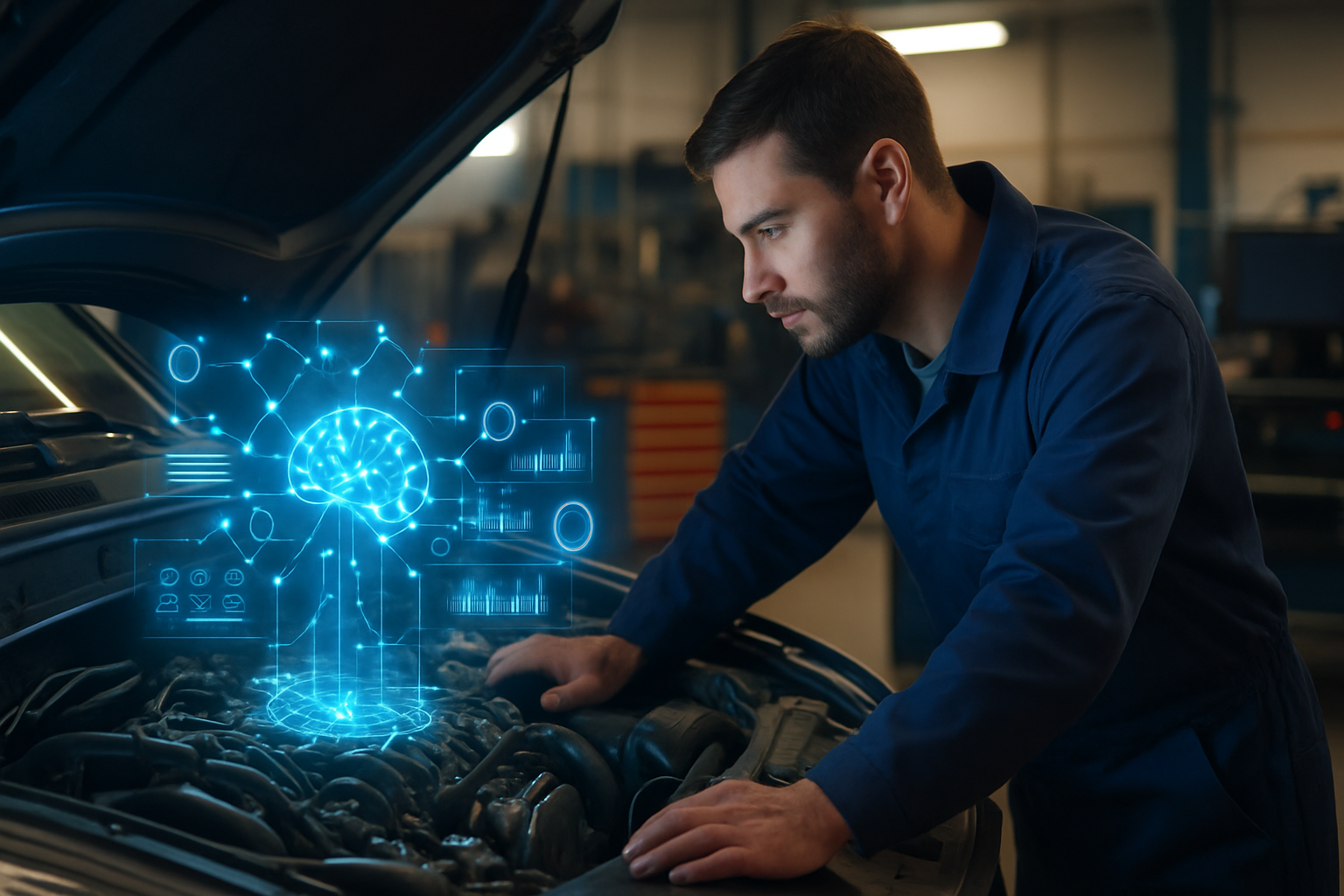
Traditional diagnostic methods often involve time-consuming trial-and-error approaches, especially when dealing with complex electrical systems in modern vehicles. AI-powered diagnostic tools are changing this landscape by analyzing vehicle data patterns and cross-referencing symptoms with vast databases of repair histories.
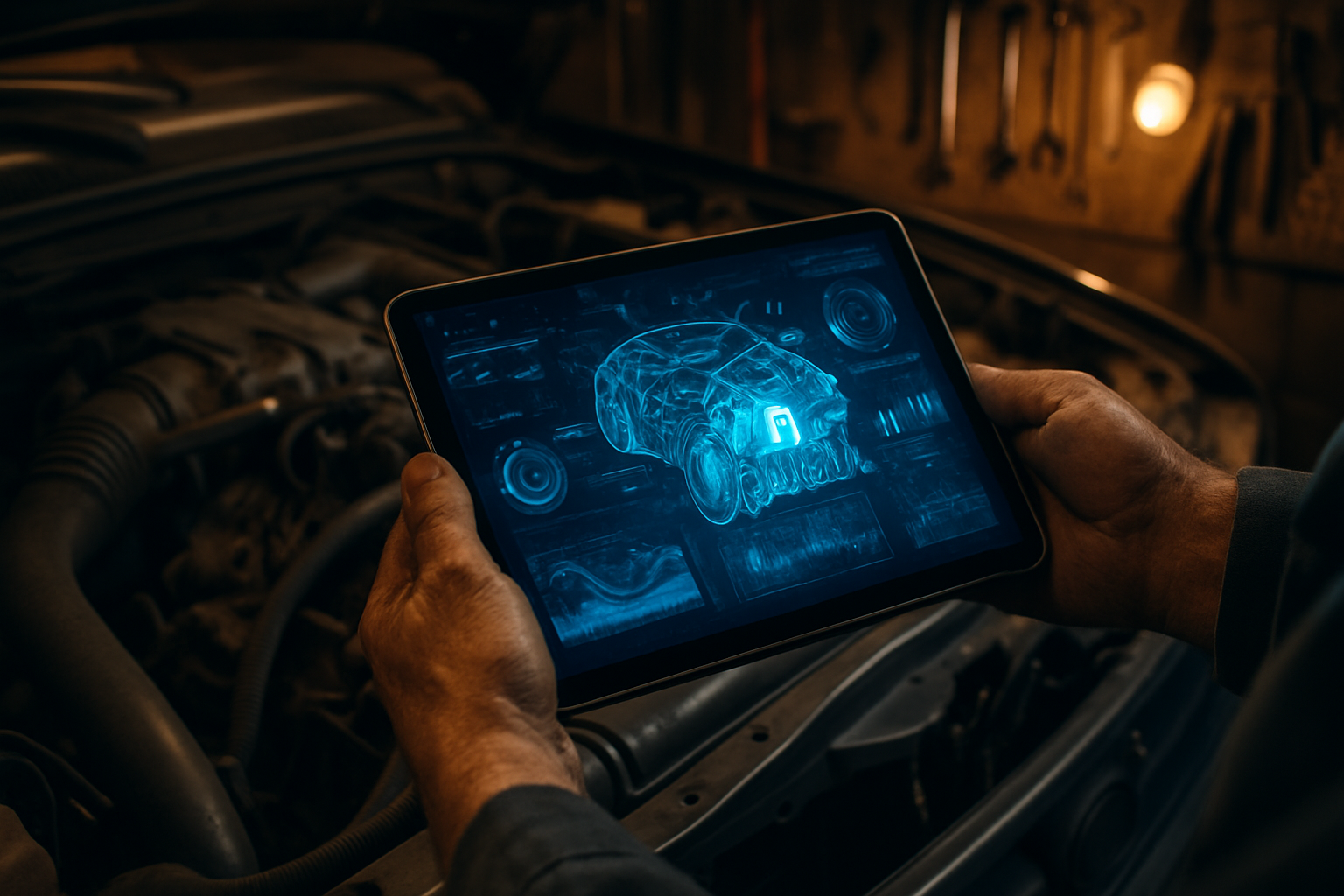
Modern AI diagnostic systems can process OBD-II codes, sensor readings, and even audio signatures to pinpoint issues with remarkable accuracy. When a customer brings in their F-150 with an intermittent engine problem, AI can analyze historical data from similar trucks, weather patterns, and even driving habits to suggest the most likely root causes.
AI diagnostic tools are reducing diagnostic time by up to 40% while increasing first-time fix rates to over 85% in shops that have adopted these technologies.
Real-World Implementation
Small shops in Dallas and Los Angeles are already seeing the benefits. Instead of spending hours troubleshooting a mysterious check engine light, mechanics can input symptoms into AI-powered systems that instantly provide ranked lists of potential issues, complete with repair procedures and parts requirements.
These systems learn from each repair, building institutional knowledge that traditionally walked out the door when experienced mechanics retired. Now, even newer technicians can benefit from decades of collective diagnostic experience.
2. Intelligent Inventory Management: Never Run Out of Critical Parts Again
Inventory management has long been a challenge for small auto shops. Too much inventory ties up cash flow, while too little means customers wait for parts and potentially take their business elsewhere. AI is solving this dilemma through predictive analytics and smart ordering systems.
AI inventory systems analyze historical repair data, seasonal trends, local vehicle demographics, and even economic indicators to predict parts demand. If your shop services a lot of Silverados in a construction-heavy area, the system might predict higher demand for brake components and suspension parts during busy construction seasons.
Key Benefits of AI Inventory Management
- Reduces excess inventory by 25-30% while maintaining 95%+ parts availability
- Automatically orders parts before you run out, based on usage patterns
- Identifies slow-moving inventory and suggests promotional strategies
- Optimizes supplier relationships by analyzing delivery times and quality metrics
- Predicts seasonal demand fluctuations for better cash flow management
One shop owner in Miami reported reducing his parts inventory investment by $15,000 while actually improving his ability to complete repairs on the first visit. The AI system identified that he was overstocking certain European car parts while understocking common items for the Honda and Toyota vehicles that made up 60% of his business.
3. Automated Customer Communication: AI Receptionists and Service Updates
Customer communication is often the weakest link in small auto shops. Mechanics are busy under the hood, shop owners are juggling multiple responsibilities, and customers are left wondering about their vehicle's status. AI-powered communication systems are addressing this gap with automated yet personalized customer interactions.
AI receptionists can handle appointment scheduling, provide repair estimates, and answer common questions 24/7. These systems understand context and can provide intelligent responses based on the customer's vehicle history and current service needs.
Advanced Communication Features
Modern AI communication systems go beyond simple chatbots. They can:
- Send proactive updates: Automatically notify customers when their vehicle arrives, when diagnosis is complete, and when repairs are finished
- Provide intelligent estimates: Use historical data and current parts prices to give accurate repair cost estimates
- Handle complex scheduling: Consider technician specialties, bay availability, and parts delivery schedules
- Follow up strategically: Send maintenance reminders based on mileage, time, and seasonal factors
Shops using AI communication systems report 35% higher customer satisfaction scores and 20% more repeat business within the first year of implementation.
A shop in Houston implemented an AI receptionist system and saw their phone answer rate improve from 70% to 95%, while reducing the time staff spent on routine inquiries by 3 hours per day. That's time that could be reinvested in actual vehicle repairs.
4. Predictive Maintenance Recommendations: Turning Repairs into Revenue
AI doesn't just help fix problems—it helps prevent them. By analyzing vehicle data, maintenance histories, and manufacturer recommendations, AI systems can predict when components are likely to fail and recommend proactive maintenance.
This capability transforms the traditional reactive repair model into a proactive service relationship. Instead of waiting for a customer's brake pads to wear down to dangerous levels, AI can predict when they'll need replacement based on driving patterns, vehicle weight, and local driving conditions.
Creating Value Through Prediction
Predictive maintenance recommendations benefit both shops and customers:
| For Auto Shops | For Customers |
|---|---|
| Increased revenue through scheduled maintenance | Reduced risk of breakdowns and emergency repairs |
| Better appointment scheduling and resource planning | Lower long-term maintenance costs |
| Higher customer retention through value-added services | Extended vehicle life and better resale value |
| Reduced emergency repair burden | Improved safety and reliability |
A Chicago-area shop reported that AI-driven maintenance recommendations increased their average ticket size by 40% while improving customer satisfaction. Customers appreciated the proactive approach and the detailed explanations of why specific services were recommended.
5. Smart Workflow Optimization: AI as Your Shop's Operations Manager
Running a small auto shop efficiently requires juggling multiple variables: technician skills, bay availability, parts delivery, customer priorities, and equipment maintenance. AI workflow optimization systems act like a virtual operations manager, continuously analyzing and optimizing these factors.
These systems consider factors human managers might miss: which technician has the best track record with transmission work, which bay has the equipment needed for a specific repair, when parts are expected to arrive, and how to sequence jobs for maximum efficiency.
Optimization in Action
AI workflow systems can:
- Assign jobs to technicians based on skill levels and current workload
- Reschedule appointments automatically when parts are delayed
- Identify bottlenecks before they impact customer service
- Balance workload across technicians to prevent burnout
- Optimize bay usage to maximize throughput
A Los Angeles shop implemented AI workflow optimization and reduced their average repair completion time by 25% without hiring additional staff. The system identified that certain types of repairs were consistently taking longer than expected due to poor job sequencing and parts availability issues.
Overcoming Implementation Challenges
While the benefits of AI are clear, small shop owners often worry about implementation complexity and costs. The reality is that modern AI tools are designed for ease of use, with intuitive interfaces and gradual implementation paths.
Many AI solutions integrate with existing shop management software, requiring minimal disruption to current workflows. Training requirements are typically measured in hours, not weeks, and most systems learn and improve automatically as they're used.
Getting Started with AI
Small shops don't need to implement all AI capabilities at once. A phased approach works best:
- Start with communication: AI receptionists and customer update systems provide immediate value
- Add diagnostic support: Integrate AI diagnostic tools as budget allows
- Implement inventory management: Use AI to optimize parts ordering and stocking
- Expand to predictive maintenance: Develop proactive service relationships
- Optimize workflows: Use AI for comprehensive shop management
The Competitive Advantage of Early Adoption
Auto shops that adopt AI technologies in 2026 aren't just improving their current operations—they're building sustainable competitive advantages. As customers become accustomed to AI-enhanced service experiences in other industries, they'll increasingly expect the same level of efficiency and communication from their auto repair providers.
Early adopters are seeing measurable results: increased customer satisfaction, improved operational efficiency, higher profit margins, and better employee satisfaction as AI handles routine tasks and provides better decision-making support.
The shops that integrate AI today will define industry standards tomorrow. Those that wait risk being left behind as customer expectations continue to evolve.
As we look toward the future of automotive repair, AI isn't replacing the skilled mechanics and personalized service that small shops are known for—it's enhancing these strengths while eliminating inefficiencies that have traditionally held small shops back. The combination of human expertise and artificial intelligence is creating opportunities for small auto repair shops to compete and thrive in ways that weren't possible just a few years ago.
The question isn't whether AI will transform the auto repair industry—it already is. The question is whether your shop will be part of this transformation or be disrupted by it.