English
 Español
 Deutsch
 FI
FI
 PT
PT
 BR
BR
 FR
FR
 AR
AR
 ZH
ZH
 UR
UR
 TL
TL
 TH
TH
 TR
TR
 PL
PL
 RO
RO
 BG
BG
 ID
ID
 MS
MS
 LT
LT
 IT
IT
 NL
NL
 CS
CS
 SK
SK
 SL
SL
 ET
ET
 SV
SV
 NB
NB
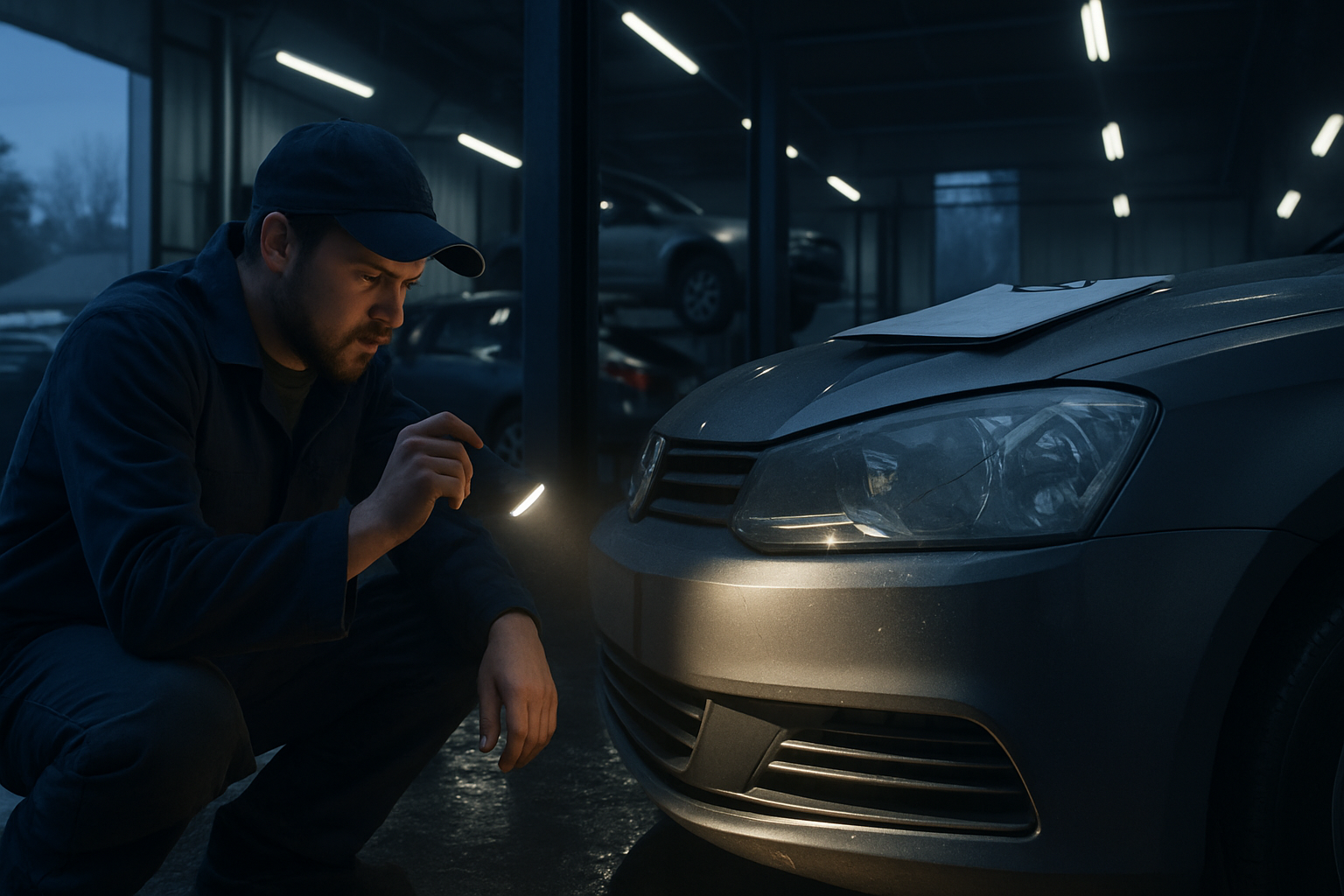
Roughly a third of cars fail their MOT first time, every year, with very little variation. The DVSA publishes the data, and the top reasons are remarkably consistent: lights, tyres, brakes, suspension, view of the road. Boring, mechanical, mostly preventable.
The frustrating part: most failed MOTs cost the owner £40-300 in remedial work, plus the inconvenience of leaving the car at the garage another day, plus the £14-20 retest fee. Total cost of a typical first-time fail is £100-400. And almost all of it could have been spotted the night before with 15 minutes and a torch.
Here is the honest checklist — and the real reasons UK cars fail.
The Top 7 MOT Failure Reasons (in DVSA Order)
Year after year, the same items dominate UK MOT failure data. The DVSA publishes the breakdown annually:
- Lighting and signalling (around 30% of all failures) — bulbs out, faulty indicators, broken brake light, fogged headlights
- Suspension (around 20%) — worn shock absorbers, broken springs, perished bushes
- Brakes (around 17%) — worn pads/discs, handbrake not holding, brake fluid contamination, ABS warning light
- Tyres (around 12%) — below 1.6mm tread, sidewall damage, mismatched sizes, pressure warning
- Driver's view of the road (around 8%) — chipped windscreen, broken wipers, missing washer fluid, obstructed view
- Steering (around 5%) — power steering leaks, worn track rod ends, stiff steering
- Body and structure (around 4%) — corroded sills, sharp edges, loose bumpers, missing wheel arches
The kicker: items 1, 4 and 5 alone account for roughly half of all MOT failures, and all three are checkable in 10 minutes by anyone, with no tools.
The Night-Before Checklist
Tomorrow morning is your MOT. Tonight, do this. About 15 minutes total, and you will catch the majority of preventable fails.
1. Lights — every single one (5 minutes)
- Headlights: dipped beam, full beam, both sides
- Sidelights and number plate light
- Indicators: front, rear, side repeaters (mirror) — both sides
- Hazards: all four flash together
- Brake lights: get someone to press the pedal while you look (or reverse against a wall and watch the reflection)
- Reverse light(s)
- Fog lights — front and rear
- Interior — number plate light especially
Bulbs cost £2-15. Replacing one yourself takes 5 minutes for most cars. A garage will charge £15-40 for the same job at MOT time. Worth a YouTube search for your specific model.
2. Tyres (3 minutes)
- Tread depth: legal minimum is 1.6mm. The tread wear indicator (small raised bar in the grooves) tells you instantly. Or use a 20p coin — push it into the groove. If you can see the outer band, the tread is below 3mm and you should plan replacement soon. If the band is fully covered, you are fine.
- Sidewall: walk around each tyre, look for cuts, bulges or cracking. A bulge fails MOT immediately.
- Pressure: check against the door-sticker recommendation. Underinflated tyres cause uneven wear and trigger the TPMS warning, which is itself an MOT fail.
- Spare and locking wheel nut: not part of MOT, but worth confirming you have the locking key in case of a roadside puncture.
3. Driver's view (2 minutes)
- Windscreen: a chip larger than 10mm in the driver's critical viewing area (the swept area of the wiper directly in front of you, top half) is a fail. Smaller chips elsewhere may be advisories. Get a chip filled BEFORE the test (most insurance covers windscreen chip repair free) — once it cracks, you need a new screen.
- Wipers: lift each blade, run a finger along the rubber. Cracked or torn = fail. New blades are £8-25 a pair.
- Washer fluid: must squirt with reasonable force. Empty reservoir or weak squirt is a fail. Top up tonight.
- Mirrors: all three must be securely mounted and the glass intact.
4. Brakes and warning lights (3 minutes)
- Start the car. Note any dash warnings that stay illuminated after start (ABS, ESP, brake, airbag, engine, EPC). Each is a potential fail.
- Pedal feel: should be firm, not spongy. Spongy pedal suggests fluid air or worn pads.
- Handbrake: pull on hard, attempt to drive forward in first gear (slowly, safely). Should hold the car solid. If it slips, the handbrake will fail MOT.
5. Bonnet check (2 minutes)
- Engine oil level — between min and max on the dipstick
- Brake fluid reservoir — at or near max
- Coolant — between min and max
- Washer fluid — full
- Battery terminals — clean, not corroded with green/white powder
What Tonight Will Not Catch (Garage-Only Issues)
Some failures only show up with the car on a ramp or with diagnostic equipment:
- Worn brake discs (visible only with wheels off)
- Suspension bushes and ball joints (need ramp + pry bar)
- Exhaust corrosion or leaks
- CV joint splits
- Underbody corrosion
- Emissions readings (diesel particulate, petrol CO/HC)
For these, you have two options: pay for a "pre-MOT inspection" at a garage (typically £30-60, sometimes free at chains like Halfords or Kwik Fit), or accept that you will discover any issues at the test itself and budget for remedial work.
The Smart Move: Read Last Year's MOT Advisory Notes
Every MOT certificate, pass or fail, lists "advisories" — items that did not fail but are wearing and worth watching. Tyre tread at 2mm. Brake pads at 30%. Slight oil seep on engine.
If your car had advisories at the last MOT, those items are 12 months older now. The 2mm tyre is now 1.5mm — a fail. The 30% brake pads are now 15% — likely advisory or fail.
You can look up your full MOT history (including all advisories from every previous test) for free at the official DVSA history checker — search for "check MOT history" on gov.uk and enter your registration. The data goes back to 2005.
If You Fail — Know Your Rights
- You can drive the car home from a failed MOT IF the previous MOT certificate is still valid. Once it expires, you can only drive to/from a garage for repair, or to a pre-booked retest.
- The retest fee is reduced (or free at the same garage if returned within 10 working days, depending on what failed). Ask before paying full retest price.
- You do not have to use the garage that failed you for the repairs. They can quote, but you can take the car elsewhere. Get a second opinion if any quoted repair sounds excessive.
- If you suspect the garage failed your car unfairly, you can request an MOT appeal — DVSA will re-test for around £50 (refunded if the original fail was wrong).
Sources & Further Reading
- DVSA — Driver and Vehicle Standards Agency (annual MOT pass/fail statistics, top failure reasons)
- gov.uk — Check MOT History (free official lookup of every MOT result and advisory back to 2005)
- The AA — pre-MOT check guides and breakdown statistics
- RAC — MOT explained, retest rules, common failure causes
- Which? — independent MOT garage testing and consumer advice
- Honest John — common-failure write-ups by make and model — honestjohn.co.uk
Why We Care
My Mekavo is free for UK car owners. Log every MOT advisory the moment you get the certificate — and Mekavo reminds you 4 weeks before the next test. No more nasty fails. No more surprise £400 bills. Just the data your car has been trying to tell you, in one place.
Note on scenarios: The shops, names, addresses, and case reference numbers in this article are fictional and used solely to illustrate how the cited statutes operate in practice. Any resemblance to actual shops, owners, or events is coincidental. The statutes, regulations, and agency procedures cited are real and current as of publication.