The Silent Business Killer Sitting in Your Workshop
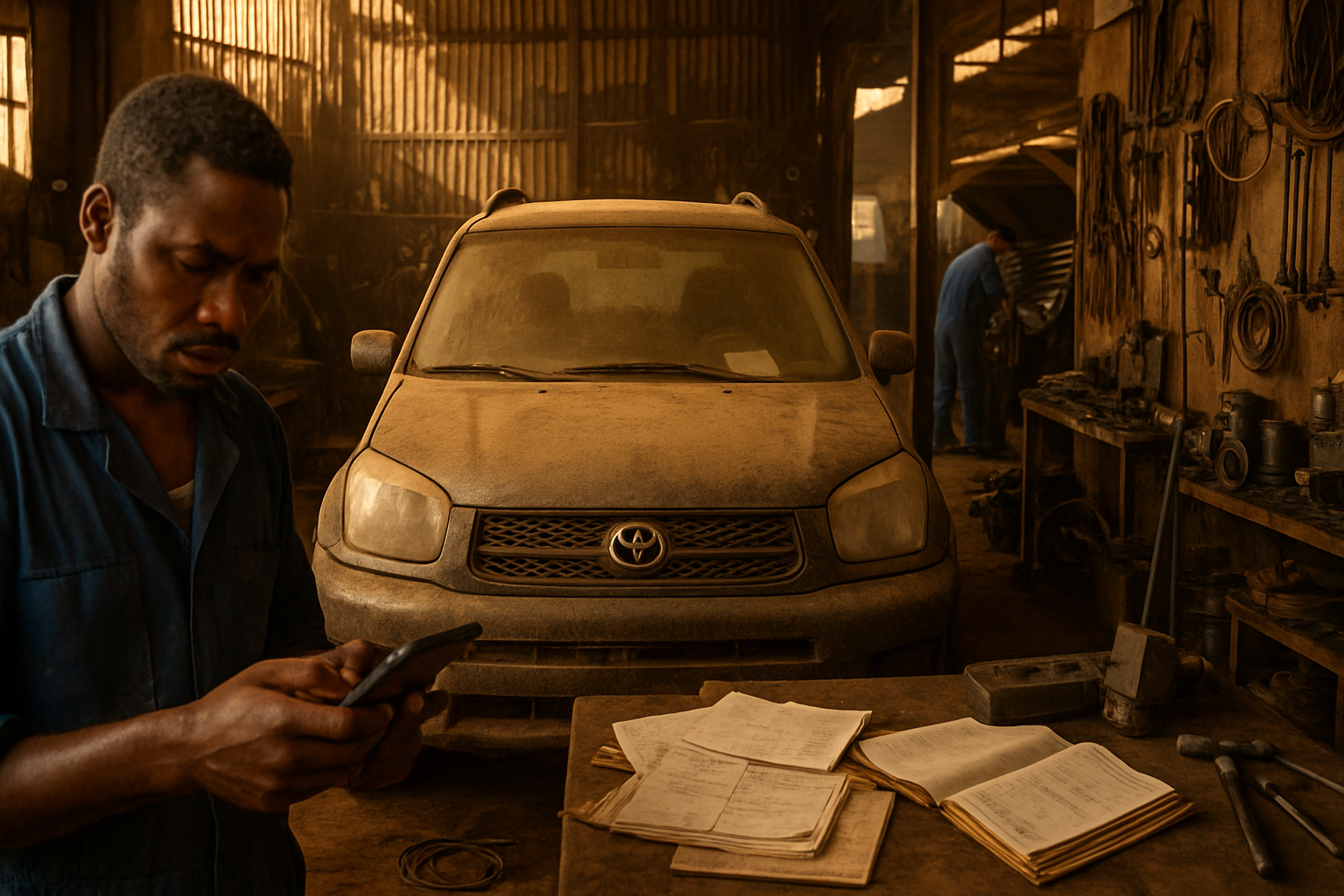
Jean-Baptiste runs a busy workshop in Remera, and right now he's looking at a 2018 Toyota RAV4 that's been gathering dust for eight months. The customer dropped it off for transmission work, disappeared after getting a 450,000 RWF estimate, and stopped answering his phone. That vehicle is taking up premium space in Jean-Baptiste's six-bay shop – space that could be generating 80,000 RWF per week in revenue.
"I've called him fifty times," Jean-Baptiste told me during my visit last month. "His phone goes straight to voicemail. I even went to his house – neighbors say he moved to Dubai. Meanwhile, I'm paying insurance on his car and losing money every day it sits here."
This scenario plays out in workshops across Kigali and beyond. Mechanics complete work, customers vanish, and shop owners find themselves running expensive parking lots instead of profitable repair businesses.
The Real Cost of Playing Storage Facility
Let's break down what that abandoned RAV4 is actually costing Jean-Baptiste, because most shop owners never calculate the true impact:
| Cost Category | Monthly Amount (RWF) | 8-Month Total (RWF) |
|---|---|---|
| Lost bay rental potential | 320,000 | 2,560,000 |
| Insurance liability | 15,000 | 120,000 |
| Security/monitoring | 8,000 | 64,000 |
| Unpaid labor (transmission work) | - | 280,000 |
| Total Cost | 343,000 | 3,024,000 |
That's over three million Rwandan francs in lost revenue and sunk costs – enough to hire two additional mechanics for half a year.
The Opportunity Cost Reality
Immaculee, who runs a successful shop in Nyamirambo, puts it bluntly: "Every day that dead car sits in my bay, I'm saying no to paying customers. I had to turn away a regular client last week because I had no space – and why? Because someone's 2015 Honda Fit has been camping here since March."
Rwanda's Legal Framework: Your Rights as a Workshop Owner
The good news is that Rwandan law provides clear mechanisms for workshops to recover costs and reclaim space. The key legislation includes provisions under the Law on Commercial Transactions and the Civil Code that establish mechanic's liens and abandoned property procedures.
Understanding Mechanic's Liens in Rwanda
Under Rwandan commercial law, workshops have what's called a "possessory lien" – the right to hold a vehicle until payment is made for services rendered. This lien automatically attaches when you begin work, but most mechanics don't understand how to enforce it properly.
Patrick Uwimana, a legal advisor who specializes in commercial disputes, explains: "Many workshops think they're stuck once a customer disappears. That's not true. The law gives you specific rights, but you must follow the proper procedures to exercise them."
The 90-Day Rule
Rwandan regulations typically consider a vehicle abandoned if it remains unclaimed for 90 days after completion of work or after final notice of readiness. However, this timeline can be shortened through proper contractual agreements.
"The 90-day period starts when you notify the customer that work is complete, not when they dropped the car off. This is why proper documentation is crucial." – Patrick Uwimana, Commercial Law Advisor
Setting Clear Terms: Prevention is Better Than Recovery
The smartest workshops solve the abandoned vehicle problem before it starts. Here's how successful shops structure their agreements:
Essential Contract Clauses
Agnes runs a spotless workshop in Gikondo and hasn't had an abandoned vehicle in three years. Her secret? Bulletproof intake procedures:
- 72-Hour Pickup Rule: Vehicles must be collected within 72 hours of completion notice
- Daily Storage Fees: 5,000 RWF per day after the 72-hour grace period
- 30-Day Abandonment Clause: Vehicles become subject to sale after 30 days of non-payment
- Towing Authorization: Customer pre-authorizes removal at their expense
"I explain everything upfront," Agnes says. "Customers sign acknowledging they understand the storage fees. Nobody can claim they didn't know."
The Two-Signature System
Smart workshops use a two-signature approach: one signature when dropping off (acknowledging storage terms) and another when authorizing work (confirming cost estimates and pickup timeline). This creates a paper trail that stands up in court.
The Warning Letter Protocol: Legal Documentation
When a customer goes silent, your response must be systematic and legally sound. Here's the three-notice system that works:
First Notice: Completion Alert (Day 1)
"Dear [Customer Name], your [vehicle] is ready for pickup. Please collect within 72 hours or daily storage fees of 5,000 RWF will apply as per our service agreement."
Second Notice: Storage Fee Warning (Day 7)
"Your vehicle has now accumulated 35,000 RWF in storage fees. Please contact us immediately to arrange pickup. Failure to respond within 14 days may result in your vehicle being deemed abandoned."
Final Notice: Intent to Dispose (Day 21)
"This is your final notice. Your vehicle will be sold to recover costs if not collected within 7 days. Total amount due: [labor + storage fees]."
Each notice should be sent via registered mail and SMS, with copies kept for your records.
Legal Disposal Options: Converting Dead Weight to Cash
Once you've followed proper notification procedures, Rwandan law allows several disposal methods:
Public Auction Process
This is the most transparent method and offers the best legal protection. The process requires:
- Publishing notice in a local newspaper (Tuko or The New Times work well)
- Posting notice at the local sector office
- Conducting auction with proper documentation
- Applying proceeds to outstanding bills (returning any excess to customer)
Claude, who runs a transmission shop in Gasabo, used this method successfully last year: "I sold a 2017 Corolla that had been sitting for five months. After covering my costs and storage fees, there was actually 150,000 RWF left over, which I deposited with the local court as required by law."
Parts Recovery Sales
For vehicles worth less than the accumulated costs, selling valuable components separately often makes more sense. The legal requirements are the same – proper notice and documentation – but the financial recovery is usually better.
Scrap Value Recovery
Even completely worthless vehicles have scrap value. Current rates in Kigali hover around 200-300 RWF per kilogram for steel, which typically yields 150,000-300,000 RWF for an average car.
Technology Solutions: Automating the Abandoned Vehicle Process
Manual tracking of overdue vehicles is a recipe for lost revenue. Modern workshop management systems can automate much of this process.
Automated Alert Systems
Good workshop software flags vehicles that haven't been collected within specified timeframes and automatically sends reminder messages. Some systems even calculate accumulating storage fees in real-time.
Daniel operates two workshops in Kigali and swears by automated alerts: "The system sends an SMS to customers automatically when their car is ready, then again at 3 days, 7 days, and 14 days. I don't have to remember anything – it just happens."
Financial Tracking Integration
The best systems automatically add storage fees to customer accounts and generate the necessary documentation for legal proceedings. This eliminates the manual calculation errors that can compromise your legal position.
Real-World Recovery: A Case Study
Let me tell you about how Samuel, who runs a shop in Nyanza, successfully recovered from an abandoned vehicle situation that was bleeding his business dry.
In January, a customer brought in a 2016 Suzuki Swift for engine work. Samuel quoted 380,000 RWF, received approval, and completed the repairs. The customer promised to return with payment "tomorrow" – and then vanished.
By March, Samuel was frustrated and losing money. The car was occupying his best lift, and he was turning away profitable work. Following the legal process outlined above, he:
- Sent proper legal notices via registered mail
- Published auction notice in local media
- Held a public auction at his workshop
The vehicle sold for 2.1 million RWF. After deducting his original 380,000 RWF bill, storage fees of 450,000 RWF (90 days × 5,000), and auction costs of 85,000 RWF, he deposited the remaining 1,185,000 RWF with the local court for the missing customer.
"Best decision I ever made," Samuel reflects. "I got my money, freed up the space, and sent a message to other customers that I'm serious about my policies."
Building Your Abandoned Vehicle Action Plan
Here's your roadmap to implement a systematic abandoned vehicle recovery process:
Immediate Steps (This Week)
- Review your current service agreements – add storage fee clauses if missing
- Calculate the true cost of your wasted bay space
- Identify any vehicles currently sitting overdue
- Draft your three-notice letter templates
Medium-Term Setup (This Month)
- Implement automated reminder systems
- Establish relationships with local auctioneers
- Create legal documentation filing system
- Train staff on proper notification procedures
Long-Term Protection (Ongoing)
- Regular policy enforcement to maintain credibility
- Quarterly review of abandoned vehicle policies
- Customer education about storage fees upfront
- Continuous improvement of tracking systems
The Bottom Line: Your Space, Your Rules
Running a workshop is hard enough without subsidizing free parking for deadbeat customers. The legal framework exists to protect your business – you just need to use it systematically.
Every day you delay implementing proper abandoned vehicle procedures, you're essentially paying customers to take up your valuable space. In a competitive market like Kigali's automotive sector, that's a luxury no workshop can afford.
Start with prevention – clear contracts and upfront communication. When prevention fails, follow the legal process religiously. Document everything, follow proper notice procedures, and don't hesitate to enforce your rights.
Your workshop is a business, not a charity. It's time to start treating it like one.