English
 AR
AR
The April Exodus: When Experienced Mechanics Walk Out
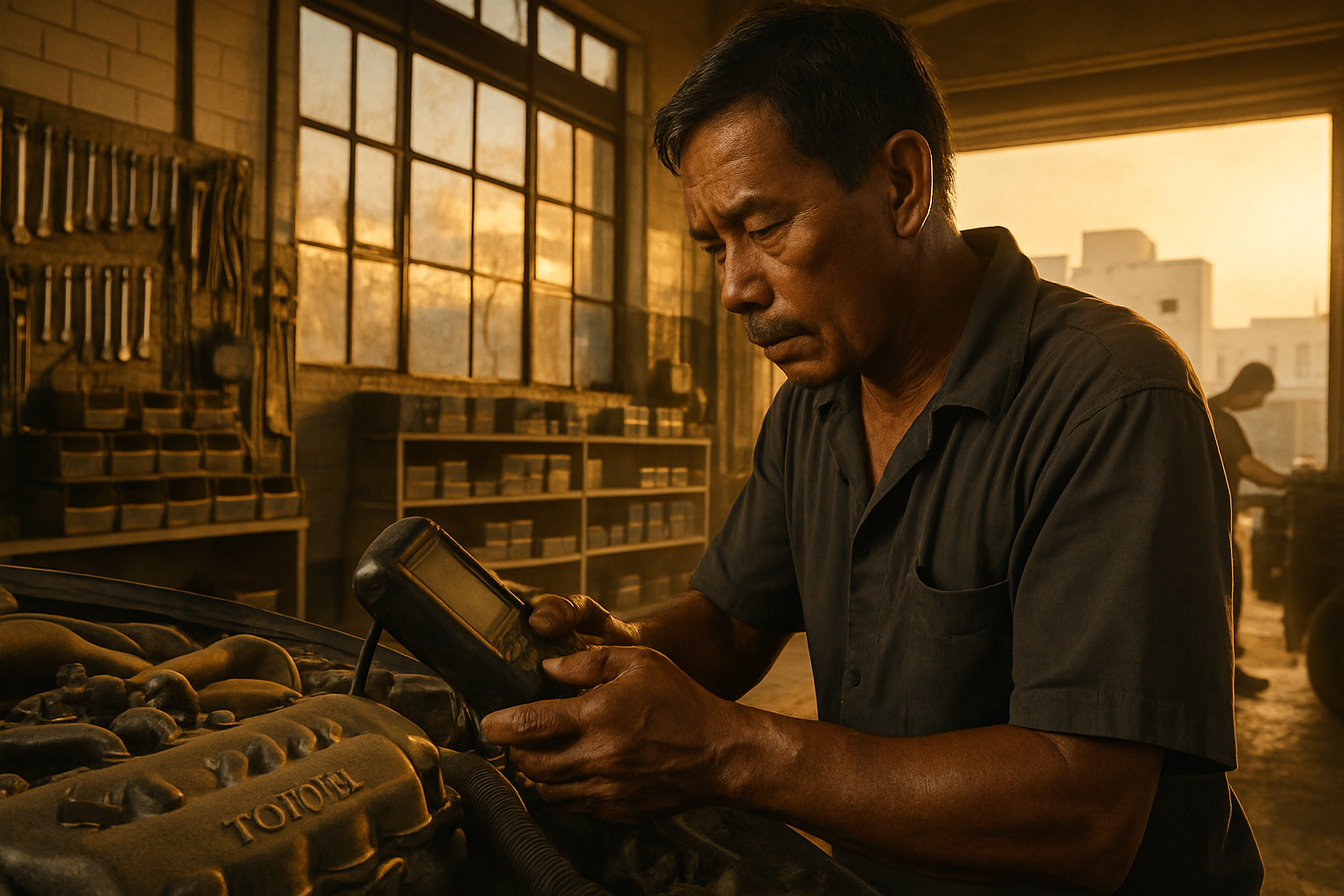
Ahmed runs a 6-bay workshop in Muharraq, specializing in Toyota and Nissan work for the fishing fleet and local families. Last April, he watched his best diagnostic technician — a Filipino mechanic who'd been with him for three years — clear out his toolbox and head to the new Lexus service center in Seef. Two weeks later, his transmission specialist got poached by a competitor in Manama offering 200 BHD more per month.
"I thought it was just bad luck," Ahmed told me over coffee at his workshop. "Then I started talking to other shop owners. Everyone loses their best people between March and June."
He's right. Spring hiring season in Bahrain coincides with new service center openings, dealership expansions, and the post-Formula 1 season when automotive businesses ramp up operations. Larger operations actively recruit from independent workshops, and your skilled technicians become their prime targets.
The Real Cost of Losing Your Best Mechanics
When Ahmed's diagnostic tech left, the immediate replacement cost was obvious: recruitment fees, work visa processing, and basic training. But the hidden costs hit harder. His replacement — equally skilled on paper — needed two months to learn the workshop's specific procedures, customer preferences, and the quirks of their regular fleet clients.
"We lost three repeat customers in that period," Ahmed explains. "One fishing boat captain specifically asked for Ramos by name. When I said he'd left, the captain took his entire fleet elsewhere."
Industry data from NBR filings shows the true cost of replacing a skilled automotive technician in Bahrain ranges from 15,000 to 25,000 BHD when you factor in:
- Recruitment and visa processing: 2,500-3,500 BHD
- Training and reduced productivity (first 3 months): 8,000-12,000 BHD
- Lost customer relationships: 4,500-9,500 BHD
"The fishing fleet work alone was worth 1,800 BHD monthly," Ahmed calculated. "Losing that customer cost me more than giving Ramos a 300 BHD raise would have."
Why Mechanics Really Leave: It's Not Just About Money
Mariam owns a successful workshop near the King Fahd Causeway, primarily serving Saudi vehicles crossing for service. She's learned that salary alone doesn't predict who stays and who leaves.
"My highest-paid technician left for a job paying 150 BHD less," she says. "But that job came with clear advancement to supervisor level within two years, plus tool allowances."
The Four Real Reasons Your Best Technicians Leave
Career Progression Clarity: Most independent workshops can't articulate a clear path from junior mechanic to master technician to shop supervisor. Dealerships offer structured advancement with defined timelines and salary increases.
Professional Recognition: Your best diagnostic tech wants his expertise acknowledged. When customers consistently request specific mechanics by name, that recognition builds loyalty — but only if the workshop owner acknowledges and rewards that relationship.
Tool Investment Support: Experienced technicians accumulate 8,000-15,000 BHD worth of specialized tools. Workshops that contribute to tool purchases through allowances or purchase programs create financial ties that discourage job hopping.
Work Variety and Challenge: Repeatedly servicing the same fleet vehicles becomes monotonous. Technicians want to work on different makes, learn new systems, and tackle challenging diagnostic problems.
"I stayed at my previous workshop for five years not because they paid the most, but because the owner let me handle all the European cars that came in. I became the go-to person for BMW and Mercedes work. That reputation was worth more than an extra 200 BHD per month." — Hassan, master technician, Riffa
The Expat Factor in Bahrain's Automotive Workforce
Bahrain's automotive workforce is heavily expat — particularly Filipino, Indian, Pakistani, and Bangladeshi technicians who often support families back home. Their career decisions weigh immediate income against long-term prospects and professional respect.
"My family depends on my salary, but I also need to think about my future," explains Carlos, a transmission specialist who recently switched workshops. "The new place pays 50 BHD less per month, but they're sending me for Hyundai certification training. That certification follows me anywhere."
Workshop owners who invest in their expat technicians' skill development build stronger loyalty than those who simply compete on salary. A 6-month Toyota certification program costing 2,400 BHD creates more long-term retention than the same amount distributed as salary increases.
How Competitors Actively Poach Your Best Staff
The automotive service industry in Bahrain operates within a relatively small geographic area. Workshop owners in Manama know which Muharraq shops have the best diagnostic techs. Service managers at Sitra industrial workshops track who's handling the complex fleet maintenance at competing shops.
"They don't just post job ads," explains Omar, who owns three workshops across Manama and Isa Town. "They send their current technicians to scope out the competition during parts runs or when dropping off subcontract work. Good mechanics know other good mechanics."
The poaching tactics are straightforward but effective:
- Direct Approach: Supervisors from larger operations visit smaller workshops as "customers," then privately approach skilled technicians
- Network Recruitment: Recently hired mechanics recruit their former colleagues with promises of better conditions
- Timing Exploitation: Competitors monitor your busy periods and approach overworked technicians when job satisfaction is lowest
- Package Sweetening: Offers include not just higher salary but tool allowances, visa transfers, and signing bonuses
"I lost my best electrician during Ramadan when everyone was working longer hours in the heat," recalls Fatima, who runs a workshop specializing in commercial vehicles. "The competitor's timing was perfect — approach a tired, frustrated mechanic with an offer that includes air-conditioned accommodation."
The Three Systems That Actually Work
After interviewing dozens of workshop owners across Bahrain — from single-bay operations in Hamad Town to multi-location services centers — three retention systems consistently emerge as effective.
System 1: Transparent Skill-Based Progression
Khalid transformed his 4-bay workshop in Sitra by implementing what he calls "certification ladders." Every technician knows exactly what skills they need to advance and what each advancement pays.
"I created five levels: Apprentice, Mechanic, Senior Mechanic, Specialist, and Master Technician," Khalid explains. "Each level has specific skill requirements and corresponding pay rates. When someone completes Toyota brake certification, they immediately move up the ladder with a defined salary increase."
The system works because it's completely transparent:
| Level | Monthly Salary Range | Required Certifications | Responsibilities |
|---|---|---|---|
| Apprentice | 300-400 BHD | Basic safety, tool use | Oil changes, tire rotation |
| Mechanic | 450-550 BHD | Brake systems, suspension | Standard maintenance, simple repairs |
| Senior Mechanic | 600-750 BHD | Engine diagnostics, A/C | Complex repairs, customer consultation |
| Specialist | 800-950 BHD | Transmission, electrical systems | Specialized work, training juniors |
| Master Technician | 1000+ BHD | Multiple manufacturer certifications | Diagnostic leadership, quality control |
"Nobody leaves wondering when they'll get promoted or how much they'll earn," Khalid says. "They control their advancement by completing certifications. I just provide the training opportunities and keep my promises."
System 2: Customer Relationship Ownership
Sara discovered this system by accident when one of her technicians developed a following among expat customers who specifically requested him for European car service. Instead of treating this as a problem, she built it into her retention strategy.
"Now each senior technician 'owns' specific customer relationships," Sara explains. "Ahmed handles all the German cars, Prakash takes care of our Japanese commercial fleet clients, and Miguel specializes in American trucks crossing from Saudi."
The ownership system includes:
- Customer Assignment: Regular customers are formally assigned to specific technicians
- Direct Communication: Customers have the technician's WhatsApp for scheduling and updates
- Service Continuity: The same technician handles a customer's vehicle from intake to delivery
- Revenue Recognition: Technicians receive bonuses tied to their assigned customers' satisfaction scores
"When customers ask for 'my mechanic' by name, that technician feels ownership and pride," Sara notes. "They're less likely to leave because they know those customers might not follow them to a new shop."
"I've been working on the same fishing fleet for two years now. The captain calls me directly when something breaks down. That relationship is mine — I built it through good work and reliability. Why would I throw that away for 100 BHD more somewhere else?" — Ravi, marine engine specialist, Muharraq
System 3: Administrative Burden Reduction
Mohammad's revelation came when he implemented Mekavo workshop management software and watched his technicians' job satisfaction immediately improve. "I didn't realize how much time they were spending on paperwork instead of actual repair work."
Before the system, Mohammad's technicians spent significant time on non-technical tasks:
- Handwriting service reports and estimates
- Walking to the office to check parts availability
- Interrupting work to update customers on progress
- Managing their own work schedules and priority conflicts
"My master technician was spending 90 minutes per day on administrative tasks," Mohammad calculated. "That's 90 minutes he wasn't doing the skilled diagnostic work he trained for and enjoys."
The workshop management system automated routine tasks and streamlined communication:
- Digital Work Orders: Technicians receive job details on tablets, eliminating handwritten paperwork
- Integrated Parts Management: Real-time parts availability without office visits
- Automatic Customer Updates: System sends progress updates via WhatsApp, reducing interruptions
- Intelligent Scheduling: Software optimizes work allocation based on technician skills and availability
"Now they spend their time doing actual technical work," Mohammad reports. "Job satisfaction went up because they're using their skills instead of filling out forms."
Implementation: Making These Systems Work Together
The most successful workshop owners don't implement these systems in isolation. Yusuf, who operates two workshops serving both Saudi cross-border customers and local Bahraini fleets, combines all three approaches.
"The certification ladder gives them a clear future, customer ownership gives them pride in their work, and reducing administrative burden lets them focus on being mechanics," Yusuf explains. "Together, these systems create an environment where good technicians want to stay and grow."
Starting Small: The 90-Day Implementation Plan
Month 1: Assessment and Communication
- Document current technician skill levels and certifications
- Identify which customers consistently request specific technicians
- Calculate time spent on administrative tasks versus technical work
- Communicate your commitment to technician development and retention
Month 2: System Foundation
- Create your certification ladder with clear requirements and salary increases
- Formally assign customer relationships to appropriate technicians
- Implement basic workshop management tools to reduce paperwork
- Establish regular one-on-one meetings with each technician
Month 3: Refinement and Expansion
- Track early results: technician satisfaction, customer retention, administrative time savings
- Adjust systems based on feedback from both technicians and customers
- Plan certification training opportunities for the next quarter
- Document and standardize successful practices
The Real ROI of Technician Retention
Six months after implementing these systems, Ahmad in Muharraq has retained all his key technicians through two hiring seasons. His investment in certification training (4,800 BHD annually) and workshop management software (180 BHD monthly) has paid clear returns:
- Zero skilled technician turnover in 12 months (previously lost 2-3 annually)
- Customer retention improved from 68% to 84%
- Average job completion time decreased by 23% due to reduced administrative burden
- Technician overtime costs dropped 31% through better scheduling
"The best part is my technicians now actively refer skilled friends to work here," Ahmad reflects. "Instead of losing people to competitors, we're becoming the shop where the best mechanics want to work."
In Bahrain's competitive automotive service market, the workshops that keep their best technicians are the ones that treat retention as a systematic business practice, not just a salary negotiation. When your skilled mechanics have clear advancement paths, meaningful customer relationships, and freedom to focus on technical work, they build careers instead of just collecting paychecks.