English
 AR
AR
The 8,000 EGP Mistake Every Egyptian Shop Makes in April
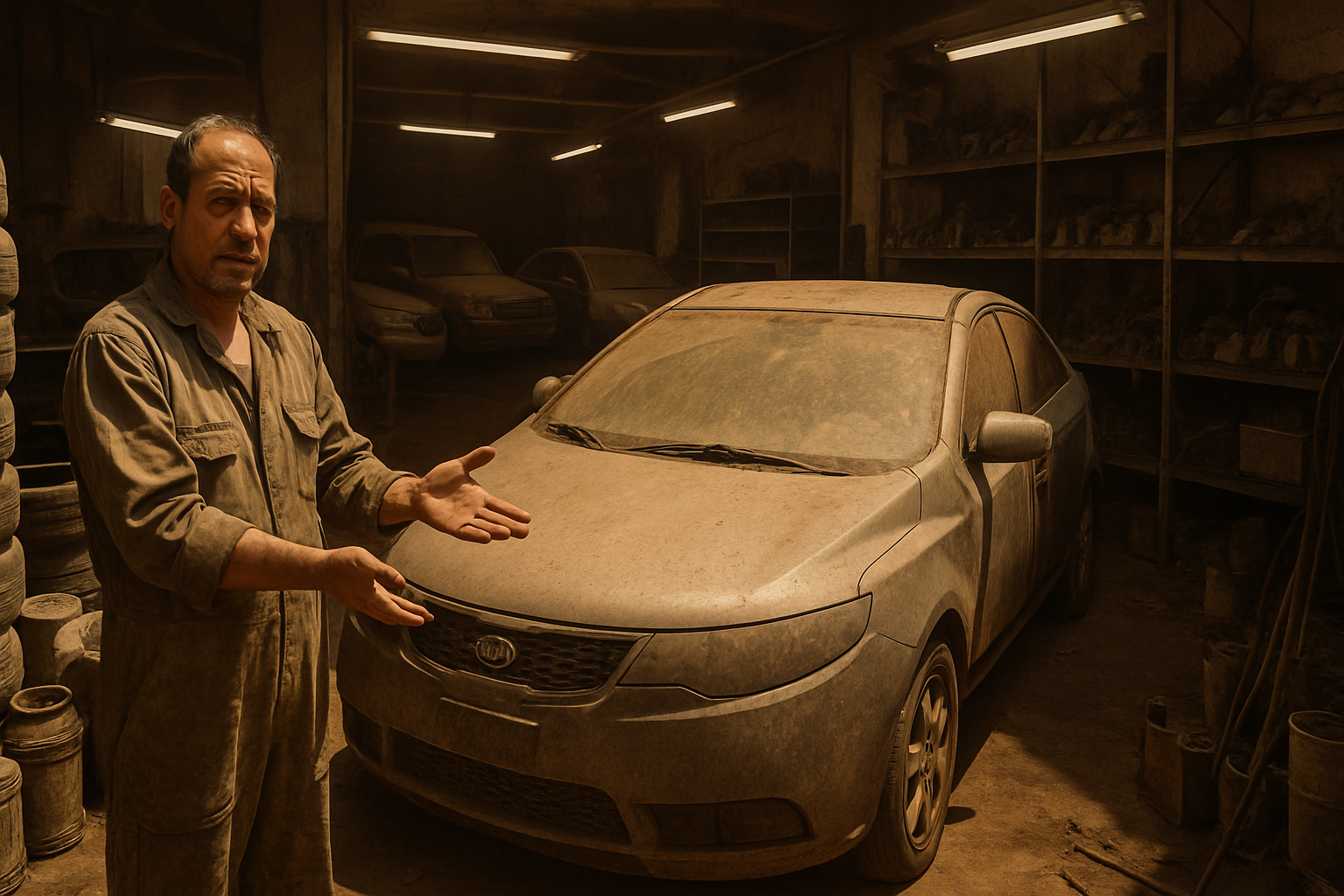
Ahmed Mahmoud runs a small ورشة in Nasr City, Cairo. Last April, a customer brought in a 2018 Hyundai Accent complaining about weak A/C. Without proper diagnosis, Ahmed blamed the compressor — the most expensive component. Three visits later, after replacing the compressor (4,500 EGP), condenser (2,800 EGP), and multiple hoses (800 EGP), he discovered the real problem: a blocked expansion valve worth 150 EGP.
"The customer never came back," Ahmed told me when I visited his shop last month. "He paid 8,100 EGP for a 150 EGP problem. Now he goes to the Hyundai dealer."
This story repeats across Egypt every spring. With summer temperatures hitting 45°C in Cairo and coastal humidity making Alexandria's 38°C feel unbearable, proper A/C diagnosis in April isn't just good business — it's survival.
Why Egyptian A/C Failures Are Different
Egypt's climate creates unique cooling system challenges that generic diagnostic approaches miss. In Cairo, the combination of traffic chaos, dust storms, and extreme heat puts massive stress on condensers and cooling fans. Meanwhile, Alexandria's coastal humidity causes different problems — corrosion in refrigerant lines and electrical connections.
Mahmoud Farid, who runs a Toyota-specialized shop in Alexandria's Gomrok district, explains: "Cairo cars come to me with blocked condensers from dust. Alexandria cars have corroded fittings and expansion valve problems from salt air. Same symptoms, completely different causes."
The Four Real Culprits Behind Weak A/C
Most Egyptian mechanics jump straight to compressor replacement, but proper diagnosis reveals four distinct failure patterns:
- Low refrigerant from leaks: Usually at hose connections or condenser fins
- Compressor clutch failure: Common on high-mileage Chevrolet Optra and older Nissan Sunny models
- Condenser blockages: Cairo's dust and traffic create external blockages, while internal contamination from failed compressors causes flow restrictions
- Thermal expansion valve problems: Coastal humidity and temperature cycling cause these precise components to stick or fail
The Correct Diagnostic Sequence That Saves Money
Proper A/C diagnosis takes 45 minutes and prevents costly comebacks. Here's the sequence I've seen work in the best Egyptian shops:
Step 1: Visual Inspection (10 minutes)
Before connecting any gauges, check obvious problems. Look for:
- Oil stains under the car (compressor or hose leaks)
- Damaged or corroded refrigerant lines
- Blocked condenser fins from dust or debris
- Worn compressor belt or loose connections
"I find 30% of problems just by looking," says Hassan Ali, who runs a successful shop in Giza. "Customers appreciate that I don't start dismantling immediately."
Step 2: Pressure Testing (15 minutes)
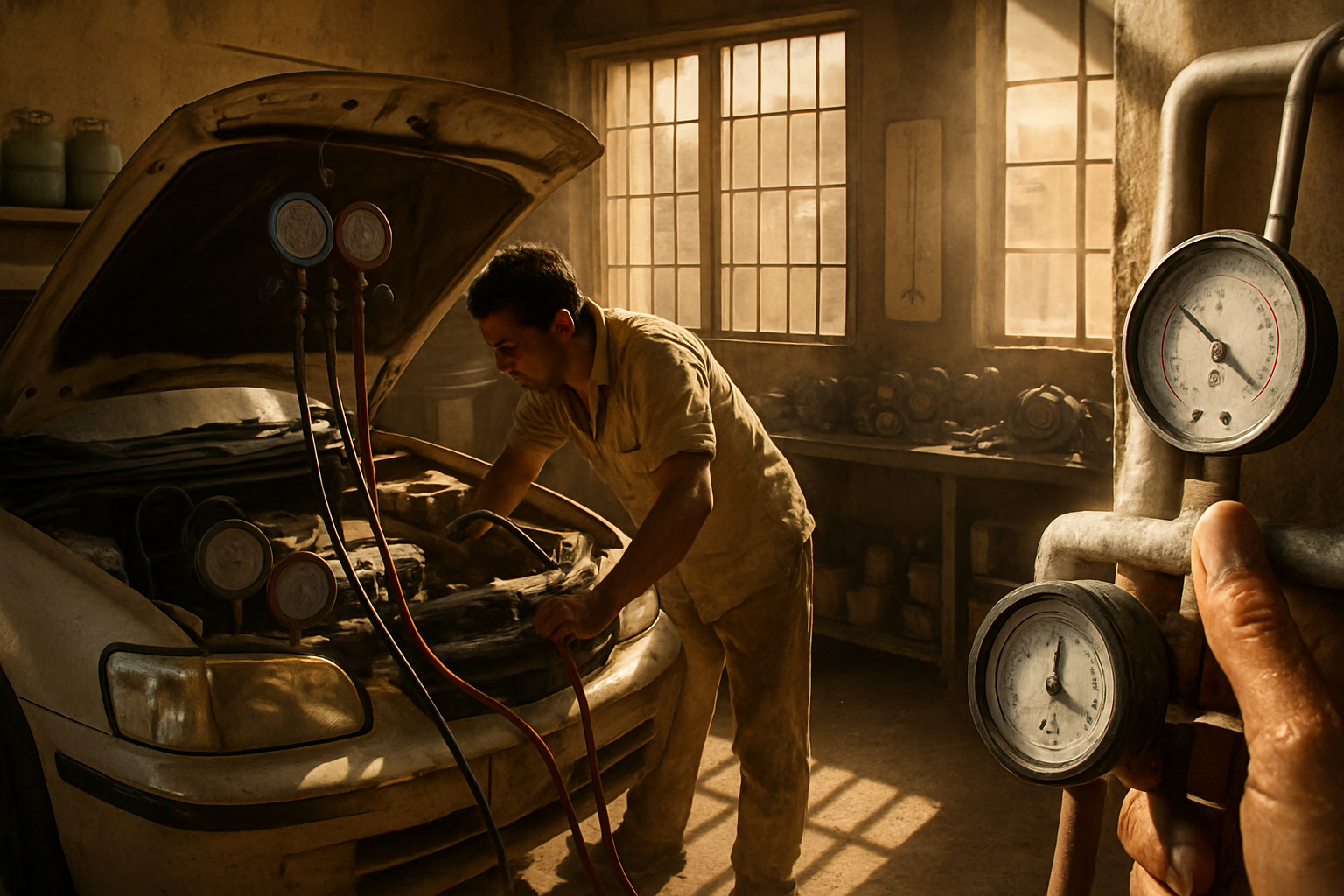
Connect manifold gauges to both high and low side ports. With engine running and A/C on maximum, proper readings should be:
| Condition | Low Side (PSI) | High Side (PSI) | Likely Cause |
|---|---|---|---|
| Normal operation | 25-35 | 200-250 | System OK |
| Low refrigerant | 15-25 | 150-200 | Find leak first |
| Blocked condenser | 35-45 | 300+ | Clean or replace condenser |
| Failed expansion valve | 0-15 | 200-250 | Replace expansion valve |
| Compressor failure | High/Low | Same as low | Internal compressor damage |
Step 3: Component Testing (20 minutes)
Test specific components based on pressure readings:
- Compressor clutch engagement with multimeter
- Condenser airflow and temperature differential
- Expansion valve operation by temperature at inlet/outlet
- Leak detection with electronic detector or soapy water
Why 'Topping Up' Refrigerant Destroys Your Reputation
The worst mistake Egyptian mechanics make is adding refrigerant without finding leaks. Omar Khalil learned this lesson the hard way at his Shubra El Kheima workshop.
"Customer came with weak A/C in his 2015 Kia Cerato. I added gas for 200 EGP, problem solved temporarily. Two weeks later, same problem. Added more gas. Month later, he's back again, angry and demanding his money back."
The leak was in the condenser — a 1,200 EGP repair Omar should have found initially. Instead, he lost a customer and gained a bad reputation on social media.
"When you top up without finding leaks, you're telling the customer you don't know your job. They'll go to someone who does." - Tarek Mostafa, 20-year veteran mechanic in Port Said
Proper Leak Detection Prevents Comebacks
Professional shops invest in electronic leak detectors (2,500-4,000 EGP) or use proven methods:
- Electronic detector for pinpoint accuracy
- UV dye injection for difficult-to-find leaks
- Soapy water solution for obvious connection leaks
- Pressure decay testing for system integrity
Smart Parts Stocking for Egyptian Heat Season
April is when smart shop owners stock cooling system parts before demand spikes prices. Based on conversations with parts suppliers in Cairo's automotive district, here's what sells out first when temperatures hit 40°C:
High-Demand Components
- A/C compressors: Hyundai Accent/Verna, Toyota Corolla, Chevrolet Optra most common
- Condensers: Universal sizes for older Fiat models, brand-specific for newer cars
- Refrigerant hoses: High-pressure lines fail most frequently
- Expansion valves: Often overlooked but critical for proper operation
- Condenser fans and motors: Cairo traffic and dust kill these components
Sherif Hassan, who supplies parts to 50+ workshops in Greater Cairo, warns: "Shops that wait until May pay 20-30% more. Smart owners buy in April when my warehouse is full."
Pricing A/C Diagnosis Fairly: The 300-500 EGP Rule
Many Egyptian mechanics undercharge for diagnosis, then overcharge for unnecessary parts to compensate. This backwards approach destroys trust and creates comebacks.
Successful shops charge 300-500 EGP for comprehensive A/C diagnosis, then apply this fee toward repair costs if customers proceed. This approach works because:
- Customers value what they pay for
- Proper diagnosis prevents costly mistakes
- You can afford quality diagnostic equipment
- Customers trust shops that charge professional rates
"I started charging 400 EGP for A/C diagnosis two years ago. Lost some price shoppers but gained customers who value accuracy. My comeback rate dropped to almost zero." - Amr Farouk, successful Alexandria shop owner
The Diagnostic Fee Structure That Works
| Service Level | Price (EGP) | Includes | Time |
|---|---|---|---|
| Basic check | 150 | Visual inspection only | 15 min |
| Standard diagnosis | 300 | Pressure test + component check | 45 min |
| Complete analysis | 500 | Full system diagnosis + leak detection | 90 min |
Case Study: The Condenser Blockage That Cost 8,100 EGP
Let's return to Ahmed's Hyundai Accent disaster. Here's what really happened and how proper diagnosis would have saved everyone money and stress.
The Original Problem
Customer complained of weak A/C in April 2023. Ambient temperature 35°C, A/C producing 25°C air instead of expected 18°C. Without pressure testing, Ahmed assumed compressor failure — the expensive guess that started his problems.
The Wrong Path
- First visit: Replaced compressor (4,500 EGP) without diagnosis
- Second visit: Problem persisted, replaced condenser thinking contamination (2,800 EGP)
- Third visit: Still not cold enough, replaced hoses suspecting leaks (800 EGP)
- Fourth visit: Finally discovered blocked expansion valve (150 EGP part, 200 EGP labor)
What Proper Diagnosis Would Have Revealed
With manifold gauges connected, Ahmed would have seen:
- Low side pressure: 10 PSI (too low)
- High side pressure: 220 PSI (normal range)
- Temperature at expansion valve inlet: 45°C
- Temperature at expansion valve outlet: 45°C (should be 5°C)
These readings clearly indicate expansion valve failure — a 45-minute diagnosis that would have saved 8,100 EGP in unnecessary parts.
Why Customers Choose Dealerships Over Independent Shops
The brutal truth: many Egyptian car owners take A/C problems to dealerships because they've been burned by misdiagnosis at independent shops. Dealership prices might be 40% higher, but customers pay for confidence.
"I used to go to small workshops," explains Nadia Ahmed, who owns a 2020 Toyota Corolla in New Cairo. "Three different shops gave me three different diagnoses for the same A/C problem. The dealership fixed it correctly the first time. Now I only go there for A/C work."
This represents thousands of EGP in lost revenue for independent shops — money that goes to dealerships simply because of diagnostic accuracy.
Winning Back A/C Customers
Smart independent shops compete with dealerships on expertise, not just price:
- Invest in proper diagnostic equipment
- Train technicians on systematic diagnosis
- Offer written diagnostic reports
- Provide parts and labor warranties
- Charge professional rates for professional service
Preparing Your Shop for Egypt's Heat Season
April is your last chance to prepare before the A/C rush begins. Here's your pre-summer checklist based on best practices from successful Egyptian workshops:
Equipment Preparation
- Service and calibrate manifold gauge sets
- Stock R-134a refrigerant (prices spike in May)
- Test electronic leak detectors and buy fresh batteries
- Organize hand tools for quick A/C access
- Prepare evacuation and recharge equipment
Staff Training
- Review systematic diagnostic procedures
- Practice pressure reading interpretation
- Update knowledge on new vehicle A/C systems
- Learn to explain problems clearly to customers
Parts Inventory
- Stock common compressors for popular models
- Order condensers before supply shortages
- Inventory expansion valves and receiver/driers
- Prepare hose repair kits and fittings
"Every April, I spend 30,000 EGP on A/C parts and refrigerant. By July, I've turned that into 80,000 EGP revenue. The shops that don't prepare lose customers to those who do." - Mostafa Abdel Rahman, successful Giza workshop owner
The Egyptian heat season is coming whether you're ready or not. The question is: will you be the shop that saves customers money with accurate diagnosis, or the one they warn their friends about on social media? The choice you make in April determines your summer success.