English
 AR
AR
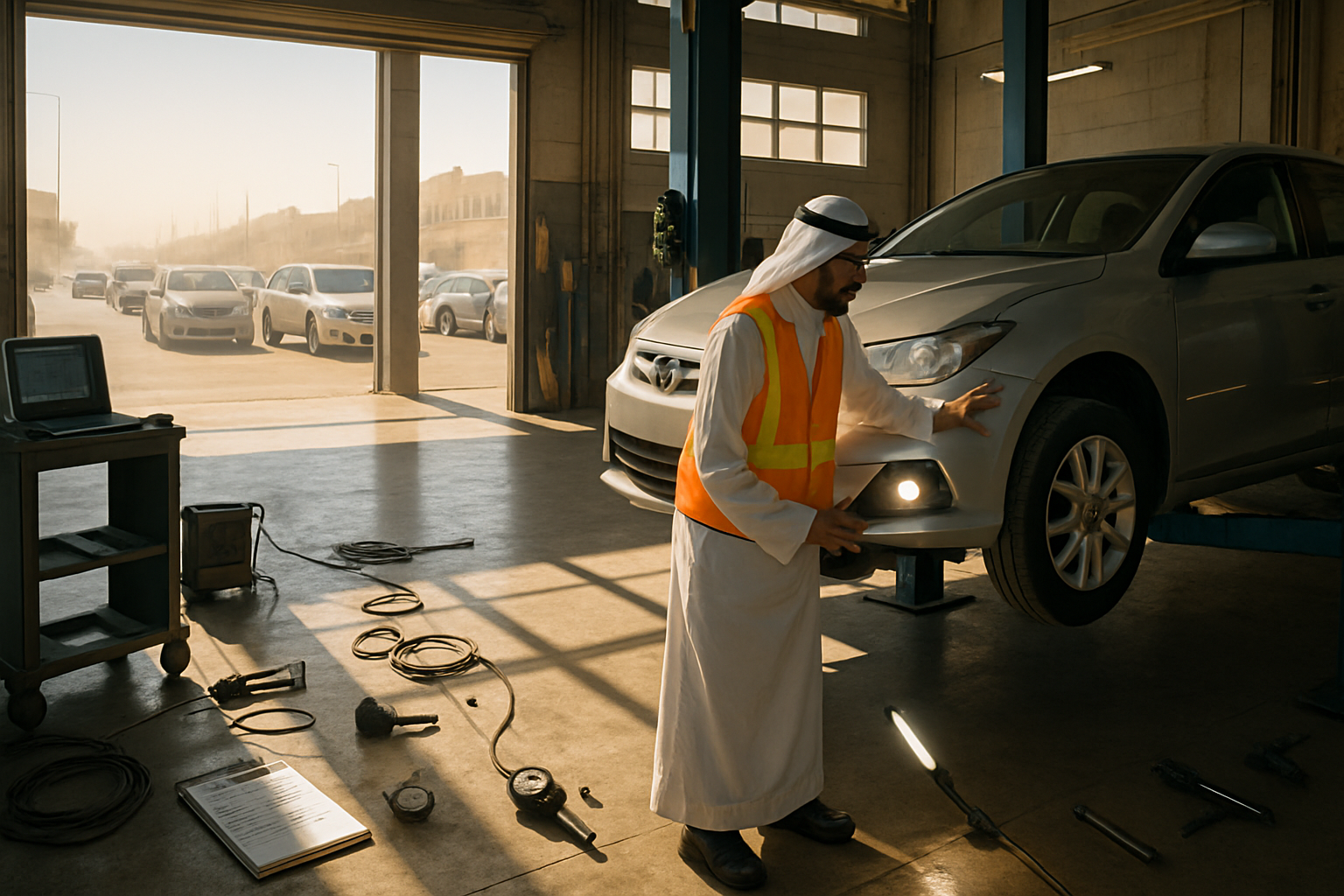
The Fahs — Saudi Arabia's periodic vehicle inspection — is one of the most stressful experiences for car owners in the Kingdom. You drive to the testing centre, wait in line in 45°C heat, and pray your car passes. If it fails, you rebook (sometimes weeks out), fix the problems, and try again. Every day without a valid Fahs means you cannot renew your Istimara (vehicle registration).
For workshops in Riyadh, Jeddah, Dammam, and across the Kingdom, Fahs preparation is one of the most reliable revenue streams in the business. Every vehicle over 3 years old needs periodic inspection. Saudi Arabia has over 12 million registered vehicles. The market is enormous — and growing every year as the Kingdom's car fleet ages.
What the Fahs Inspectors Check
The Saudi Fahs inspection is comprehensive. Unlike some countries where inspections are a formality, Saudi inspection centres (operated by companies like Masarak and others) use modern equipment and follow strict protocols:
- Brakes: Roller brake test measuring stopping force per axle. Uneven braking between left and right = fail. Handbrake efficiency test. Brake fluid condition check.
- Emissions: Gas analyser for petrol vehicles (CO, HC readings). Smoke opacity test for diesel vehicles. Saudi standards have tightened significantly in recent years — older vehicles struggle to pass.
- Lights: Headlight alignment using beam tester — the most common single failure point. All external lights must function: indicators, brake lights, reverse lights, fog lights, number plate illumination.
- Suspension: Visual inspection for worn components, leaking shock absorbers, cracked bushings, excessive play in ball joints and tie rod ends.
- Steering: Free play measurement at the steering wheel. Power steering operation check. No leaks allowed.
- Tyres: Minimum tread depth (1.6mm). No visible damage, cuts, or bulges. Correct speed rating for the vehicle. Age matters — tyres over 5 years old in Saudi heat are often degraded regardless of tread.
- Body and structure: No sharp edges. No excessive corrosion that affects structural integrity. All mirrors present and functional. Windscreen free of cracks in driver's line of sight.
- Exhaust system: No leaks. Catalytic converter present and functional.
- Modifications: Unapproved body modifications, suspension lifts beyond spec, or non-compliant exhaust modifications = automatic fail.
The Top 5 Failure Points in Saudi Arabia
Based on what workshops across the Kingdom report, the most common Fahs failures are:
- Headlight alignment (30% of failures): Saudi roads have speed bumps everywhere. Every speed bump slightly misaligns headlights over time. The beam tester at Fahs centres is unforgiving. Fix cost: SAR 50-200 for alignment. Revenue opportunity: SAR 50-200 per car × hundreds of cars per month.
- Tyres (25%): Saudi heat (60°C road surface temperature in summer) degrades tyres faster than anywhere in the world. A tyre that would last 5 years in Europe lasts 2-3 years in Saudi. Many fail for tread depth or visible heat damage. Fix cost: SAR 200-600 per tyre.
- Emissions (20%): Older vehicles — especially the beloved Toyota Camry 2007-2011 generation — develop catalytic converter issues that push emissions over the limit. Fix cost: SAR 200-2,000 depending on cause.
- Brakes (15%): Sand gets between pads and rotors, accelerating wear. Combined with aggressive driving style (common in Saudi), brake components wear faster. Fix cost: SAR 200-800 per axle.
- Suspension (10%): Speed bumps + heavy loads + extreme temperatures = accelerated bushing and shock absorber wear. Fix cost: SAR 300-1,500.
Your Pre-Fahs Package
Structure your pre-Fahs service as a clear, priced package that customers can understand immediately:
"Fahs Ready — SAR 199"
- Complete 45-minute inspection covering every Fahs checkpoint
- Headlight alignment check and adjustment if needed (the #1 failure cause)
- Emissions pre-test with your own gas analyser (investment: SAR 3,000-8,000, pays for itself in weeks)
- Tyre condition and tread depth measurement
- Brake visual inspection
- Written report: PASS / FAIL / WARNING for each item
- Quote for any repairs needed to pass
The average customer spends SAR 800-2,500 on the pre-Fahs visit (inspection + repairs). At 15-20 pre-Fahs customers per month, that is SAR 12,000-50,000/month in Fahs-related revenue alone. Over a year: SAR 144,000-600,000.
The Istimara Connection
Here is the business insight that many workshops miss: every Fahs inspection is connected to Istimara (vehicle registration) renewal. When the Istimara is about to expire, the owner MUST get a valid Fahs first. If you record the Istimara expiry date for every customer who visits your workshop — for any service, not just Fahs — you can send them a reminder 6 weeks before expiry.
"Your Istimara expires on [date]. You will need a valid Fahs to renew. Book your pre-Fahs inspection — SAR 199. Pass first time, guaranteed."
With 300 customers in your database, that is 25+ Fahs reminders per month. Guaranteed, recurring, predictable revenue — every single month, year after year. The customers come to YOU because you reminded them. No competitor gets a chance.
Building the Fahs Reminder System
The system is simple but powerful:
- Every time a customer visits — for any reason — record their Istimara expiry date. It is printed on the card. Takes 10 seconds to enter.
- Set a reminder for 6 weeks before expiry.
- When the reminder triggers, send a WhatsApp message or push notification.
- The customer books. You do the pre-Fahs check. They pass. They come back next year.
Mekavo tracks every vehicle with its inspection dates. Automatic reminders. Professional invoices in Saudi Riyals. Service history per vehicle that proves regular maintenance — valuable for resale on Haraj or Syarah.
The Fahs comes every year or two, without fail. The workshops that build a reminder system capture this revenue permanently. The ones that wait for walk-ins lose customers to whoever reminded them first.