English
 Español
 Deutsch
 FI
FI
 PT
PT
 BR
BR
 FR
FR
 AR
AR
 ZH
ZH
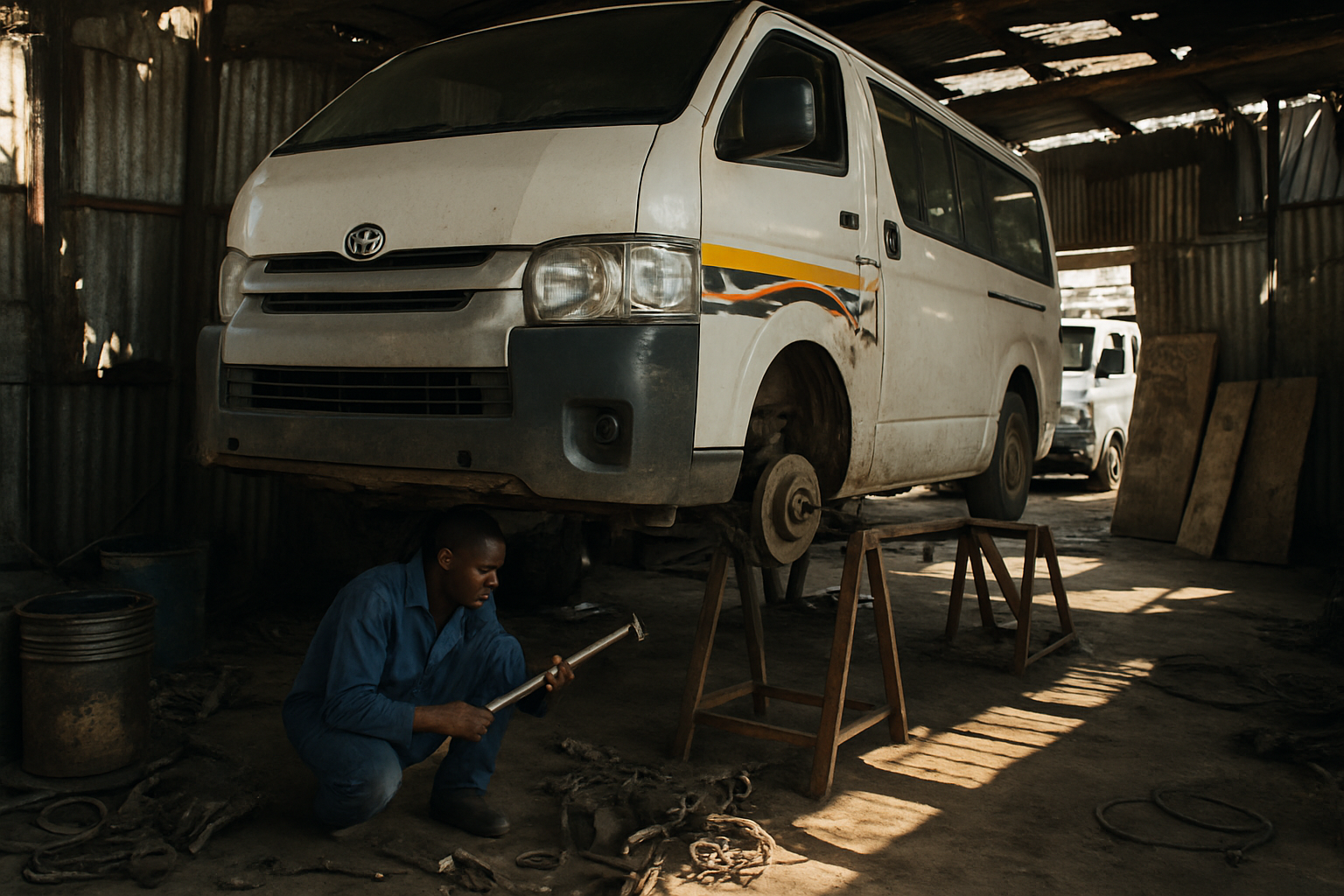
The South African minibus taxi industry moves 15 million passengers daily. More than buses. More than Gautrain. More than all ride-hailing apps combined. Over 250,000 Toyota HiAce (Quantum) and Sesfikile taxis criss-cross every city, every township, every rural route in the country.
And every single one of them is being pushed to its limits.
A typical Quantum on the Soweto–Joburg CBD route covers 200–300 km daily with 15 passengers. It stops and starts hundreds of times. It sits in traffic on the N1 and M1. The brakes glow red. The suspension groans. The engine overheats in Highveld summers.
This should be the most profitable market for any workshop in South Africa. Yet most mechanics in Germiston, Pinetown, and Parow focus on private cars and leave taxi work to informal roadside operations.
The Revenue Per Taxi
- Oil change every 2 weeks: R800–1,200 (2.7L 2TR-FE runs hard, oil breaks down fast)
- Brake pads monthly: R1,500–3,000 (constant stopping, full passenger load)
- Suspension every 2–3 months: R3,000–8,000 (potholes + overloading)
- Clutch every 6–12 months: R5,000–12,000 (stop-start traffic)
- Gearbox service every 6 months: R2,000–4,000
- Roadworthy preparation annually: R2,000–5,000
One taxi = R5,000–15,000 per month in maintenance. A taxi owner with 5 vehicles = R25,000–75,000. Three owners = R75,000–225,000/month. The work is constant, the customers are loyal (when they trust you), and the vehicles are all the same model — making parts stocking simple.
Why Taxi Owners Are Demanding But Loyal
A taxi off the road costs the owner R2,000–5,000 per day in lost revenue. They are demanding because time is literally money. "I need it fixed by 4am tomorrow" is not unusual — many taxis start their first route at 4:30am.
But here is the flip side: when a taxi owner finds a mechanic who works fast, does quality repairs, and does not overcharge — they NEVER leave. They send every taxi they own. They send their friends' taxis. They send their association members.
The taxi industry runs on trust and reputation. One good relationship opens the door to an entire rank.
The Roadworthy Certificate Opportunity
Every taxi needs a roadworthy certificate for SANTACO registration, licence renewal, and operating permits. Failing the roadworthy means the taxi cannot operate — a disaster for the owner.
Offer a "Roadworthy Ready" package: full pre-inspection covering everything the testing station checks — brakes, lights, steering, suspension, emissions, tyres, seat belts, body condition. R1,500–3,000 for the inspection, plus repair costs.
The guarantee: "Fix what we recommend, and you pass first time. If you fail, we cover the re-inspection fee." This guarantee costs you nothing (your inspection is thorough) but gives the owner confidence to spend money on repairs at your workshop.
Parts Stocking for Taxis
The beauty of the taxi market: 90%+ are Toyota Quantum (HiAce). Stock common Quantum parts and you cover almost every taxi that walks in:
- Brake pads (front and rear): R500–800/set, stock 10 sets
- Shock absorbers: R600–1,200 each, stock 8
- Clutch kit: R2,500–4,000, stock 3
- Oil filters + air filters: R100–200 each, stock 20
- Wheel bearings: R400–800 each, stock 6
- Fan belt: R200–400, stock 5
Total stock investment: R25,000–35,000. Everything is for one vehicle model. No guessing, no wrong parts, no wasted stock.
Getting Started
Find your local taxi rank. Talk to one owner. "Bring me one taxi. I will service it properly, give you a professional invoice, and have it back to you by tomorrow morning." If your work is good and your price is fair, that owner will be your customer for life — and bring others.
Track every taxi, every service, every part with Mekavo — free for South African workshops. Professional invoices in Rand, service history per vehicle, maintenance reminders. The kind of system that makes taxi owners trust you with their R500,000 Quantums.