English
 Español
 Deutsch
 FI
FI
 PT
PT
 BR
BR
 FR
FR
 AR
AR
 ZH
ZH
 UR
UR
 TL
TL
 TH
TH
 TR
TR
 PL
PL
 RO
RO
 BG
BG
 ID
ID
 MS
MS
 LT
LT
 IT
IT
 NL
NL
 CS
CS
 SK
SK
 SL
SL
 ET
ET
 SV
SV
 NB
NB
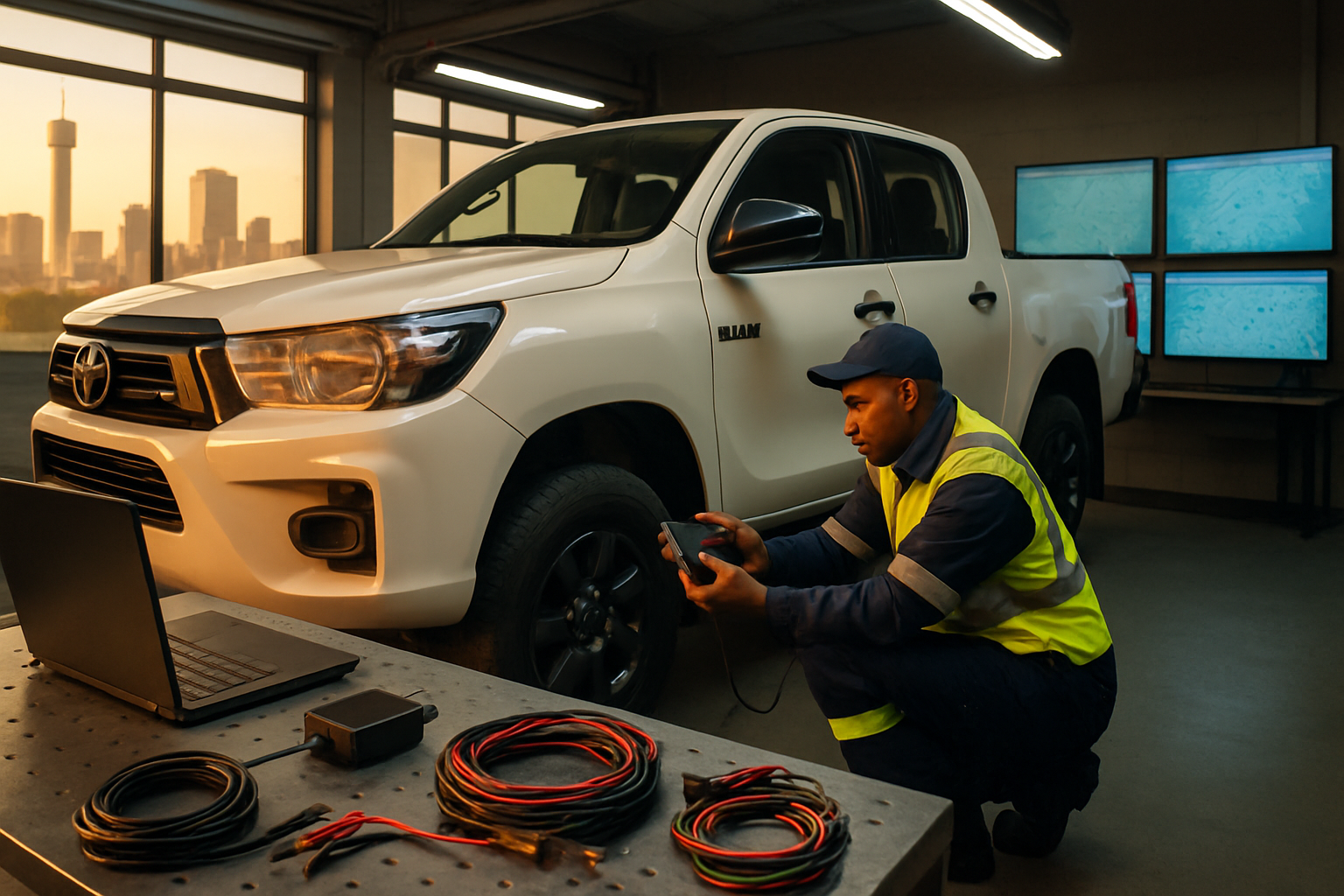
Vehicle theft and hijacking in South Africa are not theoretical risks. SAPS reports tens of thousands of vehicles stolen each year, with hijackings concentrated in Gauteng, KwaZulu-Natal and Western Cape metros. Hilux, Ranger, Land Cruiser, Fortuner, Tahoe and high-end German SUVs are at the top of every theft list.
Most South African comprehensive insurance policies now require an approved tracking device for vehicles above certain values, and offer significant premium discounts for additional security measures. The right setup buys real protection AND meaningful insurance savings. The wrong setup wastes money on theatre.
Here is the honest guide.
The Real Numbers: Theft and Recovery
SAPS publishes vehicle theft and recovery statistics annually. Headline patterns:
- Tens of thousands of cars stolen each year nationally
- Recovery rates significantly higher with tracking devices than without (industry-reported recovery rates over 80% for tracked vehicles, single-digit for untracked)
- Hijackings concentrated in metros (Gauteng, KZN, Western Cape) with significant rural variation
- Bakkies and high-value SUVs disproportionately targeted (theft for cross-border export AND for parts)
The risk is not equal across SA. Inland metros face higher hijacking rates; coastal and rural areas face more opportunistic theft and break-ins.
The 4 Layers of SA Vehicle Security
Layer 1 — Built-in factory security (already on most modern cars)
- Engine immobiliser: prevents starting without the correct key transponder. Standard on all modern vehicles. Effective against opportunistic theft, less effective against organised theft (key cloning, relay attacks).
- Central locking with deadlocks: prevents unlocking via interior handle once locked. Standard on most vehicles.
- Alarm system: sounds when doors are forced open. Standard on most modern vehicles.
- Steering column lock: when key is removed, steering column locks. Standard on all vehicles.
These are baseline. They prevent the unsophisticated attempts. They do not stop hijackings or organised crime.
Layer 2 — Tracking device (essentially required by insurers)
An installed and active tracking device that meets VESA (Vehicle Security Association of South Africa) standards. Major SA providers:
- Tracker — largest market share, multiple service tiers
- Netstar — comparable, owned by Altron
- Beame — bundled often with insurance
- Cartrack — global brand, also fleet management focus
- Pointer — fleet and consumer
What a tracker actually does:
- GPS / GSM continuous location reporting
- Geofence alerts (notify if vehicle leaves designated area)
- Tilt sensor (alerts if towed away)
- SOS / panic button (some models)
- Recovery dispatch — when activated, the tracking company contacts SAPS and dispatches recovery teams
Cost:
- Installation: R1,500-R4,500 once-off (sometimes free with insurance bundle)
- Monthly subscription: R150-R500 depending on tier and features
- Annual cost: R1,800-R6,000
Insurance savings: typically 15-30% off comprehensive premium versus the same vehicle without a tracker. For a R20,000 annual comprehensive premium, tracker often saves R3,000-R6,000 — net of subscription, often free or net positive.
Layer 3 — Mechanical and electronic add-ons
Beyond the basics, layered security adds friction for would-be thieves:
- Steering wheel lock (Disklok or similar): visible deterrent, slows opportunistic theft. R600-R1,500.
- Pedal lock: prevents driving even with key. R400-R900.
- Gear lever lock: prevents shifting out of park. R300-R700.
- Aftermarket alarm system with sensors: glass break, motion, ultrasonic interior. R1,500-R5,000 fitted.
- Hidden kill switch: secondary fuel pump or ignition cutoff installed by an automotive electrician. R800-R2,000. Highly effective against rapid theft.
- Smash & grab tinting / film: holds glass together if smashed, slows window break-in. R1,500-R4,000.
Layer 4 — Operational (free, often most effective)
- Park inside: garage > carport > driveway > street. Each step down adds risk. Many insurers require garaged or driveway parking for higher-value vehicles.
- Avoid known hijack hotspots at known times (most metros publish hijack heat maps; insurers use this data)
- Vary routes and times if you are the kind of profile organised crime targets
- Do not leave key fobs near front doors at home — relay attacks (criminals amplify the key signal from outside) are real and increasing
- Use a Faraday pouch for key fobs: blocks signal when stored. R150-R400.
- Lock manual doors when driving: hijackings often happen at traffic lights and stop streets when doors are unlocked
- Be cautious approaching driveway: many hijackings happen at the gate when you slow to enter or exit
The Hijacking Reality (Different from Theft)
Hijacking is theft with you in the vehicle. The advice differs from theft prevention:
- Comply. SAPS and insurance industry guidance is uniformly: do not resist. The vehicle is replaceable; you are not.
- Hand over keys without argument. Hijackers want speed.
- Get out of the vehicle if instructed. Most hijackings end with the perpetrators driving off — the longer you stay, the higher the risk to you.
- Activate the tracker recovery as soon as you are safe. Most tracking companies offer post-incident contact (SMS to a number, app button, hardware panic button).
- Report immediately to SAPS. Recovery time is the single biggest factor in chasing the vehicle before it is stripped or crossed-border.
What Insurers Actually Reward
Insurance underwriters in SA explicitly price for security setup:
| Setup | Premium impact (typical) |
|---|---|
| Standard car, no tracker, street parking | Baseline (often refused for high-value cars) |
| + VESA-approved tracker installed | 15-30% lower |
| + Garaged at home overnight | 5-10% lower |
| + Driver under 25 | 30-60% higher |
| + Vehicle on top-10 theft list (Hilux, Fortuner, etc.) | 10-25% higher (but tracker discount partially offsets) |
| + Live in Joburg vs. Bloemfontein | 20-40% higher |
| + Anti-hijack package (jamming detector, panic dispatch) | Additional 5-15% off |
Net effect: an SA owner who layers tracker + garage + Faraday pouch + driving discipline often pays 30-40% less than the unprotected baseline — AND has materially better recovery odds if something happens.
Common Mistakes
- "My car is too old / too cheap to be stolen": parts theft is real and indiscriminate. Catalytic converters (high precious metal value) are stolen from old Yaris and Polo Vivo daily. Old Toyota Corollas and Tazz are high-volume theft for export to other African countries.
- "I do not declare the tracker because I want to save the subscription": insurer requires you to maintain the tracker; if it lapses and you have a claim, the claim can be denied.
- Buying the cheapest tracker subscription tier: basic plans often do not include recovery dispatch, only location reporting. Worth paying for the tier that includes active recovery.
- Leaving key fob next to the front door: relay attacks are a 30-second crime. Faraday pouch costs R200 and stops it cold.
If Your Car Is Stolen
- Contact tracking company immediately — they activate recovery and dispatch teams. Time matters: most stolen vehicles are stripped or crossed-border within 24 hours.
- Report to SAPS immediately — open a case at the nearest station. Get the case number; you need it for insurance.
- Notify your insurance company — claim opens. They will request the SAPS case number.
- Notify the bank if vehicle is financed — they have a security interest and need to know.
- Do not pay any "ransom" demands — common scam after theft, contacts often have no actual control of the vehicle. Report any contact to SAPS.
Sources & Further Reading
- South African Police Service (SAPS) — annual crime statistics including vehicle theft and hijacking
- Statistics South Africa — Victims of Crime Survey, vehicle-related crime data
- Road Traffic Management Corporation (RTMC) — vehicle registration and theft tracking
- Financial Sector Conduct Authority (FSCA) — insurance industry regulation
- Automobile Association of South Africa (AA) — vehicle security advice and breakdown statistics
- South African Government services — vehicle registration, lost-keys procedures
- VESA (Vehicle Security Association of South Africa) — standards body for approved security devices — vesa.co.za
- Tracker, Netstar, Beame, Cartrack — commercial tracking providers (compare features and recovery teams in your area)
- Outsurance, MiWay, Discovery Insure, King Price, Naked — major SA insurance providers (compare premiums for your specific vehicle and address)
Related Mekavo articles: Real annual cost of running a car in SA — where tracker subscription fits in the broader budget.
Why We Care
My Mekavo is free for South African car owners. Log your tracker installation, monthly subscription, security upgrades, insurance policies and quotes — all in one place. When you renew insurance or upgrade vehicles, you have the data to compare properly. When you sell, the buyer sees a documented security history that supports asking price.
Note on scenarios: The shops, names, addresses, and case reference numbers in this article are fictional and used solely to illustrate how the cited statutes operate in practice. Any resemblance to actual shops, owners, or events is coincidental. The statutes, regulations, and agency procedures cited are real and current as of publication.