English
 AR
AR
The Problem Every Muscat Workshop Knows Too Well
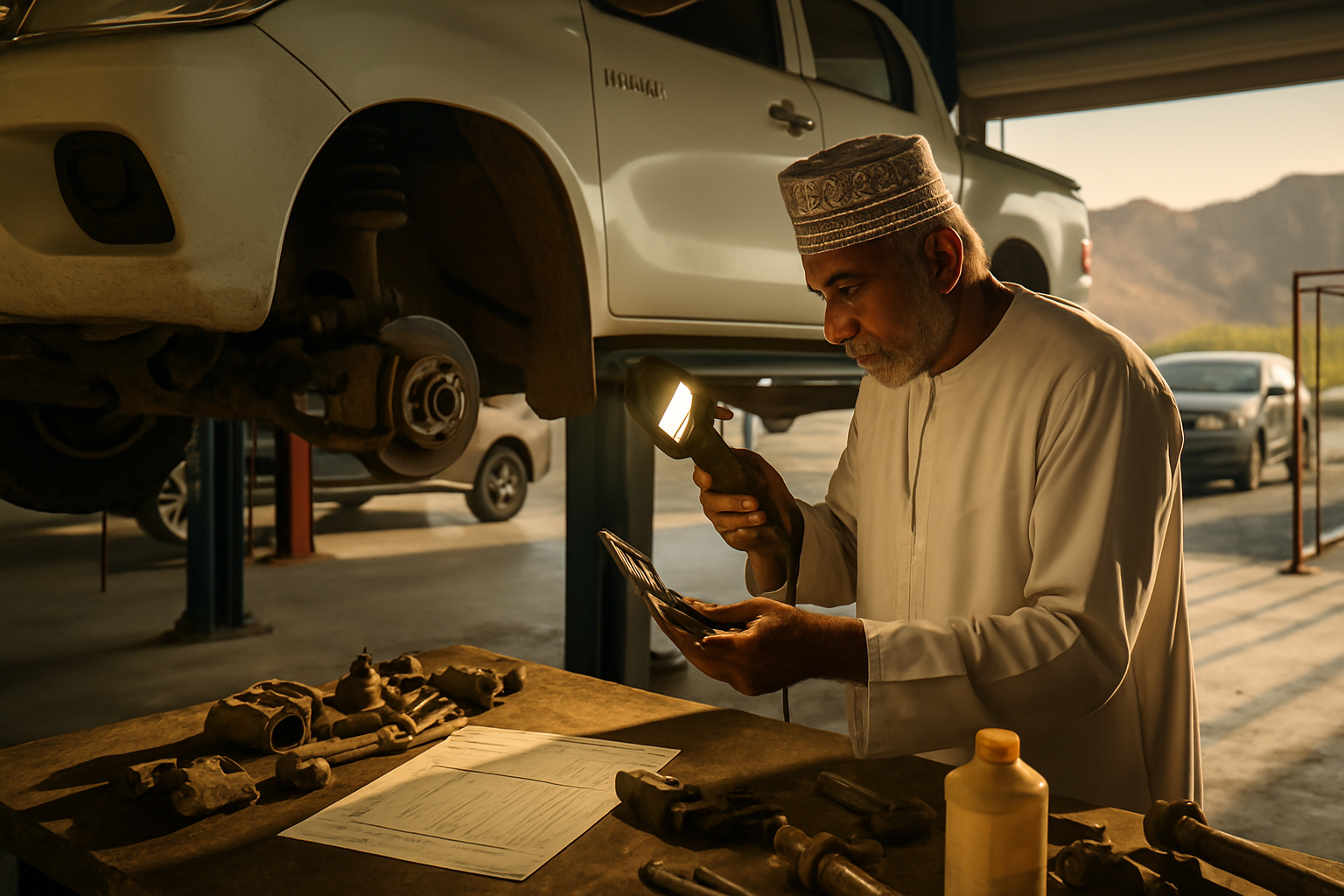
Ahmad runs a busy workshop in Ruwi, and every April through June, his story repeats itself dozens of times. A customer brings in their 2018 Toyota Hilux for Fahes inspection—it passes without issues at the ROP centre. But when Ahmad checks the brake pads back at his workshop, they're down to 2mm. The brake fluid is dark brown. The suspension bushings are cracked from three years of wadi adventures.
"The customer sees the Fahes pass certificate and thinks everything is perfect," Ahmad told me last month. "They refuse the brake service because 'the car just passed inspection.' Then they come back six weeks later when the brakes are grinding metal on metal, angry that I didn't 'fix it properly' the first time."
Sound familiar? You're not alone. Workshops across Oman are losing 1,500 to 2,500 OMR monthly because they can't bridge the gap between what Fahes inspection requires and what vehicles actually need to survive Omani driving conditions.
Why Fahes Pass Doesn't Mean Safe
Here's what most customers don't understand: Fahes inspection at ROP centres checks basic legal requirements—lights work, horn functions, major structural damage isn't visible. It's not a comprehensive safety audit.
Khalid, who runs a workshop near Sohar port, explained it perfectly: "Fahes will pass a car with brake pads at 1mm thickness. That's technically legal, but those pads won't survive two months of heavy braking with loaded trucks on the Muscat-Sohar highway."
The disconnect is real:
- Fahes checks: Brake lights illuminate when pedal is pressed
- Reality needs: Brake pads, fluid condition, line integrity for mountain descents
- Fahes checks: Tires have minimum 1.6mm tread depth
- Reality needs: Adequate tread for 48°C+ asphalt and sudden rain
- Fahes checks: Suspension components aren't completely broken
- Reality needs: Components that handle wadi crossings and speed bumps daily
The Revenue You're Leaving on the Table
Let me show you exactly what workshops are missing. Mariam runs a successful operation in Nizwa, and she tracked her numbers for three months during peak Fahes season:
| Service Category | Average Price (OMR) | Monthly Conversions | Revenue Impact |
|---|---|---|---|
| Brake fluid flush | 200 | 8 | 1,600 |
| Suspension inspection + minor repairs | 300 | 5 | 1,500 |
| Tire replacement (partial sets) | 450 | 3 | 1,350 |
| Coolant system service | 250 | 6 | 1,500 |
"Once I started explaining these as separate safety services rather than 'additional repairs,' my monthly revenue increased by 2,200 OMR," Mariam explained. "Customers understand the value when you frame it correctly."
The Psychology Behind Customer Resistance
The biggest mistake workshops make is treating post-Fahes recommendations like traditional upselling. Customers have just received official confirmation that their vehicle is roadworthy—psychologically, they're in "everything is fine" mode.
Saeed, whose workshop handles fleet maintenance for several Salalah tourism companies, learned this the hard way: "I used to say 'While you're here, you should also do the brakes.' Customers thought I was trying to squeeze extra money from them. Now I separate it completely: 'Your Fahes is complete. Let me show you what we found during our complementary safety review.'"
"The key is positioning these as independent services that happen to coincide with Fahes timing, not as add-ons to the inspection itself."
Reframing the Conversation
Instead of fighting customer psychology, work with it. Here's the approach that converts:
- Separate the services: "Your Fahes inspection is complete and passed. Now, would you like me to check what the ROP inspection doesn't cover?"
- Focus on Oman-specific risks: "Fahes doesn't test brake performance in 45°C heat" rather than "Your brakes need work"
- Use timeframes: "This will keep you safe for the next six months" rather than "This needs fixing"
- Offer choices: Present three service levels instead of all-or-nothing
The Services That Actually Convert
Not all post-Fahes services are created equal. Based on conversations with workshop owners from Sur to Sohar, here are the ones that customers actually purchase:
1. Brake System Comprehensive (150-250 OMR)
This isn't just brake pads—it's a complete brake safety audit:
- Brake fluid replacement (essential before summer heat)
- Brake line inspection for corrosion
- Pad thickness measurement and documentation
- Brake performance test under load
"I don't sell brake pad replacement," explains Rashid from Muscat. "I sell 'Summer Brake Safety Package.' Customers understand that brakes work differently when the road surface is 60 degrees."
2. Suspension and Steering Safety Review (200-400 OMR)
Oman's roads are tough on suspension—speed bumps, wadi crossings, construction zones. Fahes doesn't test this thoroughly:
- Shock absorber performance test
- Bushing and joint inspection
- Wheel alignment check
- Steering response evaluation
3. Tire Safety and Performance Upgrade (300-600 OMR)
This is often the easiest sell because customers can see tire wear themselves:
- Tread depth measurement at multiple points
- Sidewall inspection for heat damage
- Pressure monitoring system check
- Seasonal tire recommendations
4. Cooling System Preparation (200-300 OMR)
With summer temperatures reaching 48°C, this practically sells itself:
- Coolant replacement with high-temperature formula
- Radiator performance test
- Thermostat operation verification
- Cooling fan inspection
The Presentation That Converts
Omar, whose workshop serves the industrial area near PDO facilities, has perfected his post-Fahes presentation. Here's his exact script:
"Congratulations, your vehicle passed Fahes inspection. The ROP centre confirmed it meets legal requirements. Now, I'd like to show you what they don't check—the things that keep you safe in real Omani driving conditions. This is completely separate from Fahes, but many customers find it valuable."
He then presents three options:
- Basic Safety Review (Free): Visual inspection, verbal recommendations
- Comprehensive Safety Package (299 OMR): Detailed testing, minor adjustments, written report
- Complete Protection Service (599 OMR): All systems checked, necessary replacements, 6-month guarantee
"About 60% choose the comprehensive package," Omar reports. "They appreciate having choices instead of being told what they need."
Pricing Strategy That Works
Pricing these services correctly is crucial. Too low, and customers suspect poor quality. Too high, and they think you're gouging them.
Here's what successful workshops charge in different regions:
| Region | Brake Service | Suspension Check | Tire Service | Cooling Service |
|---|---|---|---|---|
| Muscat/Ruwi | 200-250 | 300-400 | 400-600 | 250-300 |
| Sohar/Nizwa | 180-220 | 250-350 | 350-500 | 200-250 |
| Salalah/Sur | 150-200 | 200-300 | 300-450 | 180-220 |
The key is justifying the price with value, not just listing services. "I don't charge for brake pad replacement," says Fatima, who runs a successful workshop in Muscat. "I charge for 'Six months of confident braking in Oman conditions.' Customers pay for peace of mind, not parts."
Documentation That Builds Trust
Nothing kills customer confidence like poor documentation. Successful workshops create professional reports that customers can understand and keep.
Your post-Fahes report should include:
- Clear photos of identified issues
- Measurements with industry standards
- Risk assessment in simple language
- Service timeline recommendations
- Warranty information
- Cost breakdown with parts and labor separated
"I take photos of everything," explains Abdullah from Sohar. "Customers trust what they can see. When I show them a photo of their brake pads next to new ones, they understand immediately."
The Complete System: Your Post-Fahes Checklist
Here's the practical system that workshops use to capture this revenue consistently:
Step 1: Immediate Post-Fahes Inspection
As soon as the vehicle returns from Fahes (passed or failed), conduct your comprehensive safety review:
- Photo documentation of all major components
- Measurement recording (brake pad thickness, tire tread, fluid levels)
- Performance testing where possible
- Written notes in both English and Arabic
Step 2: Customer Presentation
Use this exact sequence:
- Congratulate on Fahes pass
- Explain the difference between legal and safe
- Present findings with photos
- Offer service packages, not individual repairs
- Provide written estimate with warranty terms
Step 3: Follow-up System
Don't let customers disappear. Create a system:
- Text reminders at 2 weeks, 1 month, and 2 months
- Seasonal safety check offers
- Emergency contact for breakdown situations
- Loyalty discounts for returning customers
Making It Work in Your Workshop
The workshop owners making this system work all have one thing in common: they treat post-Fahes services as legitimate safety offerings, not sales tactics.
"My customers know I'm looking out for their safety, not my profit," says Hamad, whose Nizwa workshop has built a reputation for honest service. "When they trust your motives, they'll pay for quality work."
Start small—pick one service category and perfect your presentation. Track your conversion rates and adjust pricing based on customer response. Most importantly, deliver exactly what you promise and document everything clearly.
"The workshops making 2,500 OMR extra monthly aren't the ones with the best marketing—they're the ones customers trust to tell them what they actually need."
Your Fahes season customers are already bringing their vehicles to you. The revenue opportunity is sitting in your parking area every day. The question is: are you going to capture it, or let it drive away to your competitor who will?