English
 AR
AR
The 18,000 OMR Wake-Up Call That Changed Everything
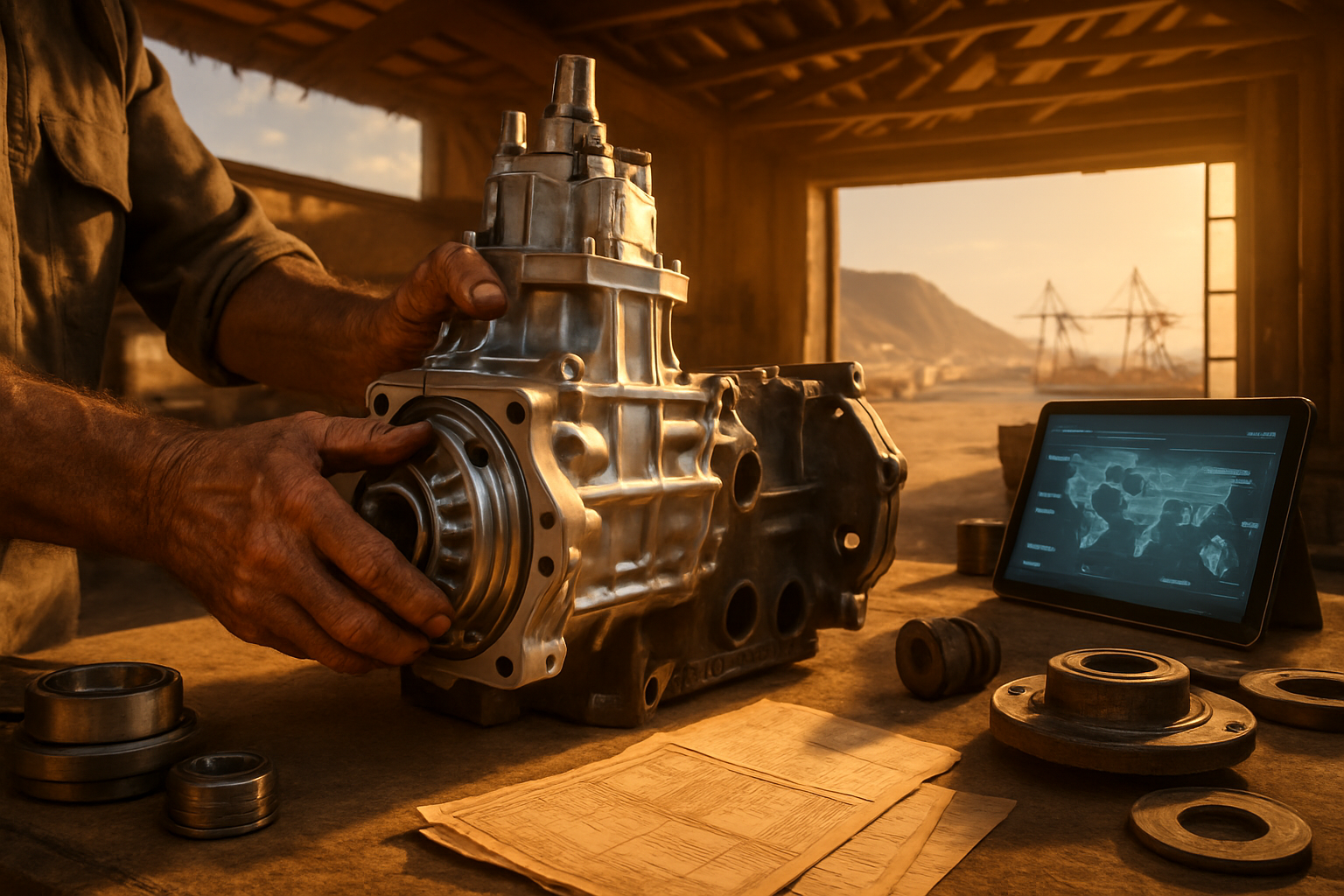
Ahmed Al-Hashmi runs Al-Noor Workshop in Ruwi, and last year he learned the hard way why Sohar Port delays can kill your business. Three Land Cruiser gearbox jobs — worth 6,000 OMR each — walked out his door because customers got tired of waiting. The parts he ordered from India in March didn't clear customs until May.
"I had the expertise, I had the space, I had everything except the parts," Ahmed told me over coffee near his workshop. "My customer took his V8 to a competitor who had local stock. Eighteen thousand riyals, gone."
Sound familiar? If you're importing engine components through Sohar or Salalah ports, you've probably lived this nightmare. The good news: workshops across Oman are cutting these delays from 6-8 weeks down to 2-3 weeks using smarter documentation, strategic sourcing, and honest customer communication.
Why Your Engine Parts Get Stuck for Two Months
Khalid Al-Balushi handles customs clearance for workshops across Muscat, and he's seen the same problems repeat hundreds of times. "The biggest issue isn't the port itself," he explains. "It's that most workshops don't understand which HS codes trigger extra scrutiny."
Here's what actually happens to your parts at Sohar:
- Gearboxes and transmissions (HS 8708.40): Require detailed technical specifications and often physical inspection
- Turbochargers (HS 8414.80): Need manufacturer certificates proving they're not counterfeit
- Engine blocks (HS 8409.91): Must show compatibility documentation with vehicle types registered in Oman
- Electronic engine management systems: Get held for CITC telecommunications compliance checks
"The customs officers aren't trying to make your life difficult," Khalid adds. "But if your paperwork is incomplete or your declared value looks suspicious, they'll hold everything for manual review. That's where weeks turn into months."
The Documents That Actually Matter
Forget the generic advice you've heard. These are the specific documents that get your parts moving:
- Certificate of Origin with manufacturer seal: Not just any certificate — it needs the actual manufacturer's stamp, not the distributor's
- Detailed technical specifications: Include part numbers, compatibility charts, and performance ratings in English and Arabic
- Accurate declared value with supporting invoices: Match your customs declaration exactly to your purchase invoice — even small discrepancies trigger delays
- Import license for restricted items: Some engine management systems require pre-approval from Ministry of Commerce
"I started including photos of the actual parts with serial numbers visible. Sounds crazy, but it cut my clearance time from 6 weeks to 10 days." — Saeed Al-Rashdi, Desert Eagle Auto Parts, Nizwa
The Hidden Costs Nobody Warns You About
Fatima runs Al-Khaleej Motors in Sohar, and she learned about import costs the expensive way. "I ordered a batch of Hilux gearboxes for 4,200 OMR. By the time I got them out of the port, I'd spent 5,850 OMR total."
Here's the real cost breakdown for a typical 4,000 OMR parts order:
| Cost Component | Amount (OMR) | Why It Happens |
|---|---|---|
| Parts cost | 4,000 | Base invoice price |
| Customs duties (5-15%) | 400 | Varies by HS code and country of origin |
| VAT (5%) | 220 | Applied to parts cost + duties |
| Port handling charges | 180 | Per container/shipment |
| Demurrage (if delayed) | 150 | Storage fees after free period |
| Clearance agent fees | 120 | Professional customs handling |
| Total actual cost | 5,070 | 27% above invoice price |
"The worst part is demurrage," Fatima explains. "Every day your parts sit there costs money. I've seen workshops pay 300-400 OMR in storage fees because they didn't have the right paperwork ready."
Smart Sourcing: What to Import vs. What to Buy Local
Omar Al-Hinai runs three workshops in Muscat and has this figured out. He imports certain parts quarterly in bulk, sources others from UAE suppliers for faster delivery, and keeps a small emergency stock of the most common failures.
Import Quarterly (3-Month Orders):
- Complete gearboxes: High value, predictable demand, worth the wait
- Engine blocks: Rarely needed urgently, significant cost savings
- Turbochargers for fleet vehicles: Plan maintenance schedules around delivery
- Specialized tools and diagnostic equipment: Long-term investments
Buy from UAE for Quick Delivery (3-7 Days):
- Common wear parts: Brake pads, filters, belts
- Emergency replacement items: Starters, alternators, fuel pumps
- Customer-waiting jobs: Anything needed within 2 weeks
- One-off repairs: Unique parts for older vehicles
"I keep 8,000 OMR worth of common parts in stock, import 15,000 OMR quarterly, and use Dubai suppliers for everything urgent. It's more expensive per part, but I never lose jobs to delays." — Omar Al-Hinai, Gulf Auto Services
The Capital Math That Makes Sense
Here's how Omar calculates his inventory investment:
- Emergency stock (local): 8,000 OMR — turns over every 2 months
- Quarterly imports: 15,000 OMR — ordered based on 3-month booking schedule
- UAE rush orders: 3,000 OMR monthly — premium pricing but immediate availability
"Total inventory investment is 23,000 OMR, but it generates 12,000 OMR monthly revenue because I can actually complete jobs," Omar explains. "Compare that to tying up 20,000 OMR in parts stuck at the port for 8 weeks — that's dead money."
How to Quote Customers When You're Waiting on Parts
This is where most workshops lose credibility. Customers in Oman understand that imported parts take time, but they need honest timelines and realistic expectations.
Mansour Al-Farsi at Wadi Workshop in Nizwa has developed a system that keeps customers informed without losing their business:
The Honest Timeline Conversation:
Week 1: "Your gearbox is ordered and should arrive in Sohar within 10-14 days. We'll track it daily and update you every Friday."
Week 3: "Parts are in port, clearing customs now. We estimate 5-7 more days. We can arrange a rental car allowance of 15 OMR daily starting Monday if you need transport."
Week 5: "Customs is requesting additional documentation. We're working with our agent to resolve this by Wednesday. Rental allowance continues, and we'll discount labor by 10% for the delay."
"Customers appreciate honesty. If I tell them 3 weeks and deliver in 2, they're happy. If I promise 1 week and take 6, I've lost them forever." — Mansour Al-Farsi, Wadi Workshop
Rental Car Expectations in Oman
Most workshops don't budget for this, but customer expectations are changing. For major jobs lasting over 2 weeks:
- Basic transport allowance: 10-15 OMR per day
- Equivalent vehicle rental: 25-35 OMR per day
- Commercial vehicle substitute: 40-50 OMR per day
"I factor rental costs into my quotes upfront," Mansour explains. "It's better to quote higher initially than surprise customers with delays they can't afford."
How Software Prevents You from Accepting Impossible Jobs
Ali Al-Kindi at Modern Motors in Ruwi learned this lesson after accepting three transmission jobs in one week — without checking his parts inventory or pending deliveries.
"I had the skills, I had the space, but I didn't have a system to track what I could actually deliver," he admits. "I was running my workshop on hope instead of data."
Now his shop management system tracks:
- Current inventory levels: Real-time stock of critical parts
- Pending imports: What's ordered, where it is in the customs process
- Job scheduling: Planned work matched to parts availability
- Customer commitments: Promised delivery dates linked to parts arrival
The Dashboard That Changed Everything
Ali's morning routine now starts with checking his system dashboard:
- Parts due this week: What should clear customs
- Jobs waiting on parts: Customer updates needed
- Capacity for new work: What he can actually commit to
- Reorder alerts: Critical stock running low
"The software doesn't just manage my inventory — it manages my promises to customers. I can't accidentally commit to a job I can't complete on time because the system won't let me schedule it," Ali explains.
Real Results: From 8 Weeks to 3 Weeks
These strategies work. Workshops implementing proper documentation, strategic sourcing, and honest communication are seeing dramatic improvements:
- Average parts delivery: Reduced from 6-8 weeks to 2-3 weeks
- Customer retention: Up 40% for major repair jobs
- Capital efficiency: 60% less money tied up in delayed shipments
- Job completion rate: 90% of quoted delivery dates met vs. 60% previously
"Last month I completed 8 gearbox jobs that would have walked away under my old system. That's 45,000 OMR in revenue I would have lost to competitors with local stock." — Ahmed Al-Hashmi, Al-Noor Workshop
The Action Plan: What to Do This Week
Don't wait for the next shipment delay to cost you customers. Here's what successful workshops are doing right now:
This Week:
- Audit your current pending imports — what's stuck and why
- Contact your customs agent to review documentation standards
- Calculate the true cost of your last three part orders (including all fees)
- List your 10 most common emergency parts and find UAE suppliers
This Month:
- Establish relationships with 2-3 reliable UAE parts suppliers
- Create standard customer communication templates for delays
- Set up inventory tracking that shows real parts availability
- Build rental car allowances into your major job quotes
This Quarter:
- Plan your bulk import orders around seasonal demand
- Implement job scheduling linked to actual parts availability
- Train your staff on honest timeline communication
- Review and optimize your inventory investment strategy
The workshops thriving in Oman's competitive market aren't just the ones with the best mechanics — they're the ones with the most reliable parts supply and the most honest customer communication. Stop losing jobs to delays you can prevent.