English
 AR
AR
The Silent Cash Drain Bleeding Your Workshop Dry
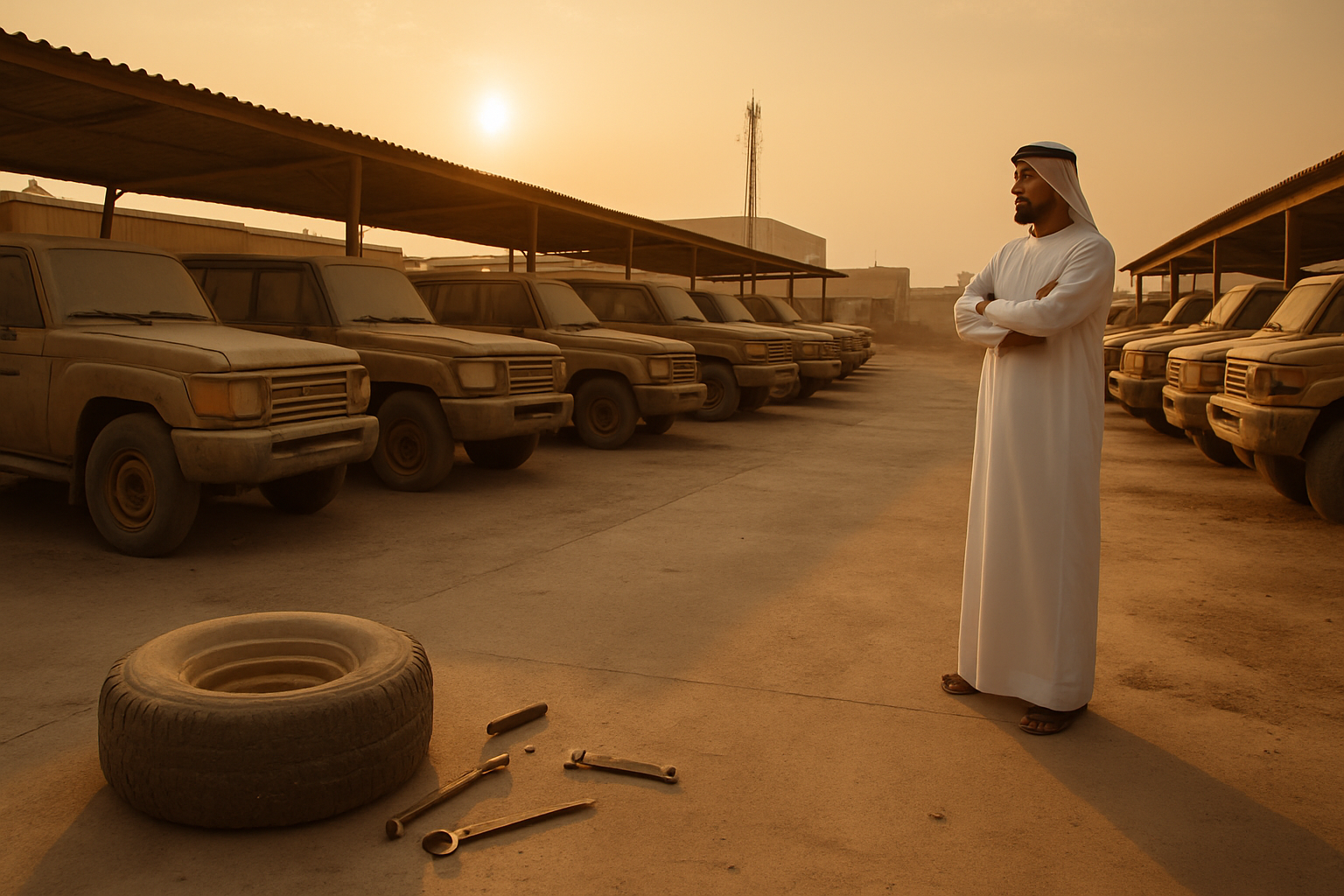
Ahmad Al-Mansouri owns three workshops in Industrial Area. Last month, he walked me through his yard, pointing to seven vehicles that have been sitting there for months. "This Land Cruiser? Customer owes 4,200 QAR for transmission work. Been here since March," he said, kicking the tire. "That Patrol over there? 2,800 QAR for engine rebuild. Owner stopped answering my calls two months ago."
The math is brutal. Ahmad calculates he's losing roughly 2,400 QAR monthly just on these abandoned vehicles—storage space, electricity for his covered bays, and the opportunity cost of turning away paying customers because his lifts are occupied by dead deals.
Sound familiar? You're not alone. Most workshops in Doha lose 1,500-3,000 QAR every month to abandoned vehicles, and many owners don't realize they have legal rights to recover this money.
Your Legal Rights as a Workshop Owner in Qatar
Here's what most mechanics don't know: Qatar's Civil Code gives workshop owners powerful tools to recover unpaid bills, but you must follow specific procedures to protect yourself legally.
The Mechanic's Lien: Your First Line of Defense
Under Qatar Civil Code Article 1179, workshops have what lawyers call a "possessory lien" on vehicles. This means you can legally hold the vehicle until the bill is paid. But there's a catch—you must have clear written terms established before starting work.
Saeed Al-Kuwari, who runs a transmission shop in Al Rayyan, learned this the hard way. "I kept a customer's Pajero for six months thinking I had the right. When he finally took me to court, the judge said my verbal agreement wasn't enough. Cost me 1,800 QAR in legal fees plus I had to release the car."
"The key is documentation from day one. No exceptions, no verbal agreements, even for regulars." - Saeed Al-Kuwari, Al Rayyan Transmission Center
Storage Rights and Compensation
Once you establish a valid lien, you can charge reasonable storage fees. Most workshops in Industrial Area charge 30-50 QAR per day for covered storage, 20-30 QAR for open yard space. These fees compound quickly—a vehicle sitting for three months generates 1,800-4,500 QAR in storage charges alone.
The Documentation System That Protects Your Money
Visit any successful workshop in Doha, and you'll see the same thing: meticulous paperwork. Here's the exact system workshop owners use to build bulletproof abandonment cases.
Step 1: The Work Authorization (Before You Touch Anything)
Your work authorization must include:
- Detailed description of work to be performed
- Estimated cost breakdown (parts and labor)
- Daily storage rate after completion
- Timeline for payment after job completion
- Clear statement: "Vehicle will be considered abandoned after 30 days without payment"
- Customer signature AND date
Omar Hassan, who operates a body shop near Hamad International Airport, shows me his standard form. "Every single line matters. See this clause here? 'Customer agrees that failure to collect vehicle within 30 days of work completion constitutes abandonment and authorizes disposal.' That one sentence has saved me thousands."
Step 2: The Completion Notice
The day you finish work, send written notice to the customer. WhatsApp messages count as written notice in Qatar courts, but always follow up with SMS and keep screenshots.
Your completion notice should state:
- Work has been completed
- Total amount due (itemized)
- Vehicle ready for pickup
- Storage charges begin in X days
- Contact information for questions
Step 3: The Payment Demand Sequence
Khalid Al-Thani, a veteran mechanic in Lusail, uses a three-notice system:
Day 7 after completion: Friendly payment reminder via WhatsApp and SMS
Day 21: Formal payment demand with storage charges calculation
Day 30: Final notice stating vehicle will be considered abandoned
"The key is being polite but firm," Khalid explains. "I've collected thousands just by showing customers I'm serious about my process."
Setting Payment Terms That Actually Work
Prevention beats recovery every time. The best workshop owners in Qatar have payment systems that virtually eliminate abandonment problems.
The 50% Deposit Rule
Successful workshops require 50% deposit before starting work on jobs over 1,000 QAR. For major jobs (5,000+ QAR), some require 70%.
"I used to be too nice," admits Mansour Al-Dosari, who runs an engine rebuild shop in Industrial Area. "Now I get half up front, no exceptions. My abandonment rate dropped from maybe 15% to less than 2%."
Progress Payment Schedule
For extensive jobs lasting weeks, break payments into milestones:
- 50% to start work
- 30% at 50% completion
- 20% on delivery
This keeps customers invested throughout the process and limits your exposure if they walk away.
The Legal Sale Process: Turning Abandoned Vehicles Into Cash
After following proper notice procedures, you have several options to recover your money legally.
Option 1: Part Sales (Most Profitable)
Many workshops find selling valuable parts separately generates more revenue than whole vehicle sales. Land Cruiser transmissions, Patrol engines, luxury car electronics—these parts move quickly in Qatar's repair market.
Before dismantling:
- Take detailed photos of the entire vehicle
- Document all parts removed with photos
- Keep receipts for all part sales
- Maintain parts inventory list
Abdullah Al-Naemi, who specializes in Japanese imports, explains his approach: "I focus on high-value parts first. Last month, I recovered 3,800 QAR from one abandoned Lexus just selling the navigation system, HID headlights, and leather seats. Took two weeks to move everything."
Option 2: Scrap Metal Sale
For vehicles not worth parting out, scrap dealers in Industrial Area pay 800-1,200 QAR for most cars, depending on weight and current metal prices. Document the sale with receipts and photos.
Option 3: Whole Vehicle Auction
Some workshops partner with QatarSale or organize their own auctions. This works well for newer vehicles that customers might still want to reclaim.
Using Technology to Prevent Abandonment
Modern garage management software can flag potential abandonment cases before they become problems.
Automated Alert Systems
Mekavo and similar systems can automatically send payment reminders and track vehicles approaching abandonment deadlines. Set alerts for:
- Day 3: Payment reminder
- Day 14: Second notice
- Day 25: Final warning
- Day 30: Abandonment flag
Customer Credit Tracking
Track customer payment history to identify high-risk clients. Some workshop management systems flag customers who have previously abandoned vehicles or made late payments.
"The software pays for itself just preventing one abandonment case," notes Hassan Al-Ali, who operates four service bays in Al Wakrah. "I can see which customers are dodging calls before they become my problem."
Template Letters You Can Use Today
Completion Notice Template
WORK COMPLETION NOTICE
Date: [DATE]
Customer: [NAME]
Vehicle: [MAKE/MODEL/PLATE]
Job Number: [NUMBER]
Your vehicle repair has been completed. Total amount due: [AMOUNT] QAR
Please arrange payment and pickup within 7 days to avoid storage charges of [RATE] QAR per day.
Contact: [PHONE/WHATSAPP]
[WORKSHOP NAME]
Final Abandonment Notice Template
FINAL NOTICE - VEHICLE ABANDONMENT
Date: [DATE]
Customer: [NAME]
Vehicle: [MAKE/MODEL/PLATE]
This vehicle has remained on our premises for 30 days without payment of [AMOUNT] QAR plus storage charges of [STORAGE AMOUNT] QAR.
Total amount now due: [TOTAL] QAR
If not claimed within 7 days, this vehicle will be considered abandoned and disposed of according to our terms of service to recover costs.
Final opportunity to contact: [PHONE]
[WORKSHOP NAME]
Common Mistakes That Cost You Money
Learn from others' expensive mistakes:
The "Trust Me" Trap
Never start expensive work based on verbal promises, even from long-time customers. Economic downturns, job loss, or family problems can change anyone's situation overnight.
Inadequate Storage Documentation
If you can't prove when storage charges began, courts may reject your claims. Date and photograph everything.
Emotional Pricing
Don't inflate bills out of frustration. Stick to legitimate charges you can document. Courts scrutinize excessive storage fees or mysterious "administrative charges."
The Bottom Line: Protecting Your Cash Flow
Abandoned vehicles don't have to drain your workshop's profitability. With proper documentation, clear payment terms, and systematic follow-up, you can recover most unpaid bills and prevent future problems.
Start implementing these procedures today:
- Create written work authorizations for every job
- Establish clear payment and storage terms upfront
- Document everything with photos and dated notices
- Follow systematic collection procedures
- Consider garage management software for automation
Remember Ahmad from the beginning? After implementing these procedures, he recovered 8,400 QAR from two abandoned vehicles last quarter and hasn't had a new abandonment case in three months. "My yard is clear, my cash flow is steady, and I sleep better knowing I'm protected," he says.
The tools are here. The legal framework supports you. Now it's time to stop losing money to abandoned vehicles and start recovering what you've earned.