English
 AR
AR

The 20,000 QAR Problem Sitting in Qatar Customs
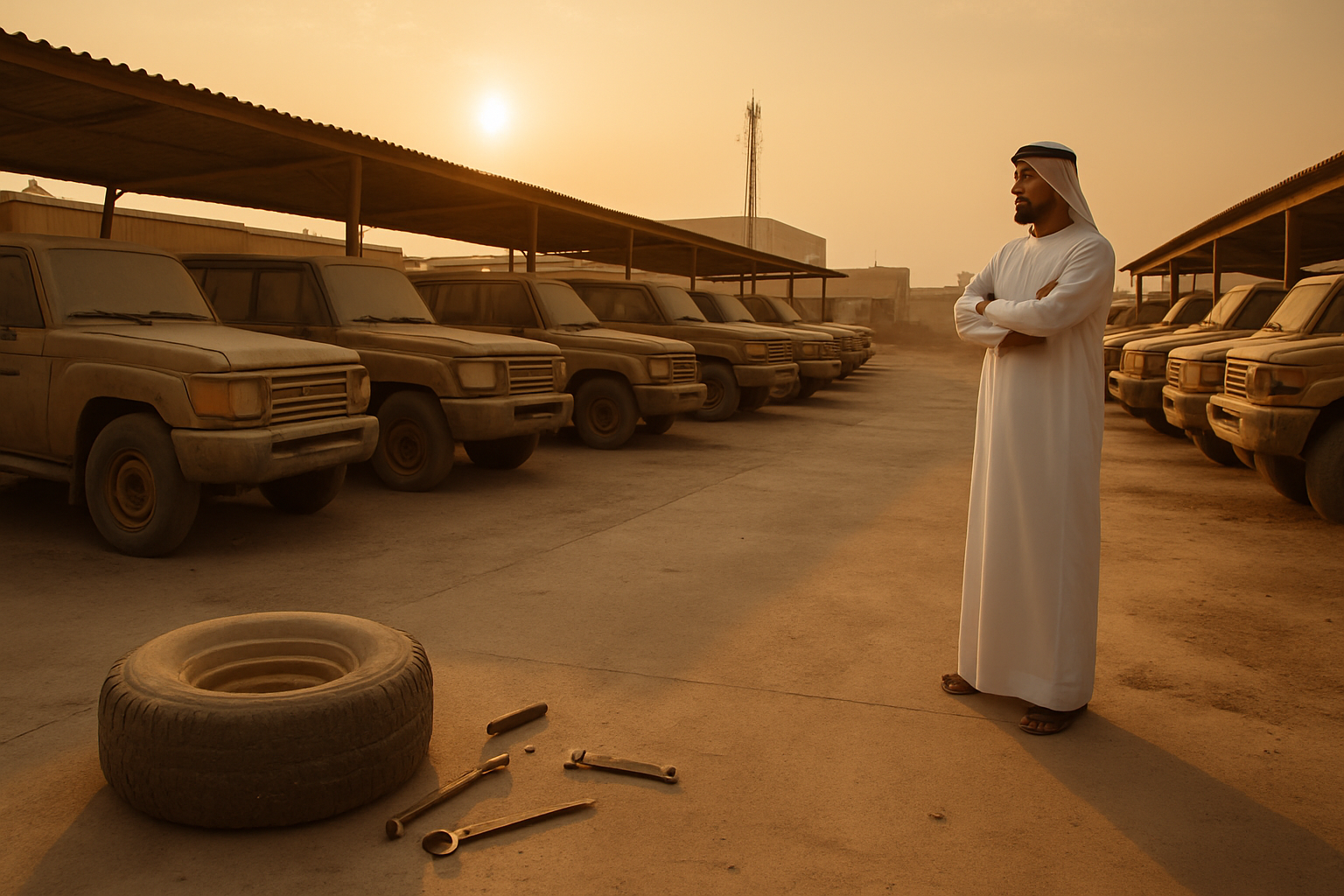
Khalid runs a transmission shop in Al Wakrah that should be making 35,000 QAR monthly. Instead, he's been stuck at 15,000 for three months. The reason? A Toyota Hilux engine block ordered in January finally cleared customs last week—in March. His customer took the truck to a competitor in Doha's Industrial Area, and word spread fast in Qatar's tight automotive community.
"I had four more engine jobs lined up behind that Hilux," Khalid tells me over Arabic coffee at his workshop. "Every one of them walked when they heard about the delay. In Qatar, people expect their Land Cruiser fixed fast—they've got desert trips planned, construction projects waiting."
This story repeats across Qatar's 400+ registered workshops. Engine parts that should take 2-3 weeks to import are taking 8-10 weeks, hemorrhaging revenue while customers defect to shops with better inventory planning.
Qatar's Import Reality: What Actually Happens at Hamad Port
Let me walk you through what happens when you order a Patrol engine block from Japan versus buying Toyota parts through Dubai. The differences will shock you.
The Japan Direct Route (8-10 Week Horror Story)
Ahmed in Lusail tried this route for a customer's Nissan Patrol VQ40 engine. Here's his timeline:
- Week 1-2: Engine shipped from Yokohama to Hamad Port
- Week 3: Container arrives, sits in queue for customs inspection
- Week 4-5: MOI automotive inspection requires engine serial verification (two separate visits)
- Week 6: Customs demands additional documentation proving engine compliance
- Week 7-8: Back-and-forth with customs broker over duty classification
- Week 9: Finally cleared, total cost 8,500 QAR for a 6,200 QAR engine
"I spent more on demurrage fees and broker charges than the actual engine cost. Never again direct from Japan." — Ahmed, Lusail Auto Center
The UAE Transit Route (2-3 Week Success)
Smart shops like Marwan's in Industrial Area use a different approach. Same Patrol engine, different route:
- Day 1-3: Engine shipped Japan to Dubai (their supplier handles customs there)
- Day 4-7: Re-exported from Dubai with GCC documentation
- Day 8-12: Qatar customs clearance (pre-cleared GCC goods move faster)
- Day 14-16: Engine delivered to workshop
Total time: 16 days versus 63 days. Cost difference: 600 QAR more than direct import, but 7,300 QAR less than the total Japan route when you factor in lost revenue.
The Hidden Costs That Kill Your Margins
Saeed learned this lesson the hard way when he imported five Ford Ranger engines thinking he'd save money. His spreadsheet looked great—until reality hit.
| Cost Component | Budgeted | Actual | Why the Difference |
|---|---|---|---|
| Engine Cost (each) | 4,200 QAR | 4,200 QAR | As expected |
| Shipping | 800 QAR | 1,300 QAR | Overweight container fees |
| Customs Duty | 420 QAR | 630 QAR | Reclassified as higher duty category |
| Broker Fees | 200 QAR | 450 QAR | Multiple inspection visits |
| Storage/Demurrage | 0 QAR | 850 QAR | 6-week customs delay |
| Lost Revenue | 0 QAR | 3,200 QAR | Shop bay idle for 6 weeks |
Real cost per engine: 6,630 QAR versus budgeted 5,620 QAR
"I could have bought the same engines from my Dubai supplier for 5,800 QAR each and had them in two weeks," Saeed reflects. "The 'savings' cost me 4,000 QAR per engine when you count everything."
Pre-Positioning Strategy: The Industrial Area Success Model
The smart shops in Doha's Industrial Area don't wait for orders to import. They predict demand and pre-position inventory. Here's how Rashid at Gulf Motors does it:
High-Demand Engine Inventory (Based on Qatar Registration Data)
Toyota Engines (60% of market):
- 1GR-FE V6 (Prado/4Runner) - Keep 2 units
- 1UR-FE V8 (Land Cruiser) - Keep 1 unit
- 2TR-FE 4-cylinder (Hilux) - Keep 3 units
Nissan Engines (25% of market):
- VQ40DE V6 (Patrol) - Keep 2 units
- YD25DDTI Diesel (Navara) - Keep 1 unit
Ford Engines (15% of market):
- 3.2L Duratorq (Ranger) - Keep 1 unit
"I import 10 engines every quarter through Dubai, not when I need them. My turnover rate is 85% within 3 months. The 15% that don't sell immediately pay for themselves in saved revenue from the 85% that do." — Rashid, Gulf Motors
The Financing Reality
This strategy requires capital. Rashid's quarterly engine order: 52,000 QAR sitting in inventory. But his revenue impact:
- Engine jobs completed immediately: 12-15 per quarter
- Average margin per engine job: 3,500 QAR
- Revenue protected: 42,000-52,500 QAR per quarter
- ROI on inventory investment: 80-100% annually
Working with Qatar Customs: The Broker Relationship
Not all customs brokers understand automotive parts. Yousef in Al Khor learned this when his first broker classified transmission components as "industrial machinery" instead of "automotive parts"—tripling the duty rate.
Questions to Ask Your Customs Broker
- How many automotive importers do you handle monthly?
- What's your average clearance time for engine blocks?
- Do you have relationships with MOI automotive inspectors?
- Can you pre-classify parts before shipping to avoid surprises?
- What's your fee structure for delays beyond your control?
"A good automotive broker costs 300-400 QAR more per shipment than a general broker," explains Yousef. "But they save you 2-3 weeks and prevent costly reclassifications. Worth every riyal."
Customer Communication: Keeping Jobs While You Wait
The worst thing you can do is go silent when parts are delayed. Faisal at Doha Engine Works turned a potential disaster into customer loyalty with smart communication.
When a Range Rover engine was stuck in customs for 5 weeks, here's how he handled it:
Week 1: "Mr. Khalil, your engine cleared Dubai customs and is en route to Doha. Expected arrival next week."
Week 2: "Slight delay at Hamad Port due to inspection backlog. I'm personally following up with our broker daily. Should clear by Thursday."
Week 3: "Customs needs additional documentation from the UK supplier. I've arranged a courtesy car for you at no charge while we wait."
Week 4: "Good news—customs issue resolved. Bad news—two more days for final clearance. I'm reducing your labor charge by 500 QAR for the inconvenience."
Week 5: "Engine arrives tomorrow morning. Installation starts immediately. As promised, reduced labor charge and courtesy car covered the entire delay period."
"That customer has sent me four referrals since then. The delay cost me 800 QAR in courtesy car and reduced labor. Those referrals brought in 18,000 QAR in new business." — Faisal, Doha Engine Works
Alternative Solutions: Used OEM and Refurbished Options
While waiting for imports, smart shops offer alternatives. Hassan at Al Rayyan Auto developed a three-tier approach:
Option 1: Import New (Premium Price, Longest Wait)
- Brand new OEM engine
- Full warranty
- 8-10 week delivery via Japan
- Price: 8,500-12,000 QAR
Option 2: Dubai New Stock (Balanced Option)
- Same OEM engine via UAE
- Full warranty
- 2-3 week delivery
- Price: 9,100-12,600 QAR (600-800 QAR premium for speed)
Option 3: Refurbished Local (Fast, Budget-Friendly)
- Professionally rebuilt engine
- 6-month warranty
- 1-2 week rebuild time
- Price: 5,500-8,000 QAR
"60% of customers choose Option 2 when I explain the small premium saves them 6-8 weeks," Hassan notes. "30% choose refurbished for budget reasons. Only 10% insist on direct import and accept the wait."
The Two-Week Import System
Based on conversations with Qatar's most efficient importers, here's the system that consistently delivers parts in 14-21 days:
- Use UAE Transit Route: All parts ship to Dubai first, then re-export to Qatar with GCC documentation
- Pre-Position Common Parts: Keep 2-3 months of high-demand inventory
- Automotive-Specialist Broker: Pay the premium for someone who knows engine import procedures
- Multiple Supplier Relationships: Don't depend on one Dubai supplier—have 2-3 options
- Documentation Accuracy: Engine serial numbers, model compatibility, and technical specs must be perfect
- Relationship Building: Visit your broker quarterly, know your customs inspector, maintain good standing
ROI on Faster Imports: The Numbers
Let me show you the real cost of slow imports versus the investment in faster systems:
Slow Import Shop (8-10 Week Average):
- Engine jobs per month: 2-3
- Revenue per month: 15,000-20,000 QAR
- Customer retention rate: 60%
- Annual revenue: 180,000-240,000 QAR
Fast Import Shop (2-3 Week Average):
- Engine jobs per month: 8-12
- Revenue per month: 35,000-45,000 QAR
- Customer retention rate: 85%
- Additional investment: 25,000 QAR inventory, 2,400 QAR annual broker premium
- Annual revenue: 420,000-540,000 QAR
- Net additional profit: 200,000+ QAR annually
The 27,400 QAR investment in faster systems generates 200,000+ QAR in additional annual profit. That's a 730% return on investment.
Making the Change: 90-Day Implementation Plan
Month 1: Intelligence Gathering
- Analyze your last 12 months of engine jobs by make/model
- Interview 3 automotive customs brokers
- Visit 2-3 Dubai suppliers to establish relationships
- Calculate your current revenue loss from delays
Month 2: System Setup
- Choose your primary customs broker and backup
- Place your first pre-positioned inventory order (3-4 engines maximum)
- Set up customer communication templates for delays
- Establish refurbished engine partnerships for alternatives
Month 3: Process Refinement
- Track your first fast-import results
- Adjust inventory levels based on actual demand
- Refine broker relationship and clearance procedures
- Measure revenue impact and customer satisfaction
The workshops winning in Qatar's competitive market aren't the ones with the lowest prices—they're the ones that deliver when promised. In a country where a delayed Land Cruiser means a missed desert camping trip or stalled construction project, speed is worth more than small savings.
Transform your import process from an 8-week revenue killer into a 2-week competitive advantage. Your cash flow, your customers, and your reputation will thank you.