English
 AR
AR

The April Exodus That's Gutting Industrial Area Workshops
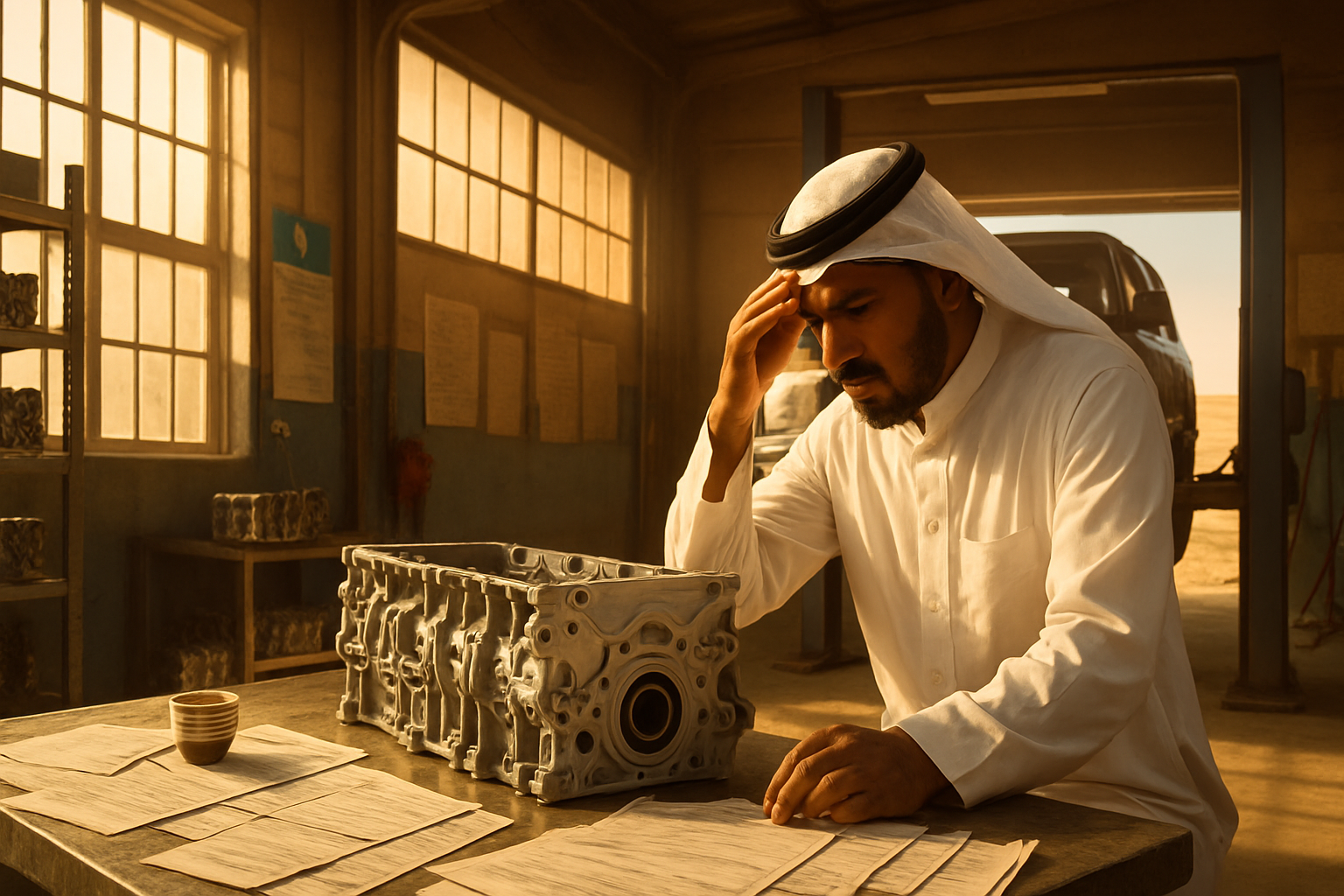
Ahmad finished his third Range Rover diagnostic of the morning at his Industrial Area ورشة, wiped his hands on his coveralls, and walked straight to his boss's office. "I'm giving my two weeks," he said quietly. "Al-Futtaim offered me a position with proper training and clear advancement." By the end of April, Ahmad's workshop had lost three of its five senior technicians.
This scene played out across dozens of Doha workshops last spring. April marks the beginning of Qatar's brutal summer season, when air conditioning failures spike and luxury vehicle maintenance peaks before families travel. It's also when dealerships and larger facilities ramp up hiring, cherry-picking experienced technicians with promises of better equipment and career growth.
The financial damage is immediate and brutal. Replacing Ahmad cost his workshop owner 12,000 QAR in recruitment fees, training time, and lost productivity. But the real pain came from the ripple effects: delayed repairs, frustrated customers posting negative reviews on QatarSale forums, and remaining mechanics burning out from increased workloads.
"I've seen workshops lose their entire diagnostic team in one month," says Khalid Al-Mansoori, who runs a successful 8-bay facility in Al Rayyan. "The owners always blame money, but that's rarely the real issue. These guys leave because they feel stuck and invisible."
The Real Reasons Your Best People Walk Away
After interviewing dozens of mechanics who switched jobs in the past year, three patterns emerge that have nothing to do with salary complaints:
Invisible Career Paths
Mahmoud worked for the same Al Wakrah workshop for four years, progressing from oil changes to complex electrical diagnostics on Lexus LX models. His daily routine? The same as day one. No official recognition of his expanded skills, no clear path to lead technician status, and certainly no discussions about opening his own bay or specializing in hybrid systems.
"My cousin works at the Porsche Centre," Mahmoud explains. "They have Level 1, 2, and 3 technician grades with specific requirements and pay increases. He knows exactly what he needs to master to advance. I had to guess."
Diagnostic Equipment Frustration
Nothing kills a skilled mechanic's motivation faster than being handed a 2018 Cayenne with electrical issues and a basic OBD scanner that can't access half the vehicle's systems. While dealerships invest in manufacturer-specific diagnostic tools, many independent workshops expect their technicians to perform miracles with outdated equipment.
Hassan, now working at a Mercedes-Benz facility in Lusail, describes his breaking point: "I spent six hours on a G-Class that should have taken one hour with proper diagnostics. The customer was angry, my boss was frustrated, and I looked incompetent. That's when I decided to leave."
Zero Visibility Into Performance
Most workshop management happens through handwritten job cards and verbal updates. Technicians have no clear picture of their productivity, efficiency ratings, or earnings potential beyond their base salary. This creates a psychological trap: hardworking mechanics feel their efforts go unnoticed, while underperformers coast without accountability.
"I worked harder than anyone in that shop, but I had no way to prove it. When promotion time came, it felt political rather than merit-based." - Omar, former technician turned service advisor
System 1: The Transparent Skills Ladder
Khalid's Al Rayyan workshop hasn't lost a single senior technician in 18 months. His secret? A formal advancement system that every employee understands from day one.
The Three-Tier Structure:
- Level 1 Technician (QAR 2,500-3,200/month): Basic maintenance, oil changes, tire work, simple brake jobs
- Level 2 Technician (QAR 3,500-4,500/month): Engine diagnostics, transmission service, A/C repair, electrical troubleshooting
- Level 3 Technician (QAR 5,000-6,500/month): Complex diagnostics, hybrid systems, ECU programming, mentoring junior staff
Each level has specific skill requirements, certification goals, and performance benchmarks. More importantly, Khalid reviews every technician's progress quarterly, not annually. "We post the requirements on the workshop wall," he explains. "Everyone knows exactly what they need to learn to earn more."
The financial results speak volumes: his average technician tenure is 3.2 years, compared to the industry average of 14 months. Customer retention sits at 78%, largely because experienced staff build lasting relationships with vehicle owners.
Implementation Steps:
- Document current skill levels for each technician through practical assessments
- Create clear advancement criteria with specific technical competencies
- Establish quarterly review meetings with advancement discussions
- Post advancement charts publicly to create healthy competition
- Budget for skill-based salary increases rather than annual cost-of-living adjustments
System 2: The Equipment Investment That Pays for Itself
Saeed runs a 4-bay workshop in Industrial Area that specializes in German luxury vehicles. Two years ago, he was losing technicians to dealerships monthly. Today, mechanics from other shops ask about job openings. The difference? A 45,000 QAR investment in proper diagnostic equipment that transformed his team's capabilities and confidence.
"I bought a Bosch KTS diagnostic system and sent my two senior guys for training," Saeed recalls. "Within three months, our diagnostic time dropped by 60%, customer satisfaction scores jumped, and my technicians started bringing their friends' cars here because they could actually fix complex problems."
| Issue Type | Before (Basic Scanner) | After (Professional Diagnostics) |
|---|---|---|
| BMW electrical problems | 4-6 hours average | 1-2 hours average |
| Audi transmission issues | Often referred out | 90% resolved in-house |
| Mercedes A/C diagnostics | 3-4 hours guesswork | 45 minutes precise diagnosis |
The equipment investment created a virtuous cycle: faster, more accurate diagnoses led to happier customers and higher profits, which funded additional training and tools. Most importantly, technicians felt professional pride in their work again.
Smart Investment Strategy:
- Start with one comprehensive diagnostic platform rather than multiple basic tools
- Include 2-3 technicians in equipment selection decisions
- Factor training costs into the total investment (usually 20% of equipment cost)
- Create specialization opportunities around new equipment capabilities
- Track diagnostic time improvements to demonstrate ROI to staff
System 3: Ownership Through Performance Transparency
The most powerful retention tool isn't higher base salaries—it's helping technicians see and control their earning potential. This requires workshop management software that tracks individual productivity, efficiency, and profitability in real-time.
Yousef implemented Mekavo at his Doha workshop six months ago, primarily for invoicing and inventory management. The unexpected benefit? His technicians became obsessed with their performance metrics.
"Now they can see their monthly productivity scores, average job completion times, and bonus earnings," Yousef explains. "Ahmed realized he was wasting 30 minutes per job on unnecessary trips to the parts room. He reorganized his workflow and increased his monthly bonus by 800 QAR."
"For the first time in my career, I could see exactly how my daily work translated into earnings. It changed everything about how I approach each job." - Mohammed, Level 2 Technician
Key Performance Metrics to Track:
- Efficiency Rate: Actual time vs. estimated time per job
- First-Time Fix Rate: Percentage of jobs completed without callbacks
- Upsell Success: Additional services identified and sold
- Customer Satisfaction: Direct feedback scores per technician
- Training Progress: Certifications completed and skills acquired
The transparency creates healthy competition while identifying training needs and star performers. More importantly, it gives technicians concrete data to discuss during advancement conversations.
The Commission Structure That Actually Works
Many workshops try performance bonuses but fail because the structure feels arbitrary or unfair. The most successful approach combines base salary security with transparent performance incentives.
Effective Commission Framework:
- Base salary covers 70-80% of expected total compensation
- 10% bonus for efficiency improvements (completing jobs faster than estimated time)
- 5% commission on legitimate upsells (additional services that prevent future problems)
- 5% bonus for customer satisfaction scores above 4.5/5
- Monthly team bonus when workshop exceeds profit targets
This approach ensures financial stability while rewarding exceptional performance. Crucially, all metrics are automatically tracked and displayed, eliminating disputes about bonus calculations.
The 90-Day Retention Action Plan
Implementing retention systems takes time, but you can start seeing results within 90 days by focusing on the highest-impact changes first.
Days 1-30: Assessment and Quick Wins
Week 1: Conduct one-on-one meetings with each technician using these specific questions:
- "What's the most frustrating part of your daily work here?"
- "If you could change one thing about this workshop, what would it be?"
- "Where do you see your career in two years?"
- "What new skills are you most interested in learning?"
Week 2: Document current skill levels and create individual development plans
Week 3: Research and budget for one major equipment upgrade based on technician feedback
Week 4: Implement basic performance tracking (even manual tracking shows you're paying attention)
Days 31-60: Systems Implementation
- Install workshop management software with performance tracking capabilities
- Create formal job descriptions for different technician levels
- Establish monthly performance review meetings
- Begin equipment upgrade process (ordering, training scheduling)
- Introduce basic commission structure for upsells and efficiency
Days 61-90: Optimization and Culture Building
- Launch formal advancement ladder with clear requirements
- Begin specialized training programs for interested technicians
- Implement customer satisfaction tracking
- Create team performance goals with group bonuses
- Establish monthly workshop meetings to discuss improvements and celebrate successes
The Critical Conversations That Save Careers
Sometimes retention comes down to a single conversation at the right moment. When you notice warning signs—decreased enthusiasm, increased complaints, or casual mentions of other job opportunities—address them immediately with specific, action-oriented discussions.
The "Career Path" Conversation:
"I've noticed your excellent work on the recent Patrol diagnostics. Let's talk about your career goals and create a specific plan to get you there. What certifications or skills would make you feel more valuable in this industry?"
The "Investment" Conversation:
"I'm planning our equipment budget for next quarter. What diagnostic tools or training would make your job more efficient and enjoyable? Let's make a business case together."
The "Recognition" Conversation:
"Your efficiency has improved 20% over the past three months. Here's exactly how that translates to value for the workshop and increased earnings for you. Let's discuss how to take this to the next level."
The True Cost of Doing Nothing
Workshop owners often hesitate to invest in retention systems because they focus on upfront costs rather than replacement expenses. The math is sobering:
- Recruiting a qualified technician: 2,000-4,000 QAR in advertising and time
- Training period productivity loss: 3,000-5,000 QAR
- Mistakes and rework during learning phase: 1,500-3,000 QAR
- Customer service disruption and lost business: 2,000-4,000 QAR
- Overtime costs for remaining staff: 1,000-2,000 QAR monthly
Total replacement cost per technician: 8,000-15,000 QAR minimum. Multiply this by the industry average turnover rate of 65% annually, and retention investments become obviously profitable.
More importantly, stable, experienced teams build customer loyalty that generates referral business worth far more than the retention investment. Ahmad's old workshop is still struggling to rebuild its reputation six months after losing its diagnostic team. Meanwhile, Ahmad thrives in an environment that recognized his value from day one.
The choice is clear: invest in keeping your best people, or keep paying to replace them. In Qatar's competitive workshop market, that choice often determines which businesses survive the next busy season.