English
 AR
AR
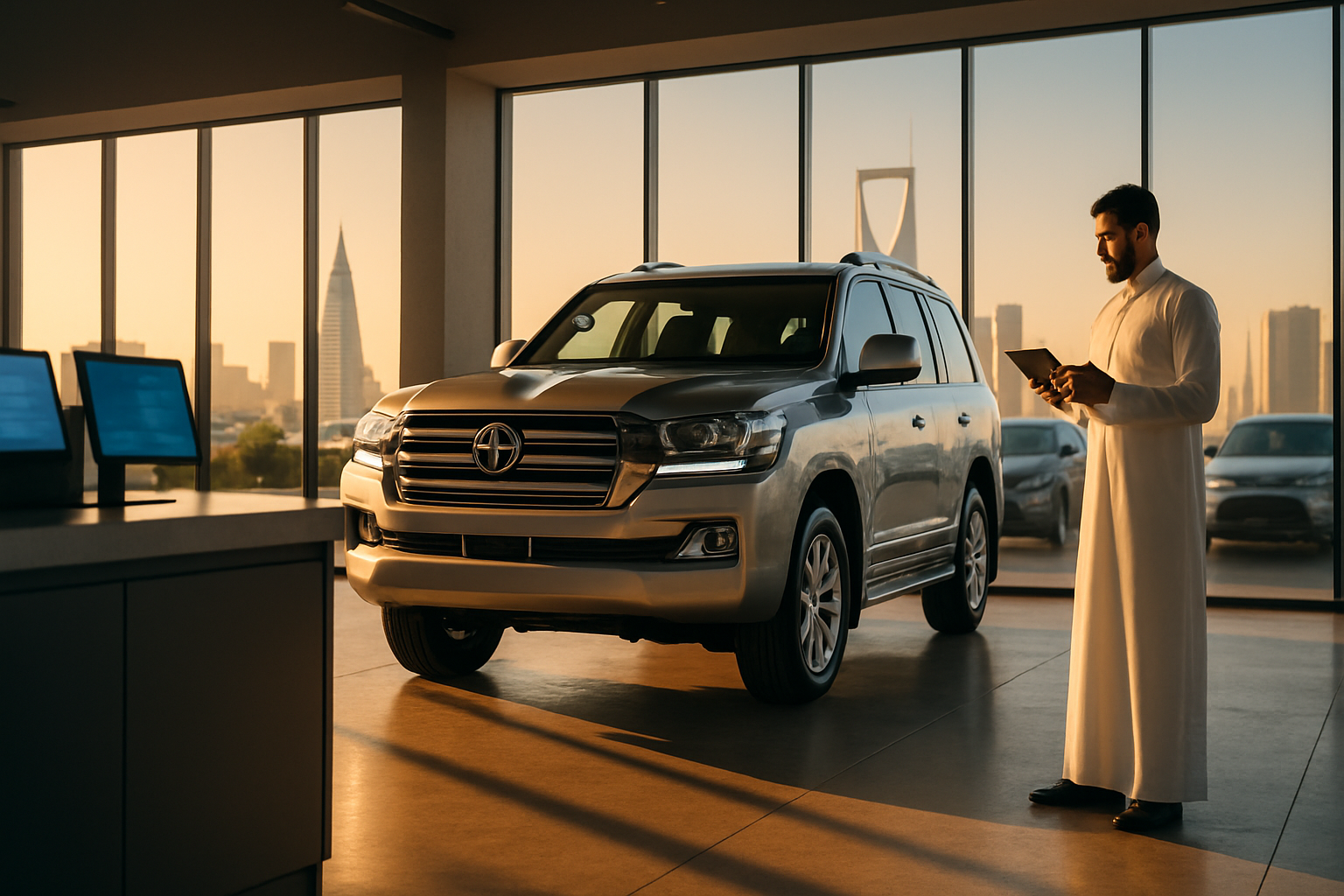
If one vehicle defines Saudi motoring, it is the Toyota Land Cruiser — the V8 J200 and now the J300 generation. Add to that the Nissan Patrol Y62, the Chevrolet Tahoe and Suburban, the Lexus LX, and the Toyota Sequoia. These are the large body-on-frame SUVs that dominate Saudi roads, drive the desert, carry families across the country, and hold value better than almost anything else on four wheels in the Kingdom.
The downside: the used market is full of vehicles that have been worked hard. A 2019 Land Cruiser on Syarah at SR265,000 might be a beautifully kept family-driven example, or a hammered ex-fleet vehicle that has been steam-cleaned and listed.
Here are the 12 things to check before you commit, Saudi-specific.
1. The Service History — Dealer vs Independent
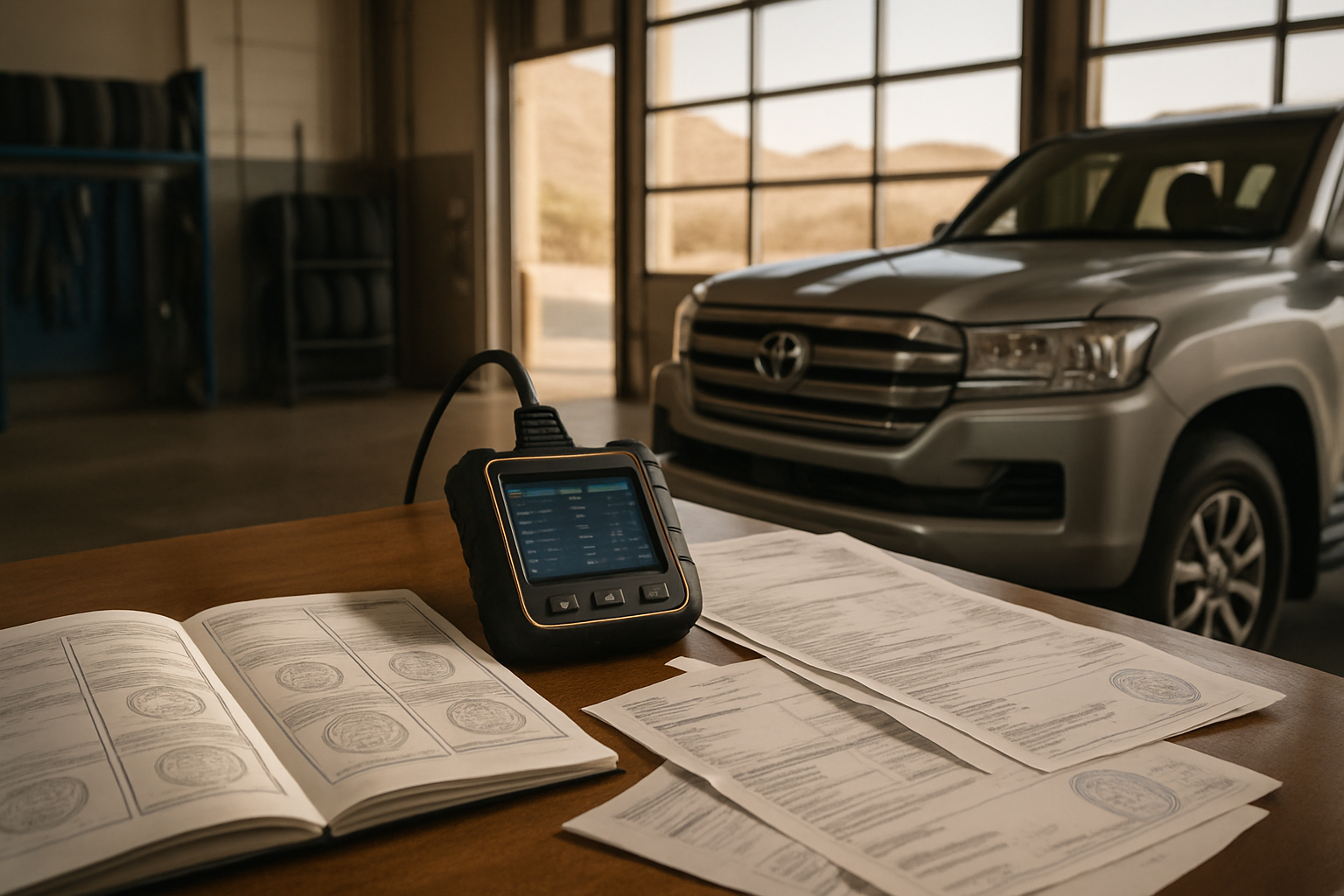
A Land Cruiser with full Abdul Latif Jameel (Toyota Saudi distributor) dealer stamps is the gold standard. A Patrol with full AlJazirah Nissan dealer history likewise. A Tahoe with United Motors dealer records.
Many Saudi buyers accept independent garage servicing at reasonable rates — if receipts are detailed (oil grade, filter brand, fluids changed). A logbook with no stamps and no receipts is a SR20,000-SR50,000 discount, easily.
Look specifically for:
- AC system service history (critical in Saudi; frequent compressor work is a red flag)
- Cooling system flushes (SA heat punishes this — every 2-3 years ideally)
- Transfer case and differential oil changes (especially if used off-road)
- Timing belt replacement (if applicable — V8 Land Cruisers have chain; some models chain; confirm for your specific engine)
2. Gulf Region Import vs Saudi-Delivered
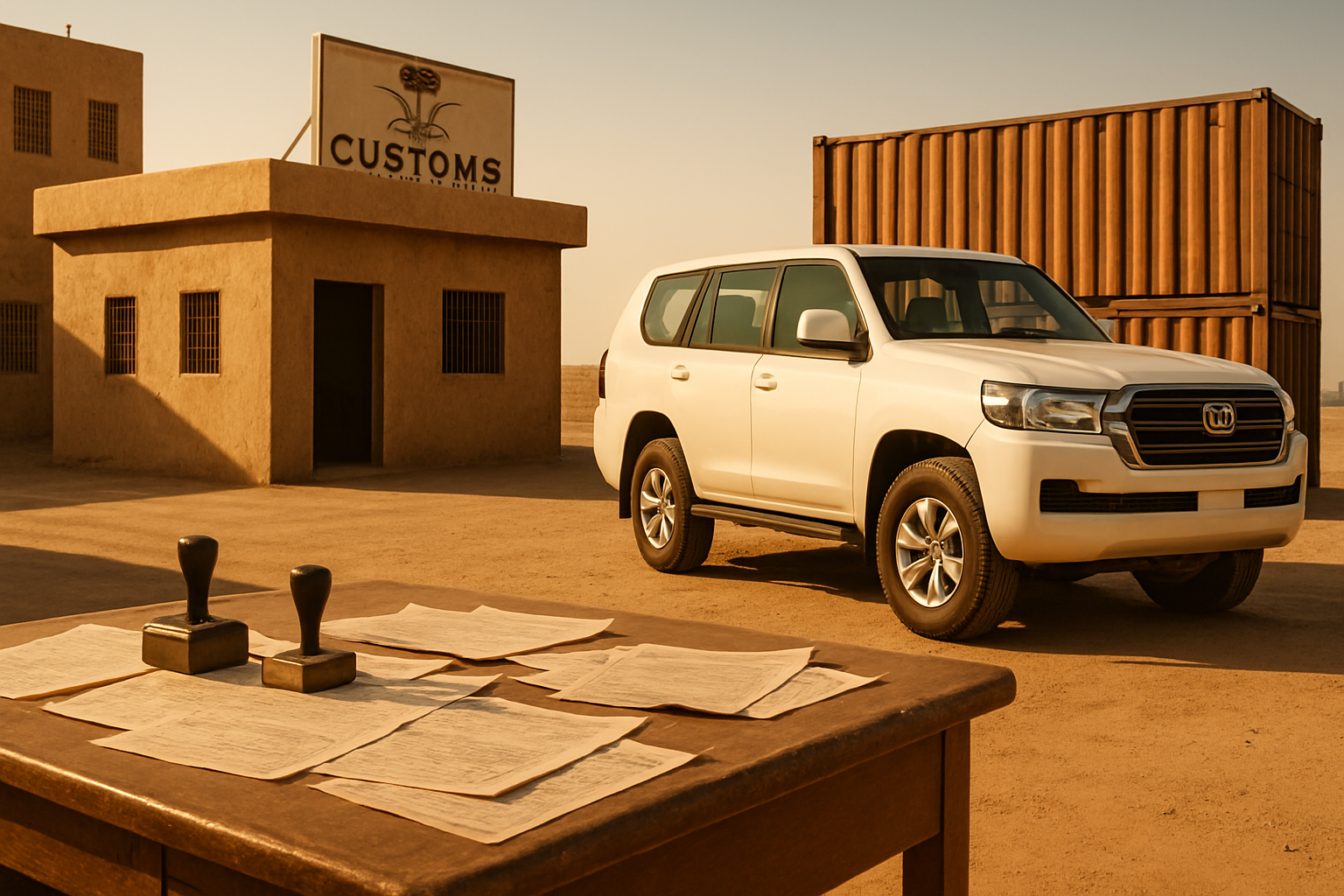
Many Land Cruisers and Patrols in the Saudi used market were originally delivered in UAE, Qatar, Oman or Bahrain — perfectly legal but different spec.
Gulf-import indicators:
- Different warranty chain (UAE Toyota vs Saudi Toyota are separate distributors)
- Sometimes different option packages, radio/navigation calibrated to different market
- Possibly different Arabic/English interface defaults
- Importation paperwork (customs receipt) in the vehicle file
Neither good nor bad — just verify. Discount should exist if buyer cannot access Saudi dealer warranty. Commercial history reports often flag import status.
3. AC System — Test Under Load
The single most-used system on any Saudi vehicle. In 50°C summers, a weak AC is the difference between comfortable and dangerous.
- Test on a hot day: drive for 10+ minutes with AC on max, windows up. Cabin should be genuinely cold (not just cool) within 2-3 minutes
- Highway AC: test AC at highway speed. AC should still blow cold (not noticeably warmer than stop-and-go)
- Rear AC (for 3-row vehicles): test rear blower, rear temperature separately if dual-zone
- Signs of trouble: inconsistent cold, weak output, compressor cycling audibly every few seconds, musty smell from vents (evaporator issue)
- Full AC rebuild (compressor + condenser + dryer + recharge) can cost SR4,000-SR15,000 on Land Cruisers and large SUVs. A pre-sale AC discount of SR3,000-SR8,000 is reasonable if system is weak.
4. Cooling System — No Compromise
Engine overheating in Saudi summer kills engines. On large-displacement V8s pushed in heat, cooling is non-negotiable.
- Coolant level and condition — clear green/pink/blue depending on type, not brown or rusty
- Radiator fins — no heavy bending from stone strikes
- Hoses — squeeze; should be firm but pliable; rock-hard or ballooning = imminent failure
- Fan clutch (on older Land Cruisers) — should engage audibly when cooling needed
- Auxiliary cooling fan operation
5. Desert / Off-Road Wear
Saudis love the desert — Empty Quarter dune runs, Edge of the World mountain drives, winter campaigns. Off-road wear shows up in:
- Bash plates: dented, scraped, or missing (owners who drive hard often remove damaged plates rather than replace)
- Sand infiltration: in air intake housing, around seats, under floor mats, trapped in door frames
- Suspension bushes and shocks worn from corrugated dirt-road driving
- Sandblasted paint on lower rocker panels and behind wheel arches
- Recovery point damage (tow hooks bent or re-welded from recoveries)
6. Rust Despite Saudi Being Dry
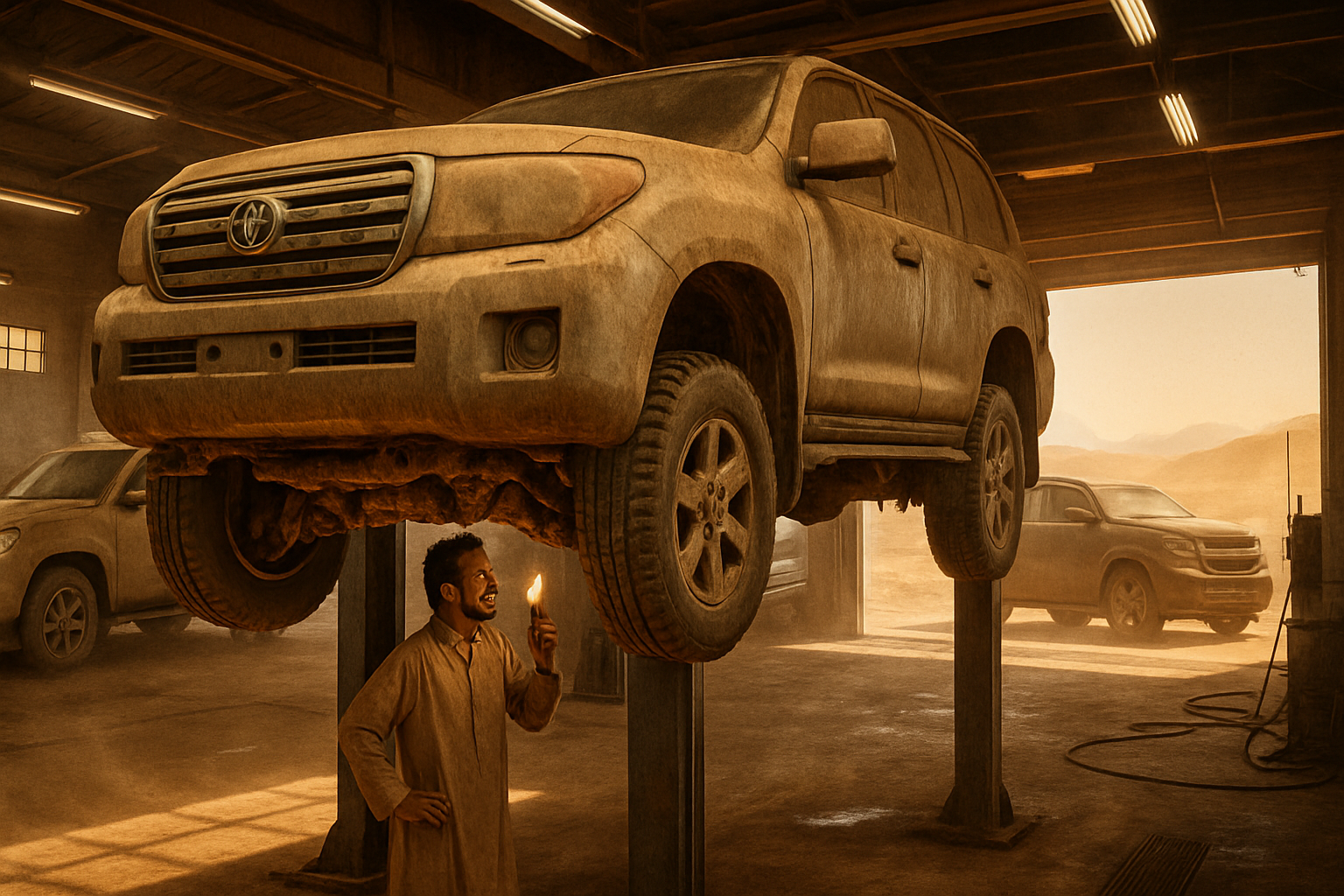
Inland Saudi is bone dry — rust is minimal. But coastal Saudi (Jeddah, Yanbu, Jubail, Dammam, Khobar) faces salt-air corrosion, and desert-rally vehicles that get their underbody wet rinsing off sand then parked without full drying accumulate rust in unexpected places.
Look under the vehicle:
- Chassis rails at mount points
- Fuel tank straps and mounting brackets
- Rear differential housing
- Around the bottom of doors
- Exhaust pipe and muffler
7. The V8 / V6 Engine on Cold Start
Ask the seller NOT to start the vehicle before you arrive. Cold-start behaviour reveals a lot.
- First 5-10 seconds: any blue smoke = oil burning; white smoke past 30 seconds = potential head gasket; black smoke = fuel mixture issue
- Idle quality: should settle to smooth steady idle within 60 seconds; hunting or rough idle = sensor or injector problem
- Tappet noise: some Land Cruiser engines tick briefly cold — should quieten within 30 seconds as oil pressure builds. Persistent tick = worn lifters or low oil pressure
- Timing chain rattle on chain-driven engines — should be silent when warm. Any rattle = replace the chain and tensioner soon (SR5,000-SR15,000 job)
8. Transmission — Smooth Shifts Only
Automatic transmissions take punishment in Saudi (stop-go city driving in heat, towing, occasional off-road). Test thoroughly:
- Cold first shift: some hesitation is normal; sharp clunking is not
- Full-throttle highway: kickdown should be smooth and immediate
- Slow crawl, gentle throttle: any judder, slipping, or delayed engagement = internal wear
- Transmission fluid: check colour and smell (on older vehicles with dipstick) — dark or burnt = abused; not serviced on schedule
9. 4×4 System (Low Range, Centre Diff)
Saudi Land Cruisers, Patrols, Tahoes all have 4×4 (most). Verify systems actually work:
- Low range: engage at full stop, drive 20 metres; should snap into place, gearing change obvious
- Centre diff lock (on some models): engage; watch the dash indicator illuminate
- Rear diff lock (if equipped): same
- Hill descent control (if equipped): test on a mild incline
10. Tyres — Desert-Capable, Age-Appropriate
- Brand and type: all-terrain tyres (BFGoodrich A/T, Toyo Open Country, Goodyear Duratrac) common on Land Cruisers; highway tyres (Bridgestone Dueler H/P, Michelin Latitude) on city-driven examples
- Tread depth: 4mm+ on all four for Saudi conditions; below 3mm is risky on highway at sustained 120 km/h in heat
- Sidewall cracking: Saudi sun ages sidewalls faster than European conditions. DOT date code over 6 years = replace regardless of tread
- Spare: often overlooked, often aged out; check it
11. Electrical Aftermarket Add-Ons
Light bars, winches, dual-battery systems, fridges, aftermarket audio, fleet tracking, dash cams — common on Saudi off-road-capable vehicles. Each is a potential source of:
- Wiring shortcuts (taped joints, illegal main-feed taps)
- Drain on the starter battery (poor dual-battery isolation)
- Voided factory warranty items
- Insurance complications if not declared
Ask for documentation. Professionally installed is preferable to DIY. Any tracker unit should transfer cleanly to you; verify with the tracking provider before purchase.
12. The "Was It a Fleet, Mining, Rental, or Expat-Returning Vehicle?" Question
Ask the seller directly. Their reaction tells you a lot.
- Fleet vehicles: often maintained on strict schedule but driven hard by multiple drivers
- Mining contractor vehicles (Eastern Province particularly): brutal wear, dust exposure, constant idling
- Rental return: multiple drivers, often aggressive, cosmetic issues common
- Expat returning home: often well-maintained single-driver cars, but pressured sales where the seller cannot hold out for full asking — potential bargain
Always worth SR400-SR800 for a paid pre-purchase inspection by a trusted Saudi mechanic or dealer service department. The cost is trivial compared to the vehicle's purchase price.
Sources & Further Reading
- Ministry of Interior (MOI) — Traffic Department — vehicle registration, ownership transfer
- Absher — MVPI status, outstanding fines, Istimara verification
- Ministry of Commerce — dealer obligations and consumer protection
- SAMA — Saudi Central Bank — vehicle insurance (Tameen) framework
- SASO — Saudi Standards — import standards for Gulf-region vehicles
- Syarah — primary Saudi used-car platform with inspection service — syarah.com
- Haraj — large classified platform — haraj.com.sa
- Motory — listings and history reports — motory.com.sa
- Rasan — vehicle history reporting — rasan.com
Related Mekavo articles: MVPI and Absher buyer checks — do these BEFORE viewing any used Land Cruiser. MVPI at Fahs centres explained — what the inspection tests on a large SUV.
Why We Care
My Mekavo is free for Saudi car owners. Once you buy a used Land Cruiser, Patrol or Tahoe, log every service, every MVPI, every Istimara renewal, every desert trip, every aftermarket accessory — so when you sell, the next buyer can see the full transparent ownership story. Builds trust in a market where documentation usually walks away with the keys.