English
 AR
AR
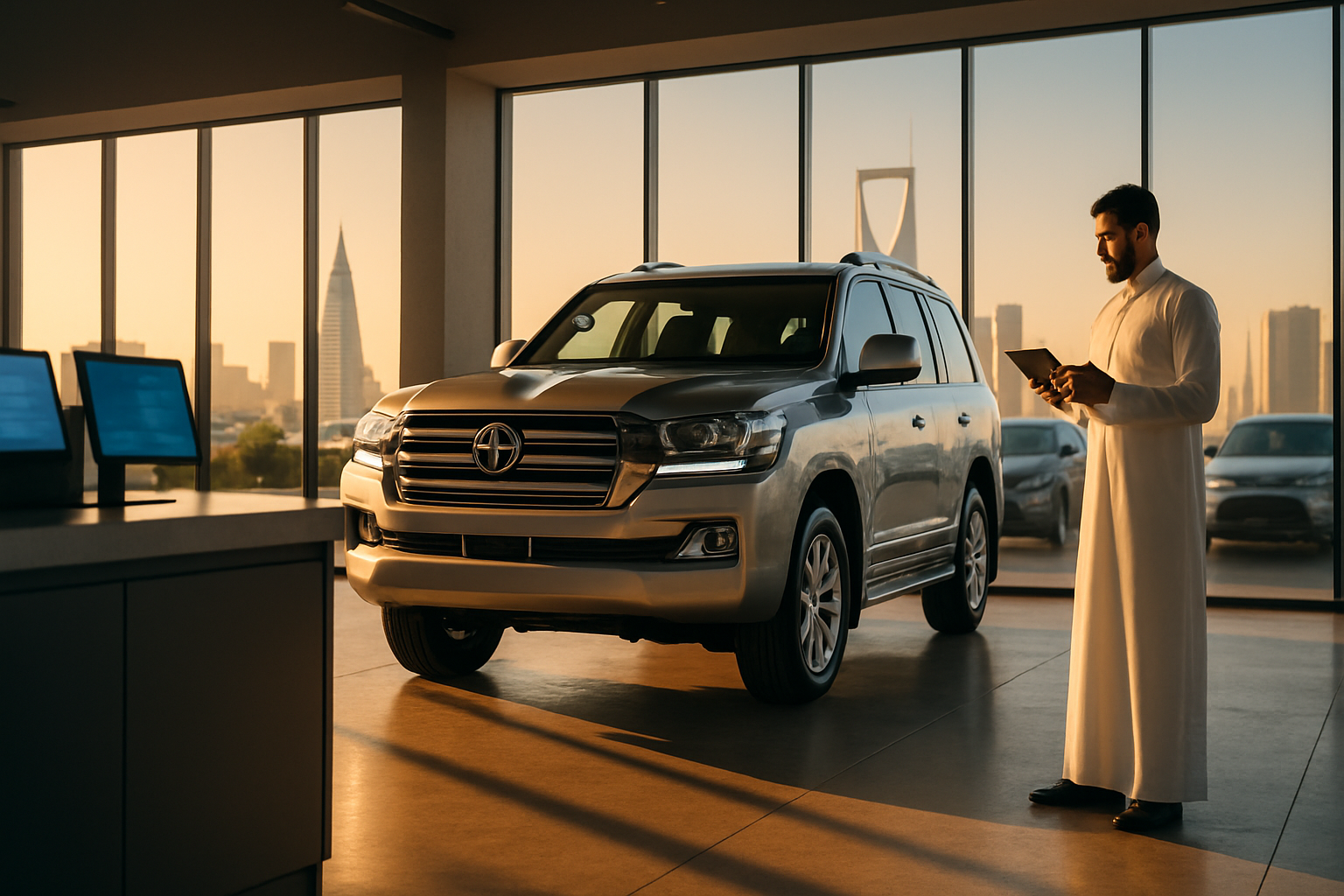
You found a 2020 Toyota Land Cruiser on Syarah for SR225,000 in Riyadh. Photos look clean. Seller has owned it 3 years. You are heading over Saturday with a bank transfer ready.
Stop. Spend an hour on due diligence first. Saudi Arabia's vehicle records are scattered across MOI, Absher, the MVPI system at Fahs centres, and commercial vehicle history reports. Running those checks before you commit is the difference between a great buy and a SR30,000 disaster.
Here is the honest pre-purchase checklist every Saudi buyer should follow, whether you are an expat in Al Khobar or a Saudi national in Jeddah.
The 5 Checks Every Saudi Used-Car Buyer Must Run
1. MVPI (Motor Vehicle Periodic Inspection) Status
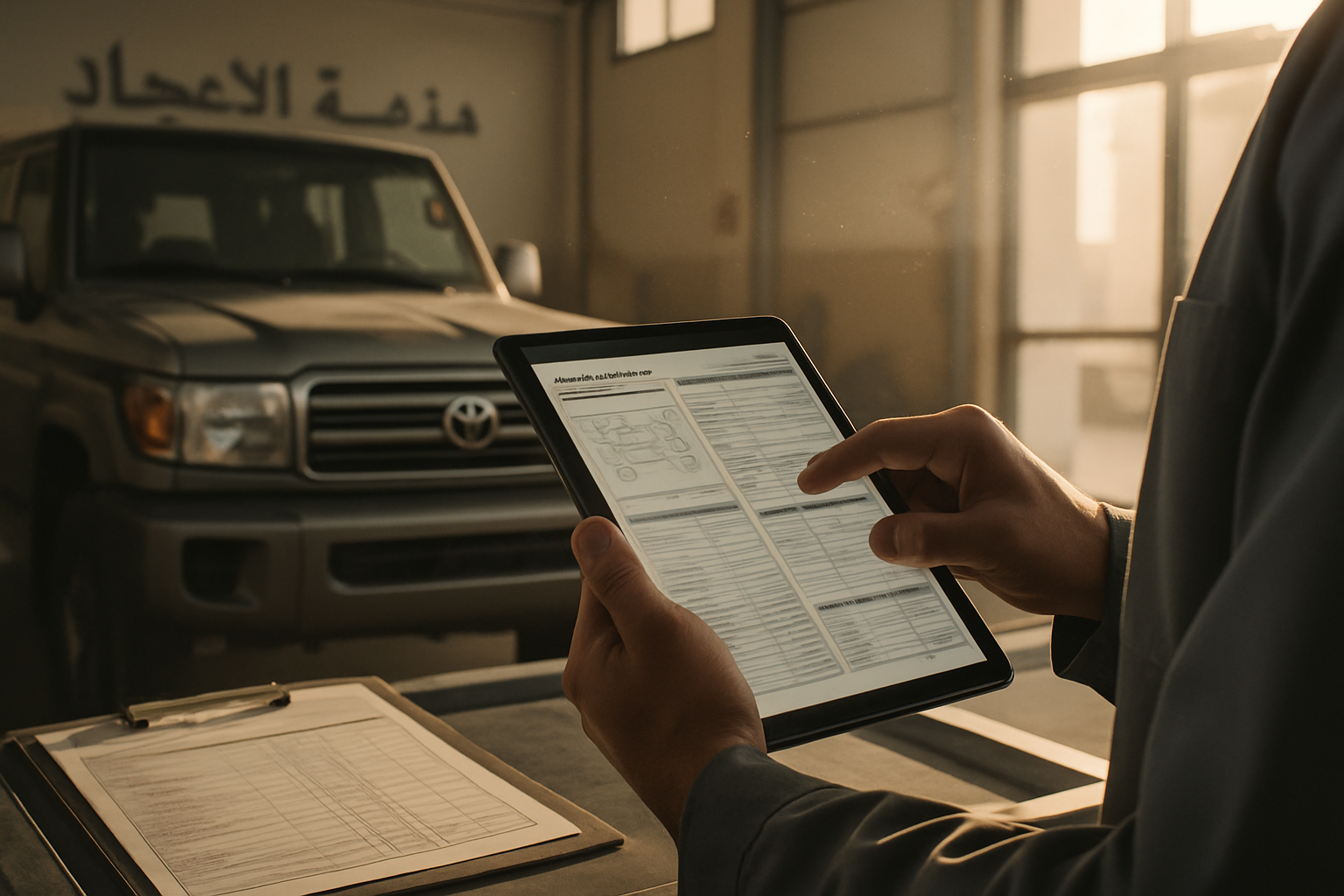
Every vehicle in Saudi Arabia must pass an annual MVPI (Fahs / فحص دوري) inspection at an authorised Fahs centre. The inspection record is linked to the vehicle's registration (Istimara) and is visible via Absher.
Before buying, verify:
- The current MVPI certificate is valid and matches the vehicle being sold
- Past MVPI history — repeated failures or remedial work on the same items suggests chronic issues
- Any recorded structural or safety items flagged historically
If the seller cannot produce a current MVPI certificate, the vehicle may be technically unregistered for road use. Walk away or require a fresh MVPI at a Fahs centre as a condition of sale.
2. Istimara (Vehicle Registration) Status
The Istimara (استمارة) is the official vehicle registration document. Check via Absher:
- The seller's name on the Istimara matches their ID — critical. Only the registered owner can legally transfer ownership.
- The Istimara is current (annual renewal due date not overdue)
- No blocks or holds on the vehicle (legal, financial, customs-related)
Expat buyers: you can only register a vehicle in your name if your Iqama (residency permit) is valid and the sponsor situation is cleared. Check your Absher status before committing to purchase.
3. Outstanding Traffic Fines (Saher + Wasel + MOI)
Saudi Arabia's Saher camera system, Wasel platform and general MOI traffic enforcement accumulate fines against the Istimara. These do NOT automatically transfer to the buyer unless you complete transfer without clearing them — then they become yours.
Check via Absher before purchase:
- All outstanding traffic fines against the vehicle
- All outstanding customs or other government fines
- Any court-registered holds
Demand the seller clear all outstanding fines before transfer. If the seller refuses, either deduct the exact fine total from the purchase price (you pay MOI directly after transfer) or walk.
4. Outstanding Finance (Tanseeq)
Saudi banks and finance houses register security over financed vehicles. If the seller still owes finance, the finance house has first claim on the vehicle — which means if the seller defaults later, they can reclaim the car from you.
Verification paths:
- Ask the seller for written confirmation from the finance house that the loan will be settled at point of sale
- For additional assurance, the buyer can pay the finance house directly for the settlement amount, and the balance to the seller
- Commercial Saudi vehicle history reports (from Syarah, Rasan, TransUnion SA) often include finance status
Walk if the seller cannot clearly demonstrate finance is cleared or will be cleared at transfer.
5. Accident, Flood and Write-Off History
Saudi Arabia experiences occasional heavy rain events (Jeddah floods, southern regions), and the used-car market has a long history of flood-damaged vehicles being resold. Plus straightforward collision rebuilds.
Indicators:
- Commercial vehicle history reports (Rasan, Motory history check, Syarah inspection report) flag known major-claim events
- Visual inspection: water tidemarks on carpets, musty smell, rust in non-wear-and-tear places, replaced wiring harness sections
- Different panel gaps front-to-rear suggest structural repair
- Any "salvage" or "total loss" marker in history should be a walk-away for a car being sold at normal price
Saudi-Specific Inspection Points for Desert Conditions
Beyond universal checks, Saudi conditions create specific wear patterns:
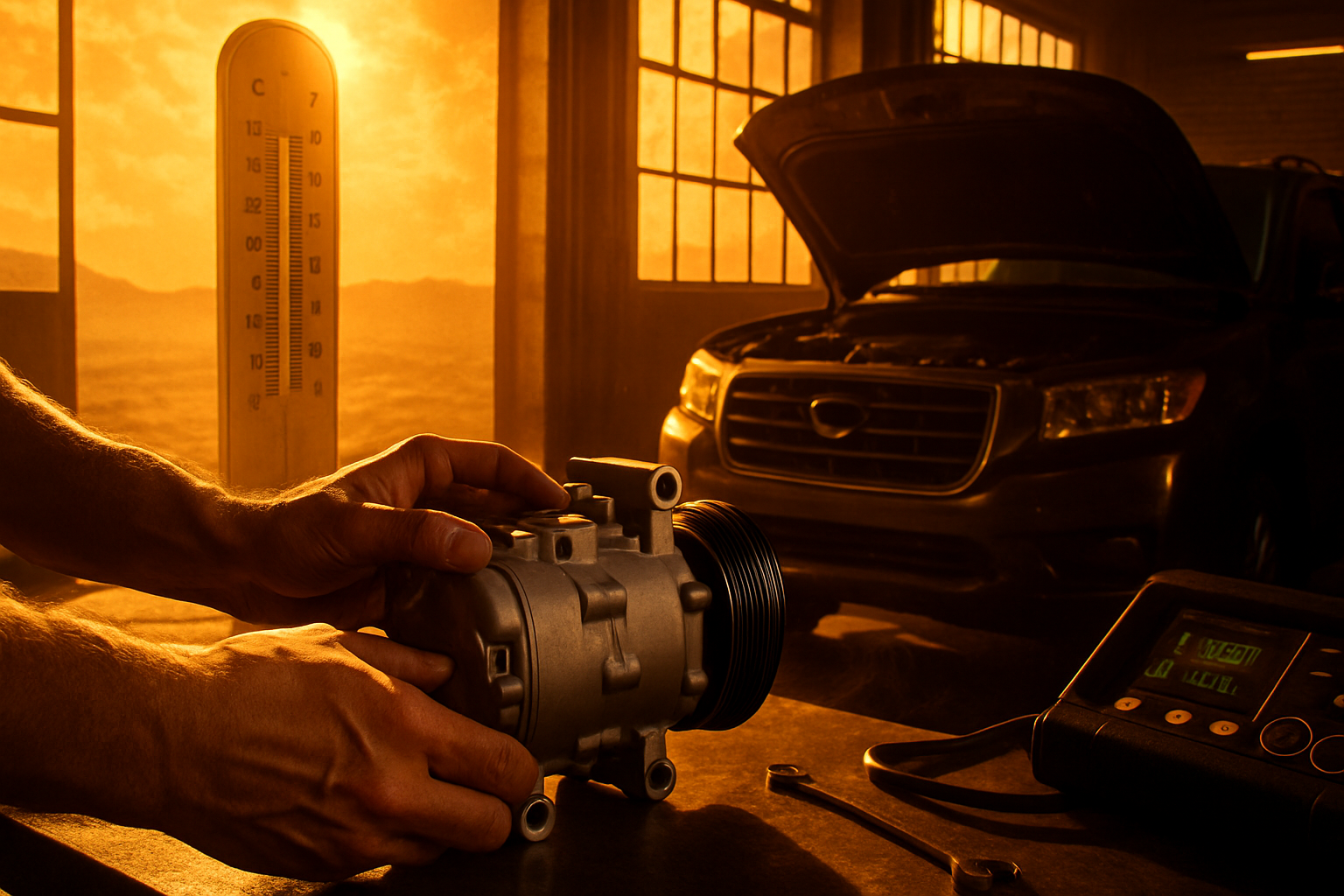
- AC system condition: critical. AC compressor, condenser, blower motor, cabin air filter. A compromised AC system in Saudi means life-threatening heat in summer. Test under load.
- Cooling system: radiator, thermostat, water pump, coolant condition. 50°C+ sustained ambient temperatures push cooling systems to their limits. Look for cracked hoses, corroded radiator, weak thermostat.
- Tyres: Saudi heat + long highway runs wear tyres faster than European conditions. Check DOT date codes and sidewall bulges carefully.
- Rubber components: door seals, engine bay hoses, wiper blades all dry-rot faster in Saudi sun and heat. A car that looks clean but has perished rubber has been parked outside for years.
- Interior sun damage: dashboard cracks, seat fade, headliner sagging — Saudi UV is relentless. These are cosmetic but signal parking-outside history.
- Battery: batteries die faster in heat, not cold. A 3+ year-old Saudi battery is living on borrowed time.
The 5-Minute Pre-Purchase Process in Saudi
- Get the Istimara (chassis number / VIN) AND the plate number from the seller before you visit
- Check MVPI status + Istimara + outstanding fines via Absher (buyer's own Absher account, or ask seller to show you theirs)
- Run a paid commercial vehicle history report (SR100-SR300 from Syarah inspection, Rasan, or Motory history check)
- If everything checks out, drive over and inspect the car physically
- If you are seriously interested, pay SR400-SR800 for an independent pre-purchase inspection from a trusted Saudi mechanic or the Saudi Automobile Association inspection service
- At transfer: meet at an MOI Traffic Office or via Absher's online transfer flow. Verify Istimara clearance before paying.
Total cost: SR100-SR1,100. Saved cost when something is wrong: SR30,000-SR150,000.
Expat-Specific Caveats
- Verify your Iqama allows vehicle ownership (some employment visas do, some require sponsor involvement)
- Insurance (Tameen) is mandatory and must be in the registered owner's name — quote insurance before committing, as rates vary enormously by nationality, age, and vehicle type
- If you plan to export the vehicle when leaving SA, note that vehicles sold during your residency generally cannot be re-registered back in your name later. Plan accordingly.
- Saudi driving licence holders only — ensure you have a valid Saudi licence (converted from your home country or locally issued) before completing purchase
What the Checks DO NOT Tell You
- Mechanical condition (only physical inspection reveals this)
- Aftermarket modifications that may affect MVPI future
- Whether the car has been driven primarily on paved roads vs off-road / desert trails (affects suspension and bodywork long-term)
- True service history if it was done outside authorised main dealers (some small garages do not issue full invoices)
If You Discover a Problem After Buying
- Stop driving the car
- Contact the seller in writing, citing the specific issue
- If finance is involved and you were misled, contact the finance house directly
- File a complaint with the Ministry of Commerce — they handle consumer protection for dealer sales
- For fraud cases, report to MOI Public Security
- The Saudi Consumer Protection Law offers specific rights — see our next article in this series for the details
Sources & Further Reading
- Ministry of Interior (MOI) — Traffic Department, vehicle registration and fines
- Absher — official Saudi government services portal for vehicle registration, MVPI status, outstanding fines, and online ownership transfer
- Ministry of Commerce — consumer protection on used-vehicle dealer sales
- Saudi Central Bank (SAMA) — vehicle insurance (Tameen) regulation and consumer rights
- SASO — Saudi Standards, Metrology and Quality Organization — vehicle safety and import standards
- General Authority for Statistics — vehicle registration and traffic data
- Syarah — primary Saudi used-car listing platform with inspection service — syarah.com
- Haraj — large classified platform, high-volume used-car listings — haraj.com.sa
- Motory — used-car listings and inspection-backed reports — motory.com.sa
- Dubizzle SA — regional listings platform now operating in SA — sa.dubizzle.com
Why We Care
My Mekavo is free for Saudi car owners. Once you buy a car that passed all checks cleanly, log every service, every receipt, every MVPI, every Istimara renewal — so when you sell, the next buyer can see your transparent ownership record. Trust both ways in a market where documentation usually disappears.