English
 Español
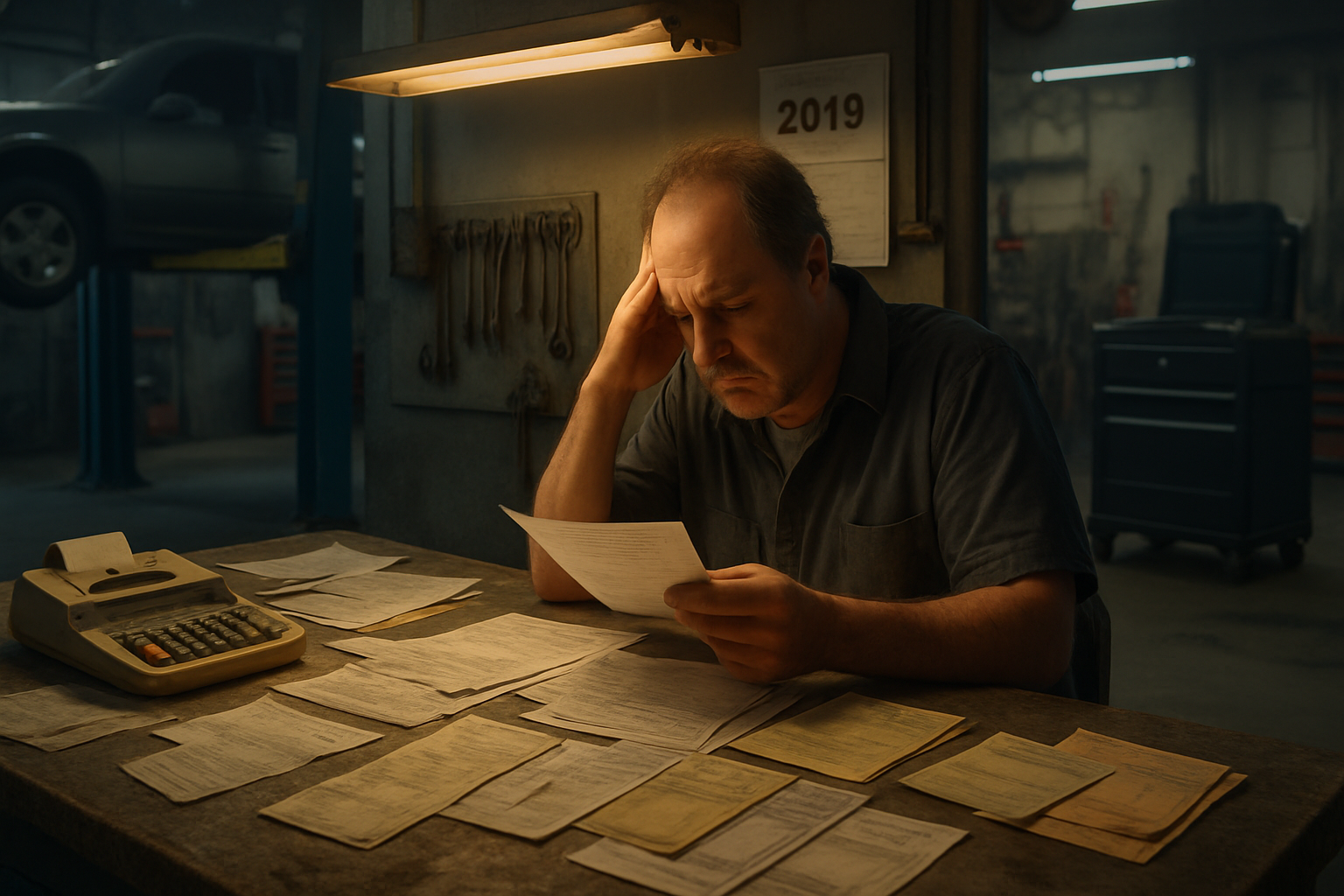
Walk into any independent auto repair shop in America and ask the owner: "How did you set your labor rate?" Most will say one of two things: "I looked at what the shop down the road charges" or "I've been charging $120 since 2019."
Neither is a strategy. Both are costing you money.
Since 2019, everything has gone up. Rent, insurance, utilities, parts costs, tool expenses, employee wages. But if your labor rate stayed at $120/hour while your costs increased 20–30%, your actual profit per hour has been shrinking every year. You are working harder and earning less.
The Real Cost Per Hour Calculation
Here is the math most shop owners never do:
- Annual overhead: Rent ($3,000/mo) + insurance ($500/mo) + utilities ($800/mo) + equipment leases ($400/mo) + software ($200/mo) + supplies ($300/mo) = $62,400/year
- Labor cost: 2 techs × $25/hr × 2,080 hours = $104,000. Plus payroll taxes and benefits: $130,000
- Owner salary: What you need to live: $60,000–$80,000
- Total annual cost: $252,400–$272,400
- Billable hours: 2 techs × 1,600 actual billable hours/year = 3,200 hours
- Break-even rate: $252,400 ÷ 3,200 = $78.88/hour
At $120/hour, your profit is $41.12/hour × 3,200 hours = $131,584. Sounds decent. But at $140/hour: $195,584. That $20/hour increase = $64,000 more profit per year. And most customers will not notice a $20 difference.
Why You Are Not Too Expensive
Dealerships charge $180–$250/hour. Jiffy Lube charges $100+ for an oil change. You are already cheaper than both — and you provide better, more personal service. Your customers are not comparing you to the cheapest option. They chose you because they trust you.
A $20 increase on a 3-hour job adds $60 to the bill. On a $800 brake job, that is a 7.5% increase. Most customers will not even notice — and the ones who complain about $60 are not your ideal customers anyway.
The Parts Markup Question
Most shops mark up parts 40–60%. But do you know your ACTUAL average markup? Without tracking every part cost and every part sale, it is a guess.
Example: you buy brake pads for $35 and charge $65. That is an 86% markup — great. But you also bought a specialty sensor for $180 and charged $200. That is only 11%. Your average markup might be 45% when you thought it was 60%. Over a year, that 15% difference on $200,000 in parts = $30,000 in lost revenue.
Track Everything — It Takes 60 Seconds Per Job
Mekavo tracks every part cost, every labor hour, every payment on every job. At the end of the month, you know your real numbers — actual labor rate effectiveness, actual parts markup, actual profit per job type. No more guessing.
Free for American shops. Professional invoices, customer tracking, service history — the tools that help you run your shop like a business, not a hobby.