English
 FR
FR
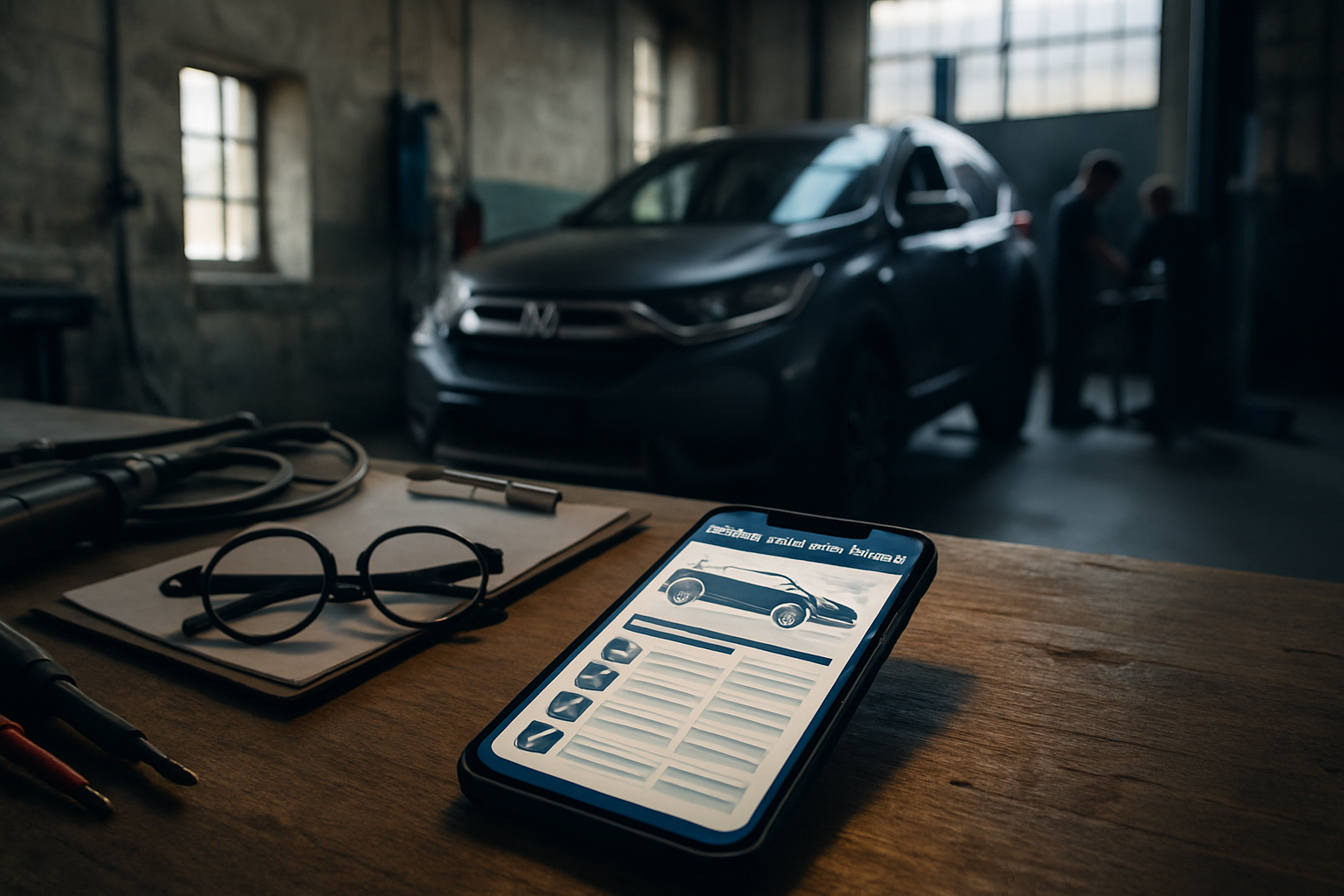
You found a 2019 Honda CR-V on Kijiji Autos for $24,500 in Mississauga. Photos look right. Seller has had it 4 years. You are driving over Saturday with cash.
Spend $40 first. A Carfax Canada or equivalent vehicle history report is the single highest-ROI thing you can do before buying any used car in Canada. Clean check = peace of mind. Dodgy check = the $5,000 disaster you avoided.
Here is what each item on a typical Canadian vehicle history report actually means — and how to react.
The Big Players in Canada
Several services offer Canadian vehicle history reports. The data sources are similar but not identical:
- Carfax Canada — most widely recognised. $40-$60 per report, often included free with major dealer listings on AutoTrader.ca.
- CarProof — was a separate Canadian-owned service; merged with Carfax Canada in 2018. Same data now flows through Carfax.
- Vehicle Information Reports from provincial sources — some provinces (Quebec via SAAQ, Ontario via Service Ontario) offer basic free or low-cost lookups directly
A Carfax Canada report pulls data from:
- Provincial vehicle registrations and ownership transfers
- Insurance claims (collision history)
- Police-reported accidents
- Canadian Police Information Centre (CPIC) for theft
- Lien holders (outstanding finance / loans against the vehicle)
- Service records from participating shops
- US data when available (vehicles imported from the US)
The 5 Findings That Should Make You Walk Away
1. Outstanding Lien (Finance Owing)
Most common nasty surprise. The seller still owes a bank or finance company. In most Canadian provinces, the lien stays attached to the vehicle — meaning if you buy it and the seller defaults, the finance company can repossess your car.
If a lien shows: do not buy without the lien being discharged in writing at the point of sale. Either the seller pays off the loan and you see the discharge document, or you pay the lien holder directly (your purchase amount goes to them, the balance to the seller).
Real cost of ignoring: the entire purchase price. Walk if not resolved.
2. Stolen Marker
If the vehicle is recorded as stolen on CPIC, you cannot legally own it. Police will seize it the moment they cross-reference the VIN. You lose the car and the money. The seller is committing a crime; you become collateral damage.
Real cost: 100% loss.
3. Branded Title — Salvage, Rebuilt, Non-Repairable
Canadian provincial branding terms vary, but the categories are roughly:
- Non-Repairable / Irreparable / Scrap — cannot legally return to the road. If you see this, the seller is committing fraud.
- Rebuilt / Reconstructed — was a write-off, has been repaired and inspected, can be re-registered. Insurance is harder and more expensive. Resale value 30-50% below clean equivalent.
- Salvage — written off, not yet repaired or re-inspected. Cannot be driven on public road until rebuilt and provincially re-inspected.
Rebuilt is not automatically a walkaway, but the price must reflect it (30-50% discount), the repairs should be documented with invoices, and you should pay for an independent mechanic to inspect the structural work.
4. Mileage Discrepancy
The report compares the seller's claimed odometer reading against the readings recorded at previous registrations, inspections, and service visits. If 2022 records show 95,000 km and the car is now being advertised at 78,000 km, the odometer has been wound back.
Odometer fraud is a federal offence in Canada. The car is also worth a fraction of asking price (and may have hidden mechanical wear consistent with the higher real mileage).
5. US Auction History (especially flood / fire / hail damage)
Many Canadian used cars are imported from the United States — perfectly legal and often legitimate. But some are vehicles US insurance wrote off, sold at salvage auction (Copart, IAA), shipped to Canada, repaired cheaply, and re-titled in a Canadian province where the US write-off is not flagged.
A Carfax Canada report often (but not always) shows US auction history. If you see "auction record" on a vehicle being sold as private-history clean, that is your tell. Walk or demand independent inspection.
Findings That Need Conversation, Not Walking
- Multiple registered owners in short succession — could be problem vehicle, or could be company fleet pool car. Ask the seller to explain each transfer.
- Recent province change — perfectly legal, but ask whether the destination-province inspection was completed
- Insurance claim history with no major payout — minor parking knocks, hail damage, glass replacements are normal in Canada and usually fine. Multiple major claims = possible repeat-collision pattern.
- Open recall — common, often free to fix at the dealer. Ask seller to have completed before pickup, or budget time to do it yourself.
What Vehicle History Reports DO NOT Tell You
- Mechanical condition. The report is paperwork; an actual engine you can hear is the test.
- Cash repairs done outside insurance — the car was crashed, fixed at the buddy's shop with no claim filed, no record exists.
- Flood damage repaired before the report becomes available.
- Service quality — a stamp does not prove the work was actually done well.
This is why vehicle history is one piece of the puzzle, alongside: physical inspection (or paid pre-purchase inspection by an independent mechanic), test drive, gut feel about the seller, and your own mechanical sanity check.
The 5-Minute Pre-Purchase Process
- Get the VIN from the seller before viewing
- Run the VIN through Transport Canada's recall database — free, instant
- Run a paid Carfax Canada report or equivalent ($40-$60)
- If everything checks out, drive over and inspect physically
- If you are seriously interested, pay for an independent pre-purchase inspection ($100-$200)
Total cost: $40-$260. Saved cost when something is wrong: $5,000-$15,000.
If You Discover a Problem After Buying
- Stop driving the car immediately
- Contact your provincial consumer affairs office (OMVIC in Ontario, AMVIC in Alberta, etc.)
- If you bought from a registered dealer, you have stronger rights than from a private sale — most provinces have a cooling-off period or rescission right for dealer purchases
- If finance / lien is outstanding, contact the lien holder directly — they will tell you the settlement figure and your options
- For stolen vehicles: contact police immediately and your insurance company
Sources & Further Reading
- Transport Canada — Vehicle Recall Database (free, official, by VIN)
- Government of Canada — Road transportation services
- Office of the Privacy Commissioner of Canada — vehicle data protection rules
- Canadian Automobile Association (CAA) — used-car buying advice and pre-purchase inspection program
- Better Business Bureau Canada — dealer complaint records and accreditation
- Carfax Canada — primary vehicle history report provider in Canada — carfax.ca
- AutoTrader.ca — listings often include free Carfax — autotrader.ca
- Kijiji Autos — private-sale listings (always run history check independently) — kijijiautos.ca
- Canadian Black Book — wholesale vehicle pricing reference — canadianblackbook.com
Why We Care
My Mekavo is free for Canadian car owners. Once you buy a car that passed vehicle history cleanly, log every service, every receipt, every kilometre — so when you sell, the next buyer can run their own Carfax AND see your transparent ownership record. Trust both ways.
Note on scenarios: The shops, names, addresses, and case reference numbers in this article are fictional and used solely to illustrate how the cited statutes operate in practice. Any resemblance to actual shops, owners, or events is coincidental. The statutes, regulations, and agency procedures cited are real and current as of publication.