English
 FR
FR
Canadian winter is not the same as winter in most of the world. -25°C in Winnipeg, freezing rain in Halifax, lake-effect snow off Lake Erie, freezing fog in interior BC. Cars built for global markets get tested at their limits here.
The good news: most cold-weather failures are predictable. Battery, oil, tires, washer fluid, brakes, sealing — they fail in the same ways every November and December. Spend an hour and a few hundred dollars in October and you will drive through February without incident. Skip it, and you join the 6:00 AM CAA queue with a dead battery in a Tim Hortons parking lot.
Here is the honest 7-item checklist.
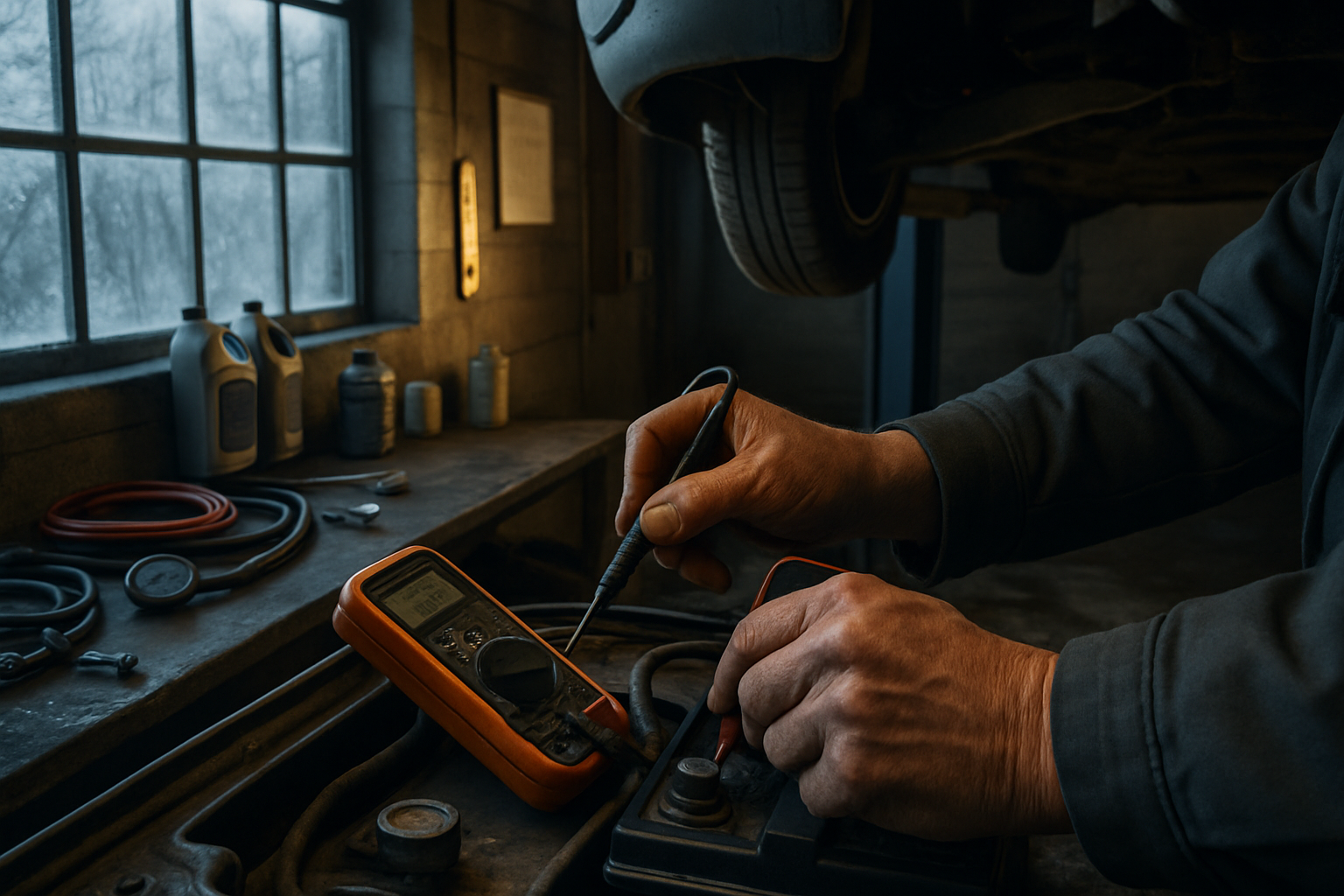
1. Battery Test (And Replace If Needed)
Cold reduces battery cranking power by 30-50%. A weak battery that started fine in summer will fail catastrophically at -20°C — usually on the coldest morning of the year, often when you have somewhere important to be.
- How long do batteries last in Canada? 4-5 years on average. Less in extreme climates (Saskatchewan, Manitoba, Northern Ontario).
- Free battery test: most parts retailers (Canadian Tire, NAPA, PartSource) test batteries free. Drive in, 5-minute test, get the printout.
- Replacement cost: $150-$300 for a quality battery installed. Better than $200+ for a tow plus $250+ for emergency replacement.
- Block heater: most Canadian cars come with one factory-fitted. Plug it in 2-4 hours before starting in -15°C or colder. Add a winter timer outlet ($25 at Canadian Tire) so it only runs the few hours before your departure.
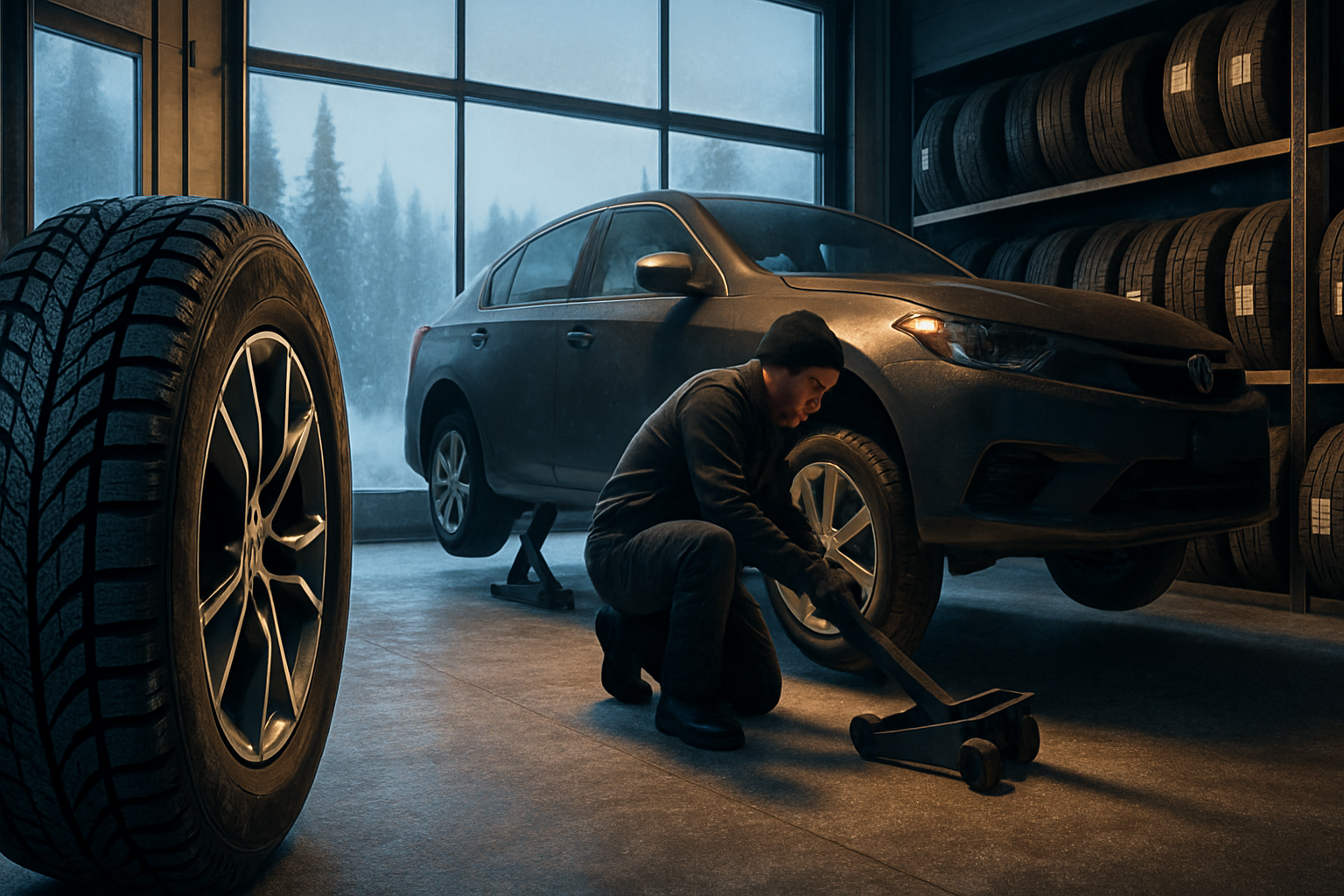
2. Winter Tires (Or At Minimum, Check Your All-Seasons)
If you are in Quebec or driving BC highways, winter tires are mandatory. Even where they are not, in most of Canada they materially improve safety.
- Tread depth: legal minimum is 4/32" (about 3.2mm) but for winter you want 6/32" (4.8mm) minimum on winters and 5/32" on all-seasons.
- Pressure: drops 1 PSI for every 10°F drop in temperature. The TPMS warning light comes on a lot in November because tires inflated for July are now low. Check pressures monthly all winter.
- Switch from all-seasons when daytime highs sit consistently below 7°C — usually mid-October to early November in most of Canada.
3. Oil Change and Viscosity Check
- Use the right viscosity for winter: many older cars specified 5W-30 or 10W-30 in their manual; modern equivalents specify 0W-20 or 0W-30 for cold-climate operation. The "0W" matters — it indicates how the oil flows at -35°C. Check your owner's manual for the cold-weather recommendation.
- Synthetic oil: outperforms conventional in cold weather, by a wide margin. Worth the $30-$50 extra every change for Canadian winter.
- Time it before winter: a fresh oil change in late October means you go through the coldest months on clean lubricant.
4. Coolant / Antifreeze Check
Coolant should freeze at -37°C or below for most Canadian conditions. Cheap or old coolant fails first. Symptoms of failed coolant: white milky appearance, brown rust colour, jelly-like consistency. Result of failed coolant in -20°C: cracked engine block, $4,000-$8,000 repair.
- Have any garage check freeze point (free, 30 seconds with a refractometer)
- Replace every 4-5 years or per manufacturer schedule, whichever comes first
- Top up only with the same type (G05, G12, G13, OAT, HOAT — your manual specifies)
5. Washer Fluid (Winter Grade Specifically)
Summer washer fluid freezes solid at -10°C. Winter fluid is rated to -40°C or -45°C.
- Drain summer fluid (use up the reservoir spraying the windshield)
- Refill with winter-grade fluid, $4-$8 a jug
- Top up monthly all winter — you will use 2-3x more than in summer (slush, road salt spray)
- Carry a spare jug in the trunk for road trips
6. Wipers and Lighting
- Replace wiper blades if they have any streaking, chattering, or visible damage. Winter blades (full rubber-encased frame) outperform summer blades on snow and ice. $25-$45 a pair, 5 minutes to fit.
- Headlight check: the days are short in Canadian winter. Both headlights, both fog lights, both rear lights, brake lights, indicators, all working. A burnt-out headlight at 5pm in Vancouver December rain is a real risk.
- Headlight cleaning: oxidized headlights cut light output by 30-50%. A $20 restoration kit takes 30 minutes and dramatically improves night-time visibility.
7. The Winter Emergency Kit
Mandatory for any drive longer than 30 minutes in winter, particularly outside cities:
- Booster cables OR a portable jump-start pack ($60-$150 — the lithium packs are excellent)
- Small shovel (collapsible)
- Bag of sand or kitty litter (for traction under wheels if stuck)
- Ice scraper and snow brush (full-size, not the tiny one in the glovebox)
- Blanket and extra warm clothes
- Granola bars / chocolate
- Bottled water (will freeze, but better than nothing)
- Flashlight with fresh batteries
- Cell phone charger and a backup battery pack
- First aid kit
- Reflective triangle or warning lights
You probably will never use it. The one time you do, it pays for itself a hundred times over.
Optional Extras Worth Considering
- Undercoating / rust protection: in salt-belt provinces (Ontario, Quebec, Maritimes), an annual or bi-annual undercoat application ($120-$200) extends the life of your frame, brake lines, and exhaust by years. Krown, Rust Check, Corrosion Free are the major providers.
- All-weather floor mats: $80-$200 well spent. Stops salt and slush destroying your carpet.
- Headlight aim check: misaligned headlights are surprisingly common after potholes and minor knocks. Check at MOT-equivalent inspection time.
- Door seal silicone: a few minutes with a silicone spray on door rubbers in October prevents the seal freezing to the body in February.
The Honest Cost
Done at home with basic tools: $150-$250 for the consumables (oil change, washer fluid, top-up coolant, wiper blades).
Done at a garage with a "winterisation package": $250-$450 depending on shop and what is included.
The cost of NOT doing it: easily $500-$3,000 in any single winter incident — dead battery emergency callout, towing for failed cold-start, body work from a low-traction slide, cracked engine block from failed coolant. The math always favours preparation.
Sources & Further Reading
- Government of Canada — Winter driving
- Transport Canada — winter tire research and safety standards
- Canadian Automobile Association (CAA) — winter driving guides, breakdown statistics by season
- SAAQ Québec — winter tire requirement and cold-weather driving advice
- ICBC British Columbia — winter tire and chain regulations
- Canadian Tire — winter prep retail pricing benchmark — canadiantire.ca
- Driving.ca — Canadian winter car prep guides — driving.ca
Why We Care
My Mekavo is free for Canadian car owners. Log when you did each winter prep item — battery test, oil change, coolant flush, wiper replacement. Mekavo reminds you next October before the cold hits. No more "did I check the battery this year?" guesswork. The data your car has been trying to tell you, in one place.
Note on scenarios: The shops, names, addresses, and case reference numbers in this article are fictional and used solely to illustrate how the cited statutes operate in practice. Any resemblance to actual shops, owners, or events is coincidental. The statutes, regulations, and agency procedures cited are real and current as of publication.