English
 FR
FR
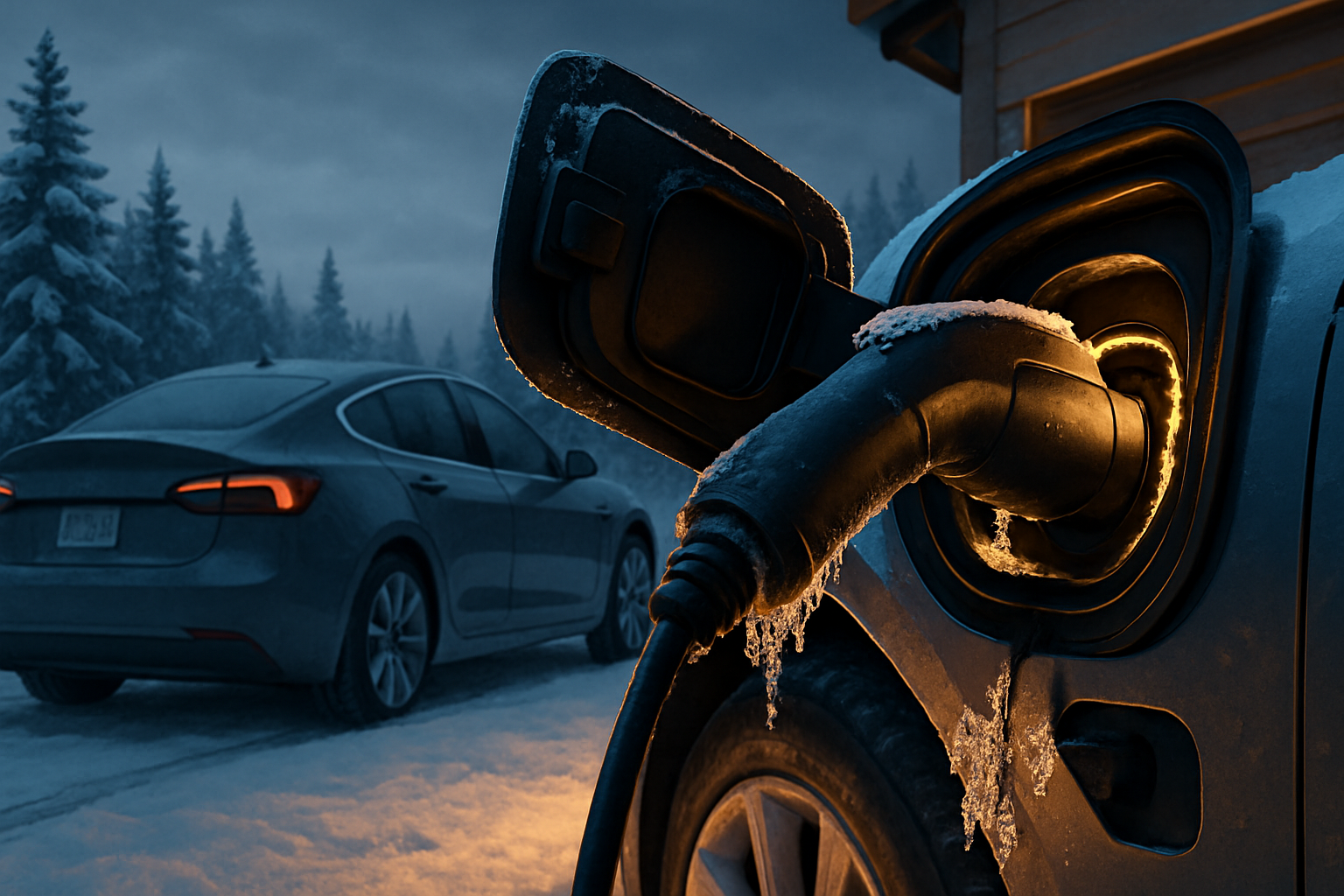
"The Tesla pays for itself in fuel savings." You hear it at every dinner party in Toronto, Vancouver, Calgary. Sometimes it is true. Sometimes it is wildly optimistic. The actual financial picture for owning an EV in Canada depends on three things almost nobody factors in honestly: which province you live in, whether you can home-charge, and whether you drive in winter.
Here is the real provincial breakdown for 2025-2026, including the federal iZEV programme ending in January 2025 and what each province now offers in its place.
The Federal iZEV Programme — Ended January 2025
The federal Incentives for Zero-Emission Vehicles (iZEV) programme — up to $5,000 off a new EV — ran out of funding in mid-January 2025 and has not been renewed. Anyone buying a new EV from late January 2025 onward gets no federal rebate.
This is a meaningful change. A $50,000 EV that effectively cost $45,000 in 2024 now costs $50,000. Sales dropped sharply in early 2025 as a direct result.
Provincial programmes still exist in some provinces but vary widely.
Provincial EV Rebates (as of 2025-2026)
- Quebec — Roulez vert programme: up to $4,000 for new EVs, $2,000 for plug-in hybrids, with phasedown announced. Covers used EVs too at lower amounts. Also incentives for home charger installation.
- British Columbia — CleanBC Go Electric: up to $4,000 for new EVs (income-based scaling), home charger rebates, plus separate utility rebates from BC Hydro.
- Newfoundland and Labrador — $2,500 rebate
- Nova Scotia, PEI, New Brunswick — limited or no provincial rebates as of 2025
- Ontario — no provincial rebate (cancelled 2018, not restored)
- Alberta, Saskatchewan, Manitoba — no provincial rebates
- Yukon — Good Energy: up to $5,000
Always check the most current provincial programme before buying — these change frequently.
Real Per-Kilometre Cost (Honest Numbers)
Based on a typical Canadian EV consuming 18-20 kWh per 100 km in mild weather, 25-32 kWh per 100 km in deep winter:
| Charging scenario | Cost per kWh | Cost per 100 km (mild) | Cost per 100 km (winter) |
|---|---|---|---|
| Quebec home (Hydro-Québec residential) | ~7-10¢ | $1.40-$2.00 | $1.95-$2.85 |
| British Columbia home (BC Hydro) | ~10-14¢ | $1.95-$2.80 | $2.75-$4.10 |
| Ontario home (off-peak) | ~9¢ | $1.80 | $2.50 |
| Ontario home (mid/on-peak) | ~13-19¢ | $2.60-$3.80 | $3.65-$5.50 |
| Alberta home (deregulated, varies) | ~12-25¢ | $2.40-$5.00 | $3.40-$7.30 |
| Public Level 2 (most cities, ~$1-$2/hour) | ~30-50¢ effective | $6-$10 | $8-$14 |
| DC fast charger (Tesla Supercharger, Petro-Canada, ChargePoint) | ~40-65¢ | $8-$13 | $11-$19 |
For comparison, a 7L/100km petrol car at $1.50/L (Ontario average 2025) costs $10.50 per 100 km.
The Winter Range Reality
EV range drops 25-40% in Canadian winter. This is real, well-documented, and usually understated in marketing.
Causes:
- Battery chemistry — lithium-ion stores and delivers less energy in cold
- Cabin heating — without an engine producing waste heat, the battery powers the heater. Can consume 2-4 kWh per hour on highway in deep cold.
- Heated seats and steering wheel — small but additive
- Battery preconditioning — newer EVs preheat the battery before fast charging, which uses energy
- Tire rolling resistance — winter tires have more resistance than summer or all-season
So a Tesla Model Y rated 525 km WLTP delivers maybe 320-380 km in -15°C with cabin heating on. A Hyundai Ioniq 5 rated 488 km might deliver 290-350 km. Plan for it. A 100km commute that is comfortable in summer can become anxiety-inducing in February.
The Cold Charging Problem
EV charging itself slows dramatically when the battery is cold. A DC fast charger that adds 250 km of range in 25 minutes in summer might add only 150 km in 35 minutes if the battery is at -10°C and unconditioned.
Modern EVs (Tesla Model 3/Y/S/X 2022+, Hyundai Ioniq 5/6, Kia EV6, BMW iX, Porsche Taycan) precondition the battery automatically when navigating to a fast charger. Older EVs or those without route planning do not — you arrive at the charger, find slow charging, get frustrated.
Total Cost of Ownership — Worked Example
Let us compare two equivalent cars over 5 years for a Toronto driver doing 18,000 km/year:
Toyota RAV4 Hybrid (gasoline):
- Purchase: $42,000 + tax
- Fuel: 5.5L/100km × $1.50/L × 18,000 km × 5 years = $7,425
- Maintenance: $4,500 over 5 years (oil, filters, brakes)
- Insurance: $9,000 over 5 years
- Total 5-year cost (excluding depreciation): $62,925
Tesla Model Y RWD (EV):
- Purchase: $54,990 + tax (no federal rebate post-Jan 2025)
- Charging (80% home off-peak, 20% public): ~$2,200 over 5 years
- Maintenance: $1,500 over 5 years (mostly tires, wiper blades; no oil changes)
- Insurance: $11,500 over 5 years (EVs cost ~25% more to insure on average)
- Total 5-year cost (excluding depreciation): $70,190
The EV costs about $7,000 more to own over 5 years on these numbers — before considering depreciation differences (EVs lost more in 2024-25 than ICE equivalents).
The savings story is much stronger for high-mileage drivers (35,000+ km/year, fuel savings amortise faster) and for drivers in low-electricity-cost provinces (Quebec especially).
When EV Genuinely Makes Financial Sense in Canada
- You live in Quebec or BC (cheapest electricity, strongest provincial incentives, mild winters in coastal BC)
- You drive 20,000+ km/year
- You have driveway / off-street parking + a Level 2 home charger
- You can plan for winter range loss without anxiety
- You plan to keep the car 5+ years (smooth out depreciation hit)
Where it is harder to justify financially:
- Alberta or Ontario without off-peak charging access
- Less than 12,000 km/year
- No off-street parking
- You change cars every 2-3 years (steep EV depreciation crystallises)
- You regularly drive 400+ km in winter without time for fast charging stops
Sources & Further Reading
- Transport Canada — Zero-Emission Vehicles (federal EV programme history and current status)
- Natural Resources Canada — Transportation and Alternative Fuels
- Canadian Automobile Association (CAA) — EV affordability calculator, charging guides, real-world range tests
- SAAQ Québec — Roulez vert provincial rebate programme
- Government of British Columbia — CleanBC Go Electric
- Government of Ontario — provincial transport policy
- Driving.ca — Canadian EV reviews and winter range testing — driving.ca
- Plug'n Drive — non-profit EV advocacy with cost-of-ownership calculator — plugndrive.ca
Why We Care
My Mekavo is free for Canadian car owners. Track every charge — date, kWh, location, cost. Across a year you see your actual per-kilometre running cost across summer and winter. Not the brochure number. The number that helps you decide whether your next car should be EV or stay petrol.
Note on scenarios: The shops, names, addresses, and case reference numbers in this article are fictional and used solely to illustrate how the cited statutes operate in practice. Any resemblance to actual shops, owners, or events is coincidental. The statutes, regulations, and agency procedures cited are real and current as of publication.