English
 AR
AR
The Silent Cash Drain Every Kuwait Workshop Knows
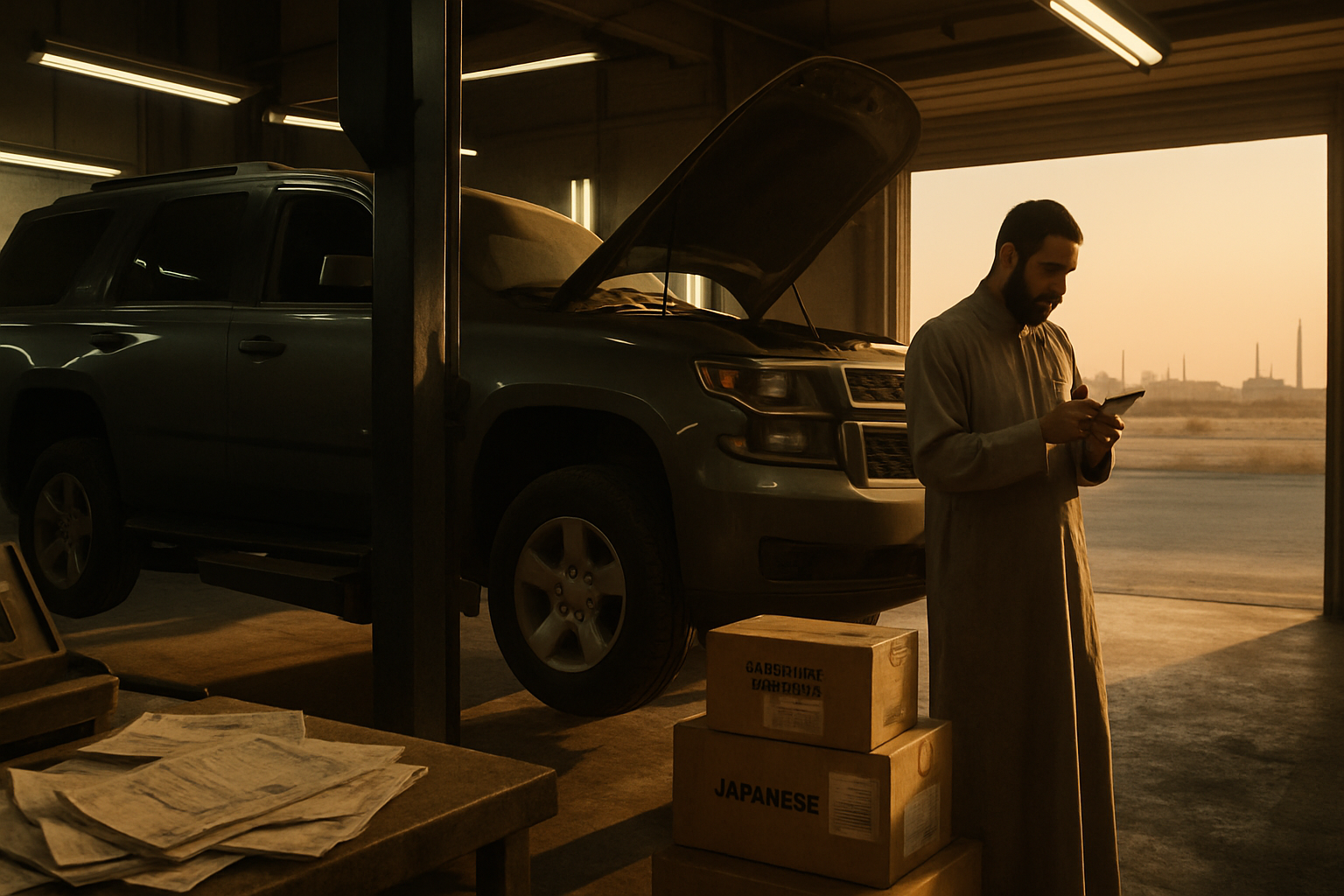
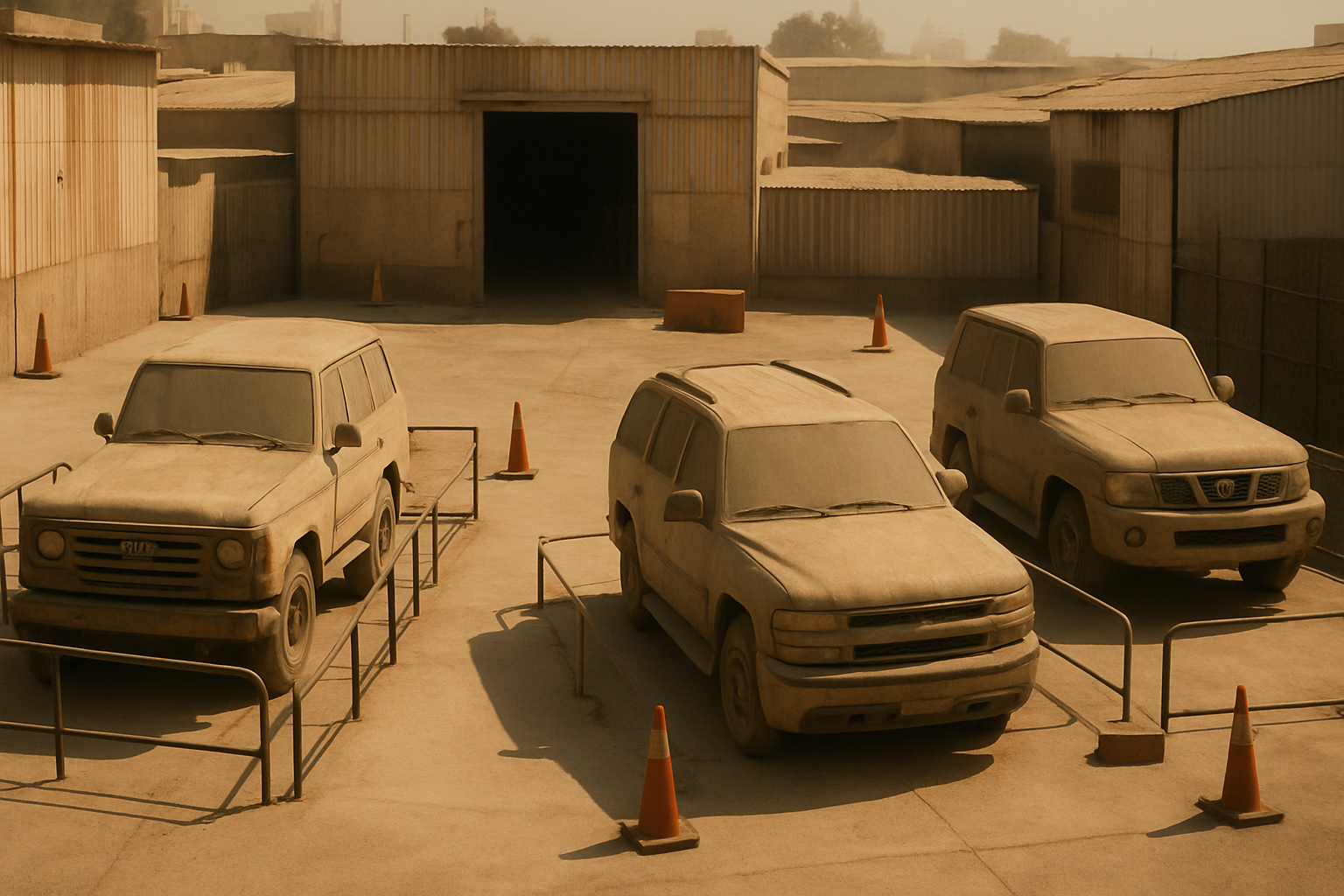
Ahmad's automotive workshop in Shuwaikh had been thriving for eight years until he tallied up the numbers last month. Three vehicles sat in his yard for over four months—a 2019 Toyota Land Cruiser needing engine work, a Chevrolet Tahoe with transmission problems, and a Nissan Patrol waiting for accident repairs. The owners? Completely unresponsive to WhatsApp messages, phone calls, and even visits to their listed addresses.
"I calculated it out," Ahmad told me over tea at his workshop office. "Each vehicle is costing me 500 KWD per month in lost space, utilities, and insurance coverage. That's 6,000 KWD tied up in dead inventory while I turn away paying customers because I have no room."
Ahmad's story isn't unique. From Kuwait City to Ahmadi, workshop owners face the same nightmare: customers bring in vehicles for major repairs worth 1,500-4,000 KWD, then vanish when it's time to pay and collect. The result is a cash flow disaster that most shop owners suffer in silence, unsure of their legal rights or how to recover without damaging their reputation.
Understanding Kuwait's Legal Framework for Vehicle Liens
Most workshop owners don't realize they have significant legal protection under Kuwait's traffic law and commercial regulations. Khalil, who runs a transmission shop in Hawally, learned this the hard way after consulting with a lawyer about five abandoned vehicles.
"The lawyer explained that as a registered garage, I have what's called a 'possessory lien' on any vehicle I'm repairing," Khalil explained. "This means I can legally hold the vehicle until all charges are paid, and after proper notice, I can even pursue sale procedures to recover costs."
Under Kuwait law, automotive workshops have several rights when vehicles are abandoned:
- Right of retention: You can legally hold the vehicle until all repair charges and storage fees are paid
- Lien priority: Your repair and storage charges take priority over most other debts on the vehicle
- Sale procedures: After proper notice periods, you can petition authorities to authorize vehicle sale to recover costs
- Storage fee collection: You can charge reasonable daily storage fees from the date work was completed
The key is documentation. Every interaction, estimate, and deadline must be recorded with dates and preferably witnesses or written confirmation.
The True Cost Calculation: Why 500 KWD Monthly Is Conservative
Most workshop owners drastically underestimate the real cost of abandoned vehicles. Mansour, who operates a body shop near the industrial area, started tracking expenses after realizing abandoned cars were killing his profitability.
"I thought storing a car cost maybe 200-300 KWD monthly. When I actually calculated space rental value, insurance increases, utility allocation, and opportunity cost, I was shocked. Each abandoned vehicle costs me at least 600 KWD per month."
Here's the real cost breakdown for a typical abandoned vehicle in a Kuwait workshop:
| Expense Category | Monthly Cost (KWD) | Notes |
|---|---|---|
| Floor space value | 300-400 | Based on 40-50 sqm @ 7-10 KWD/sqm |
| Insurance liability increase | 50-80 | Additional coverage for stored vehicles |
| Utilities (A/C, lighting, security) | 80-120 | Essential in Kuwait's extreme heat |
| Opportunity cost (lost jobs) | 200-300 | Average job margin lost per month |
| Administrative time | 40-60 | Calls, messages, paperwork |
| Total Monthly Cost | 670-960 | Per abandoned vehicle |
Over six months, a single abandoned vehicle can drain 4,000-6,000 KWD from your workshop's profitability—more than most shops realize until they calculate it properly.
The Communication Escalation Strategy That Works in Kuwait
Effective communication in Kuwait's business culture requires understanding the right progression and timing. Salman, who runs a successful garage in Salmiya, has refined his approach over twelve years.
"You can't just send angry messages," Salman explains. "There's a proper way to escalate that respects the customer relationship while protecting your business."
Phase 1: Friendly Follow-Up (Days 1-14)
Start with personal WhatsApp messages and phone calls. Many customers are genuinely busy or facing temporary cash flow issues. Keep messages respectful and solution-focused:
- "Your Tahoe is ready for collection. Would tomorrow morning work for you?"
- "I know you're busy—shall we arrange delivery to your location?"
- "Would a payment plan help? We can discuss flexible options."
Phase 2: Formal Notice (Days 15-30)
Switch to formal SMS and written notice. This creates legal documentation while maintaining professionalism:
- Send registered letter to customer's address
- Include itemized invoice with storage fees starting date
- Set clear deadline (typically 30 days)
- Copy to any sponsor or guarantor listed
Phase 3: Legal Warning (Days 31-60)
Final notice with legal consequences clearly stated:
- Reference Kuwait traffic law provisions
- State intention to pursue lien enforcement
- Include total accumulated charges
- Offer one final settlement opportunity
Negotiation Tactics That Respect Kuwait Business Culture
When customers finally respond (often at the legal warning stage), your negotiation approach can determine whether you recover costs while preserving the relationship. Omar, whose family has run workshops in Kuwait for three generations, shared his proven strategies.
"Kuwaiti business culture values face-saving solutions," Omar explained. "You need to give people a way to resolve the situation with dignity while protecting your interests."
The Payment Plan Approach
Many customers avoid workshops because the bill has grown overwhelming. Offer structured payment plans that recover your costs:
- Immediate payment: 50% of total charges to release vehicle
- Balance payment: Remaining 50% over 3-6 months with post-dated checks
- Storage discount: Waive 20% of storage fees for immediate partial payment
- Guarantee requirement: Sponsor signature or additional collateral for payment plan
The Trade-In Solution
Some customers cannot afford repairs but have vehicle equity. This can work for both parties:
- Accept vehicle ownership in lieu of payment
- Handle MOI transfer procedures
- Sell vehicle through Q8car or 4Sale platforms
- Return any excess proceeds to customer
Legal Recovery Options: When Negotiation Fails
When all communication fails, Kuwait law provides several enforcement mechanisms. However, legal action should be your last resort due to time and cost considerations.
Lien Enforcement Procedure
Working through Kuwait's court system for abandoned vehicles involves:
- File complaint: Submit documentation to appropriate court
- Serve notice: Official court notification to vehicle owner
- Await response period: Typically 30-60 days
- Request sale authorization: If no response, petition for vehicle auction
- Conduct sale: Through authorized auction house
- Recover costs: Legal fees, storage, repairs from proceeds
Youssef, who pursued legal action on three abandoned vehicles, warns about the process: "It took eight months and cost 800 KWD in legal fees, but I recovered 4,200 KWD in total charges. Worth it for the precedent, but prevention is much better."
Involving Authorities
For vehicles suspected stolen or involved in criminal activity, contact MOI traffic department. They can:
- Check vehicle status and ownership
- Hold vehicles for investigation if needed
- Facilitate contact with legitimate owners
- Provide documentation for insurance claims
Prevention Strategies: The Workshop Agreement Revolution
The most successful workshops have eliminated abandoned vehicle problems through comprehensive pre-work agreements and modern tracking systems.
The Comprehensive Work Agreement
Before touching any vehicle, establish clear terms in writing:
- Estimate approval: Written authorization for repair costs
- Storage fees: Daily rate starting 7 days after completion
- Collection deadline: 30 days maximum with escalating fees
- Lien rights: Customer acknowledgment of your retention rights
- Contact requirements: Current address, sponsor info, emergency contacts
Technology Solutions for Customer Communication
Modern garage management systems have transformed how successful workshops handle vehicle status and customer communication. Rather than relying on manual calls and WhatsApp messages, integrated systems can:
- Send automated SMS updates at each repair stage
- Track customer response times and engagement
- Generate formal notices with proper legal language
- Calculate storage fees automatically
- Maintain complete communication records
Fahad, whose workshop in Kuwait City implemented comprehensive management software, reports dramatic improvements: "I haven't had an abandoned vehicle in eighteen months. Customers get automatic updates, they know exactly when their car is ready, and storage fees start ticking immediately if they delay collection. Everything is documented automatically."
The GPS Tracking Advantage
Some workshops now use GPS tracking for customer vehicles, providing real-time status updates through smartphone apps. This creates accountability for both workshop and customer while reducing abandonment rates.
Financial Impact: The Numbers That Matter
Workshops that implement comprehensive abandoned vehicle prevention and recovery systems report significant financial improvements:
- Cash flow improvement: 15-25% faster payment collection
- Storage cost recovery: 80-95% of legitimate storage fees collected
- Space utilization: 30-40% better garage capacity management
- Customer satisfaction: Fewer disputes due to clear communication
"Once I implemented proper agreements and automated tracking, my workshop capacity increased 40% without expanding the building. No more dead cars taking up paying customer space." - Nasser, Kuwait City automotive workshop
Moving Forward: Your Action Plan
Abandoned vehicles don't have to drain your workshop's profitability. By understanding your legal rights, implementing proper communication systems, and establishing clear pre-work agreements, you can eliminate this silent profit killer while maintaining customer relationships.
The workshops thriving in Kuwait's competitive market aren't necessarily the biggest or best-equipped—they're the ones that manage their business systematically and protect their cash flow professionally. Your abandoned vehicle problem can become a competitive advantage once you implement the right systems and procedures.
Start with your current abandoned vehicles: calculate the real costs, follow the communication escalation process, and recover what you can. Then implement prevention systems to ensure it never happens again. Your bottom line will thank you.