English
 AR
AR
The 30,000 KWD Engine Job That Sat for Six Weeks
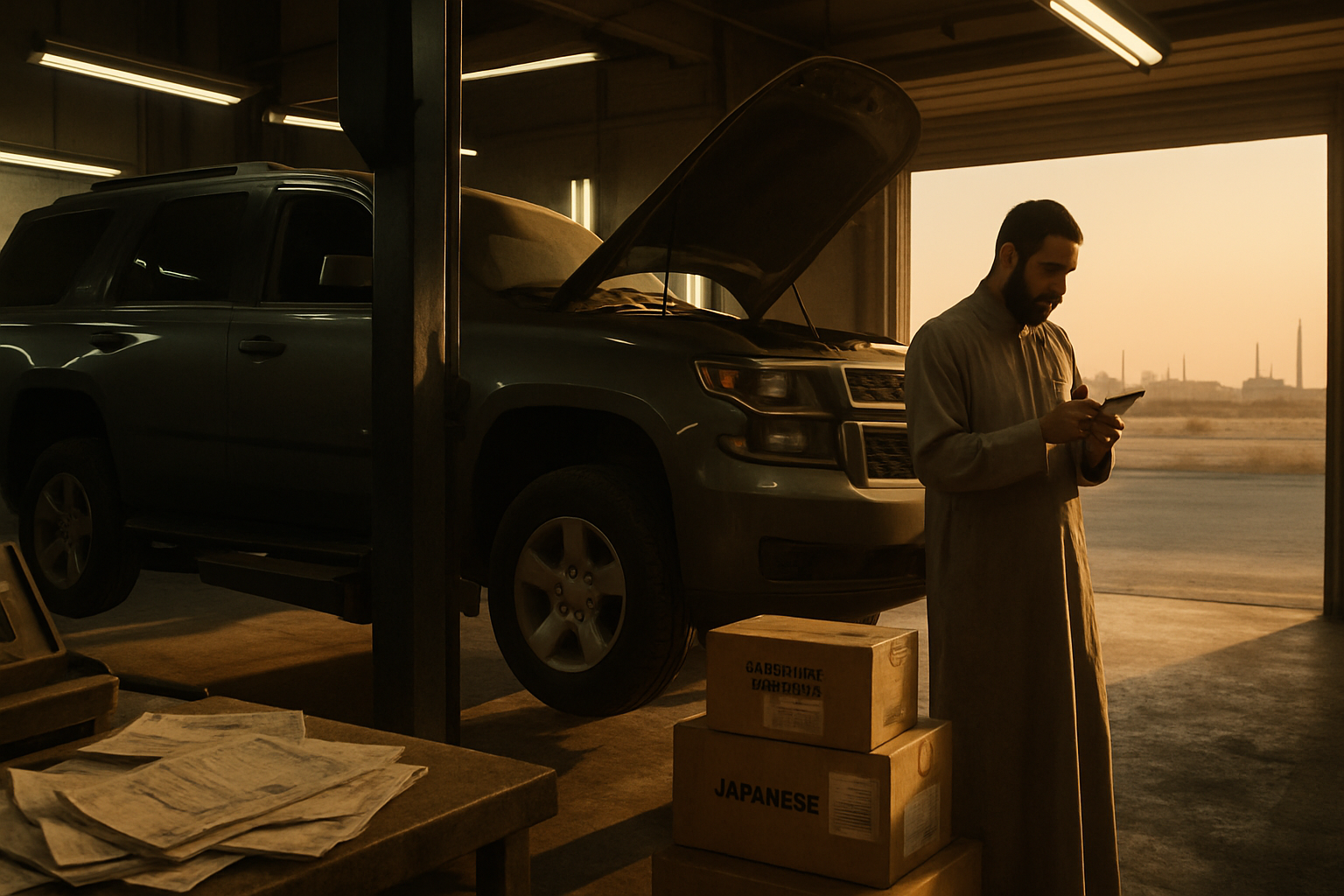
Khalid's ورشة in Shuwaikh had a problem. A Chevrolet Tahoe needed a complete engine rebuild, and the customer—a KOC fleet manager—had already approved the 30,000 KWD quote. The German pistons and Japanese gaskets were ordered Monday morning. By Friday, Khalid was calling his supplier asking where the parts were.
"Customs," came the familiar reply. "Maybe two weeks, maybe four. You know how it is."
Six weeks later, the Tahoe was still on the lift, the customer had moved the job to another shop, and Khalid was out the margin plus six weeks of bay rental. Sound familiar?
Here's what most Kuwait shops don't realize: customs delays aren't random. They follow predictable patterns, and shops that understand the system can cut import times from 4-8 weeks down to 10-14 days—sometimes less.
How Kuwait Customs Documentation Actually Works
Ahmad at Hawally Auto Parts imports 2 million KWD worth of engine components annually. His secret? He treats customs like a checklist, not a lottery.
"Every rejected shipment I've seen has the same three problems," Ahmad explains. "Wrong HS codes, missing manufacturer certificates, or incomplete commercial invoices."
The Documentation Essentials
Kuwait customs requires five core documents for automotive parts:
- Commercial Invoice: Must show exact part numbers, country of origin, and FOB values in USD
- Bill of Lading: Original copy, not a photocopy or email attachment
- Certificate of Origin: Issued by the manufacturing country's chamber of commerce
- Manufacturer Certificate: Confirms the parts meet OEM specifications
- Customs Declaration (Form 15): Filed by your clearing agent
The killer detail most shops miss? The HS (Harmonized System) codes. Engine pistons are 8409.99.90, but piston rings are 8484.10.00. Get it wrong, and your shipment sits in Shuwaikh port while they figure out what you actually ordered.
"I've seen shops order 'engine parts' on the invoice instead of listing each component separately. That's an automatic 2-week delay while customs manually inspects everything." — Ahmad, Hawally Auto Parts
The Supplier Communication Gap
Here's the reality: your trusted supplier in Stuttgart has sold Mercedes parts across Europe for 20 years, but they've never dealt with Kuwait customs. They don't know that Kuwait requires manufacturer certificates for engine components, or that commercial invoices need to show the exact KWD exchange rate on the shipping date.
Fahad in Kuwait City learned this the hard way. His go-to German supplier kept sending incomplete documentation because "it works fine for UAE and Saudi." Three delayed shipments later, Fahad switched to a local importer who sources from the same German factories but handles all the Kuwait-specific paperwork.
Finding Kuwait-Savvy Importers
The best importers in Kuwait have relationships with customs brokers and understand the documentation requirements cold. Look for suppliers who:
- Provide tracking numbers within 24 hours of your order
- Can explain exactly which customs documents they handle vs. what you need to provide
- Have a physical location in Kuwait (not just a UAE office serving multiple countries)
- Stock common engine components locally instead of drop-shipping everything
Names like Al-Bahar Auto Parts, Behbehani Motors Parts Division, and Kuwait Saudi Group consistently clear customs faster because they've invested in understanding the system.
Pre-Importing vs. On-Demand: The Real Numbers
Omar runs a Land Cruiser specialist shop in Ahmadi. Two years ago, he made a calculated decision: instead of ordering engine parts as needed, he'd keep 15,000 KWD worth of common components in stock.
"People thought I was crazy," Omar says. "That's a lot of cash tied up. But let me show you the math."
| Metric | On-Demand Ordering | Pre-Import Stock |
|---|---|---|
| Average Import Time | 4-6 weeks | 3-5 days (local stock) |
| Jobs Lost to Delays | 8-12 per year | 1-2 per year |
| Average Job Value | 8,500 KWD | 8,500 KWD |
| Annual Revenue Lost | 68,000-102,000 KWD | 8,500-17,000 KWD |
| Capital Tied Up | 0 KWD | 15,000 KWD |
| Net Benefit | -68,000 to -102,000 KWD | +38,000 to +72,000 KWD |
The key is stocking the right parts. Omar focuses on high-wear components for popular models: Toyota 4.6L V8 pistons, Nissan VQ40 timing chains, and Chevrolet 5.3L gaskets. These parts turn over 6-8 times per year, so his 15,000 KWD investment generates 90,000-120,000 KWD in annual revenue.
Alternative Sourcing: Middle East Suppliers That Deliver
Not everything needs to come from Germany or Japan. Smart Kuwait shops have built networks of regional suppliers who can deliver OEM-quality parts in days, not weeks.
Saeed in Jahra sources 60% of his engine components from UAE and Saudi suppliers. "For a Toyota timing chain, I can get OEM quality from Dubai in 3 days for maybe 20% more than ordering from Japan and waiting 6 weeks. My customers pay the premium happily because their car is back on the road."
Regional Supplier Network
- UAE: Al-Futtaim Automotive (Toyota/Lexus), Gargash Motors (Mercedes), Arabian Automobiles (Nissan)
- Saudi Arabia: Abdul Latif Jameel (Toyota), Aljomaih Motors (Mazda/Volvo), Mohammad Yousuf Naghi Motors (BMW)
- Qatar: Al-Fardan Automobiles (multiple brands), Mannai Auto (Chevrolet/GMC)
- Bahrain: Behbehani Brothers (Toyota), Zayani Motors (Ford)
The trade-off is cost vs. speed. Regional suppliers typically charge 15-25% more than direct imports, but you eliminate customs risk and get parts in 3-5 days.
Customer Communication During Delays
This is where most Kuwait shops lose customers. The wrong WhatsApp message can kill a 25,000 KWD job, even if the delay isn't your fault.
Waleed in Salmiya has perfected his customer communication during parts delays:
"Instead of saying 'parts are stuck in customs, nothing I can do,' I send: 'Your engine components cleared German quality control and shipped Monday. Kuwait customs is processing international automotive shipments this week. I'm tracking daily and will update you Friday with exact delivery date. Your Patrol will be ready for collection 2-3 days after parts arrive.'"
What Works vs. What Kills Deals
What Works:
- Specific timelines ("parts arrive Thursday" vs. "soon")
- Show you're actively managing the situation
- Explain the process without making excuses
- Offer alternatives ("local parts available for 300 KWD extra, 3-day completion")
What Kills Deals:
- "Customs is unpredictable, could be weeks"
- "This always happens, nothing we can do"
- Long delays between updates
- Blaming the supplier or customs directly
Margin Protection: The Customs Handling Fee
Here's a business reality: customs delays cost you money in tied-up bays, customer service time, and administrative overhead. Smart shops charge for this service.
Nasser's ورشة in Kuwait City charges a 500 KWD "import coordination fee" for any job requiring overseas parts. "I explain to customers that this covers customs documentation, shipment tracking, and the extra administrative work for international orders. Most customers understand—they just want transparency."
How to Present the Fee
The key is positioning it as a service, not a penalty:
- Call it: "Import Coordination Fee" or "International Parts Service"
- Not: "Customs Delay Fee" or "Waiting Charge"
- Justify it: "Covers documentation, tracking, and administrative coordination"
- Offer alternatives: "We can source locally for 400 KWD extra and finish this week"
Fees typically range from 300-800 KWD depending on job complexity. For a 20,000 KWD engine rebuild, customers rarely object to a 500 KWD coordination fee if you explain the value.
Workflow Management: Don't Let One Job Paralyze Your Shop
The worst thing you can do is let a delayed engine job tie up a valuable lift for weeks. Experienced Kuwait shops structure their workflow to minimize this impact.
Hassan runs a 6-bay ورشة in Shuwaikh. When engine parts are delayed, he moves the car to a storage area and continues with other work. "I learned this lesson when I had three cars waiting for parts and customers started going elsewhere for oil changes and brake work."
Workflow Strategies
- Dedicated Parts-Waiting Area: Move cars off working lifts while waiting for components
- Alternative Work Identification: What else can you complete while waiting? (suspension, brakes, A/C service)
- Customer Options: Offer rental car arrangements or loaner vehicles for extended delays
- Revenue Diversification: Don't let 80% of your revenue depend on major engine jobs
The 500,000 KWD Annual Impact
Most Kuwait shops don't realize how much customs delays actually cost them. It's not just the lost jobs—it's the opportunity cost of tied-up resources, customer trust damage, and administrative overhead.
A typical busy ورشة loses:
- Direct Revenue: 8-15 delayed jobs annually, averaging 12,000 KWD each = 96,000-180,000 KWD
- Opportunity Cost: Bays tied up with waiting vehicles instead of generating revenue
- Customer Lifetime Value: Customers who switch shops during delays, taking future business elsewhere
- Working Capital: Cash flow disrupted by jobs that drag on for months
Add it up, and a shop can easily lose 500,000+ KWD annually to poorly managed parts importing.
The shops that thrive in Kuwait's market treat parts sourcing as strategically as they treat technical expertise. They understand customs, build regional supplier networks, communicate clearly with customers, and structure their operations to minimize delay impact.
Because in Kuwait's competitive automotive market, technical skill gets you the job, but logistics management keeps the customer.