English
 AR
AR

You bought a used car in Jeddah for SR125,000. Six weeks later the transmission starts slipping. The seller stops responding to WhatsApp messages. You remember them saying "bey hasaba haya haluha" — as is, as it is — and assume you have no recourse.
That depends on who you bought from. Saudi Arabia's consumer protection framework — Saudi Consumer Protection Law and related Ministry of Commerce regulations — materially changed used-car buying. But the protection only applies in some scenarios. Here is the honest legal picture for Saudi buyers, written for owners not lawyers.
The Big Distinction: Dealer vs Private Sale
Almost every consumer-protection right in Saudi Arabia turns on whether you bought from a registered business or from a private individual. The difference is huge.
Bought from a registered commercial dealer (consumer law applies)
Saudi Consumer Protection Law applies to transactions between a consumer and a commercial entity (merchant, trader, dealer). If the seller is a registered used-car business, dealer lot, or authorised showroom:
- The goods (vehicle) must be of acceptable quality, free of hidden defects, and fit for normal use
- The dealer must disclose known material defects before sale
- The Ministry of Commerce has authority to investigate complaints and apply penalties on non-compliant dealers
- Typical remedies include: repair at dealer cost, replacement, or refund of the purchase price, depending on the defect and the circumstances
Dealer "sold as is" clauses attempting to waive fundamental consumer rights are generally not enforceable against the underlying statutory protections.
Bought from a private individual (consumer law largely does NOT apply)
If the seller is not a registered business — an individual selling their personal vehicle — Saudi Consumer Protection Law protections are much weaker. The sale is treated as a private contract between two individuals.
You can still claim under general civil law for:
- Defects the seller knew about and deliberately hid (fraudulent misrepresentation)
- Active fraud (e.g., selling a stolen vehicle, cloned VIN, serious misrepresentation of mileage or accident history)
- Sale of a vehicle that legally cannot be on the road
Proving the seller knew is hard in practice. The realistic outcome of a private-sale dispute in Saudi courts is often: slow, expensive, frustrating, with uncertain result.
This is why pre-purchase due diligence matters more in private sales in Saudi Arabia. A vehicle history report (SR100-SR300) and a paid pre-purchase inspection (SR400-SR800) cost a fraction of a single court filing.
What Counts as a "Commercial Dealer" in Saudi
- Any registered business with a commercial registration (CR) selling vehicles as its trade or significant part of it
- Multi-brand used-car lots with physical premises
- Franchised dealer used-car departments (Toyota, Nissan, Lexus dealer pre-owned programs)
- Syarah, Motory, and similar online platforms when they take ownership of vehicles before reselling (as opposed to listing private-seller inventory)
- Saudi auction houses (in limited cases — check their specific legal structure)
What does NOT count as a commercial dealer:
- An individual selling their personal vehicle, even via online listings on Haraj or Dubizzle SA
- An individual selling 1-2 vehicles as a side activity (generally not ongoing trade)
An individual who consistently sells 5-10+ vehicles per year may be treated as a de facto trader in some cases — but this is fact-dependent.
Key Dealer Obligations
Disclosure
Registered dealers must disclose known material facts before purchase:
- Major defects (previous accident damage, engine overhaul history, write-off status)
- The vehicle's registration and ownership history
- Outstanding finance or any liens
- Gulf-region import status where relevant
- Any significant odometer discrepancy
Failure to disclose known material defects = grounds for remedial action, possibly refund, and complaint to the Ministry of Commerce.
Warranty
Under Saudi regulations, dealers selling used vehicles typically provide some level of implied warranty for a reasonable period after sale — the exact duration and coverage depend on the vehicle's age, condition, and the specific contract. Many Saudi pre-owned programs explicitly offer 3-12 months warranty on major systems.
Refunds and Remedies
Where a dealer-sold used vehicle has a substantial defect covered by consumer protection:
- Remedy typically starts with repair at no cost to buyer
- If repair is impossible or unsuccessful, replacement or refund may be required
- Refund typically must be paid within a reasonable time without unreasonable deductions
What Saudi Consumer Law Does NOT Protect You From
- Defects caused by your own misuse, modification, or failure to maintain
- Defects you were aware of and accepted at purchase
- Wear and tear consistent with the vehicle's age and mileage
- Defects that develop significantly after the warranty or reasonable implied-quality window
- Private sales (covered above)
The Practical Process When Something Goes Wrong
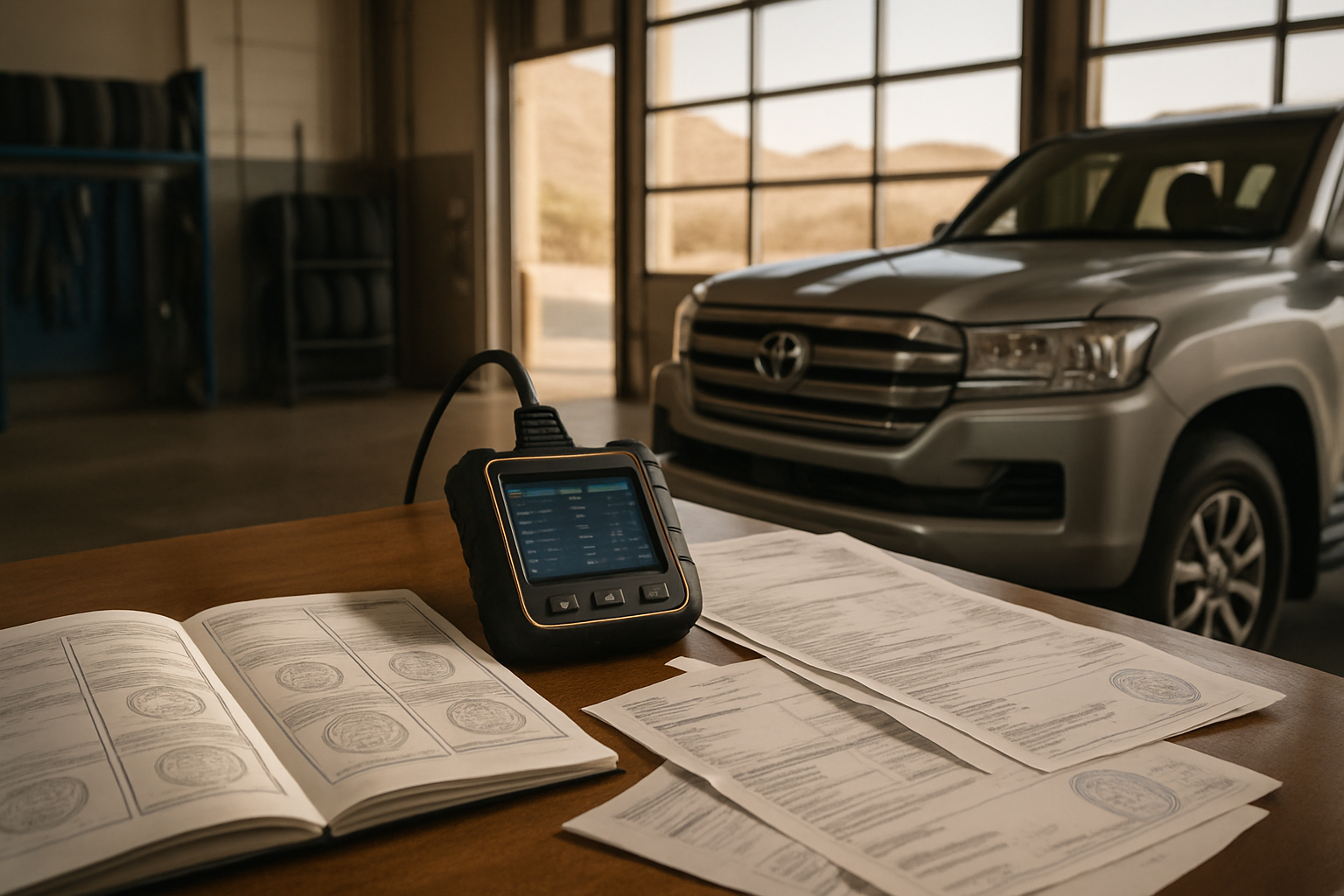
Step 1: Document Everything (Day 1)
- Photograph the defect
- Get a written diagnosis from an independent mechanic (SR200-SR500)
- Keep all records of the original purchase: contract, payment proof, Istimara transfer documents, kilometres at delivery, date
Step 2: Notify the Dealer in Writing (Day 1-7)
- Written notification (WhatsApp, email, letter) including photo evidence and independent mechanic's diagnosis
- Reference the Saudi Consumer Protection Law
- State what remedy you want (repair, replacement, refund)
- Set a reasonable deadline for a response (7-14 days)
Step 3: Escalate If Ignored
- Ministry of Commerce — file a complaint at mc.gov.sa. The Ministry investigates consumer complaints against registered dealers and has power to apply penalties.
- Balagh / Government complaint portals — general government grievance channels for registered businesses
- SAMA (for finance-related issues) — sama.gov.sa handles complaints relating to vehicle finance terms
- Civil court — for contract disputes not resolved by Ministry intervention. Lawyer recommended.
Step 4: Realistic Outcomes
Most dealer disputes resolve at Step 2 or 3. Registered dealers know the Ministry of Commerce can apply penalties and reputation damage. A well-documented complaint usually gets attention.
Private-sale disputes are harder. Civil court is the typical route, with reasonable success only when fraud or active misrepresentation can be proven.
"Bey Hasaba Haya Haluha" — What It Actually Means in 2025-2026
Common confusion: "the contract said as-is, so I have no rights."
In dealer sales: "as-is" language is largely overridden by Saudi consumer protection. Material-defect disclosure, implied quality, and the dealer's duty of care apply regardless of contract wording. Consumer rights cannot be waived by dealer-drafted clauses.
In private sales: "as-is" retains more force for obvious defects the buyer should have noticed. It does NOT protect a private seller who actively concealed a known material defect — that is fraudulent misrepresentation, actionable under civil law regardless of "as-is" wording.
Expat-Specific Considerations
- Complaints to Ministry of Commerce are accepted from foreign residents (Iqama holders) as well as Saudi nationals
- Civil court actions require local legal representation for most expats — budget SR3,000-SR10,000+ in legal fees for a simple civil case
- If you plan to leave Saudi Arabia soon, factor in: unresolved civil cases generally must be concluded before final exit
- Dealer disputes can sometimes be resolved via your embassy's consumer-help channel, though this is informal and not a legal remedy
Sources & Further Reading
- Ministry of Commerce — Saudi Consumer Protection Law and complaint portal for dealer disputes
- Ministry of Interior — fraud and theft case reporting
- SAMA — Saudi Central Bank — vehicle finance disputes and Tameen (insurance) regulation
- SASO — vehicle standards including import quality
- Absher — documentation trail (Istimara history, ownership transfer records)
- Saudi Consumer Protection Association — private advocacy — casco.org.sa
- Syarah — platform purchasing programs with warranty — syarah.com
Related Mekavo articles: MVPI and Absher buyer checks — prevent the dispute in the first place. Used Land Cruiser/Patrol/Tahoe checklist — what to inspect so you never need this article.
Why We Care
My Mekavo is free for Saudi car owners. Once you buy a used car, log every service, every defect, every dealer interaction, every receipt. If you ever need to file a Ministry of Commerce complaint or dispute, you have the timeline + documentation that makes the case airtight. Good for protection, good for resale, good for peace of mind.