 English
 Español
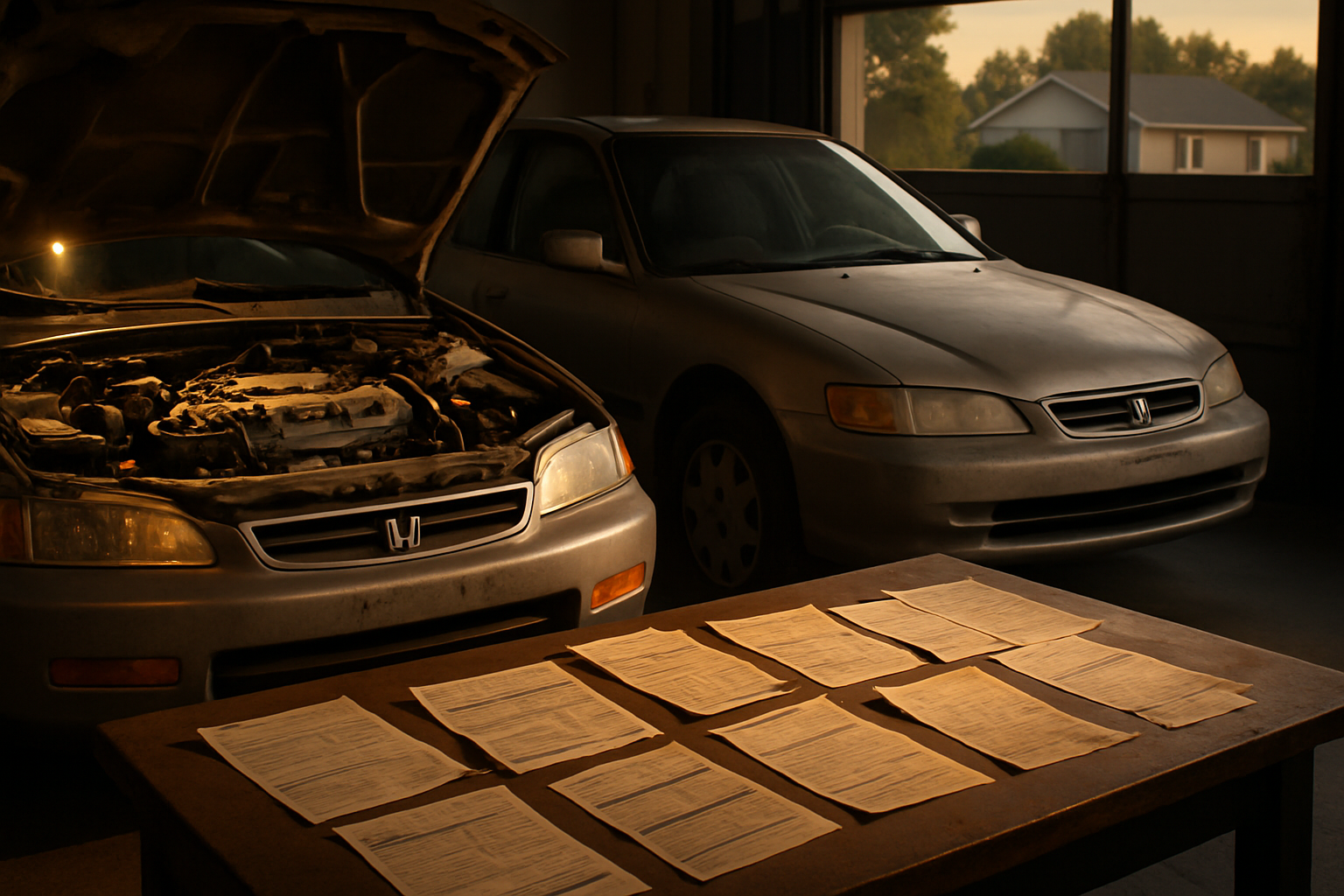
Walk through any Facebook Marketplace, Carvana parking lot, or used car dealership in America. You will see dozens of 5-to-10-year-old cars, same makes, same miles, same colors. On paper, identical.
In real life, the prices vary by thousands of dollars. The difference is almost always the same thing: proof of what has been done.
The Two Cars Nobody Tells You About
Picture two 2018 Honda Accords. Both silver. Both 95,000 miles. Both clean titles.
Car A is listed at $16,500. The seller shrugs: "Oil changes every 3–5,000 miles, I think. I had the brakes done somewhere. Transmission might have been serviced a while back? I do not really remember."
Car B is listed at $18,800. The seller hands you a folder. "Here is every oil change with date and mileage. Transmission fluid changed at 60,000. Brake pads and rotors at 78,000. Spark plugs at 90,000. Timing chain inspection at 80,000 — clean. Cabin filter last month. Here is the Carfax, here is the state inspection history."
Both cars drive identically. Both will probably last another 100,000 miles. The difference is $2,300 — and Car B sells in 3 days while Car A sits for 6 weeks.
Why Buyers Pay More for Documented Cars
Three reasons, every time:
- Risk removal. A used car is a gamble. Every service record is a piece of evidence that the previous owner cared. Buyers will pay a premium to reduce that gamble — even if the car itself is identical.
- Proof of care = proof of character. A seller with receipts is a seller who treated the car like an investment. That person is far less likely to have ignored warning lights, postponed important services, or hidden damage.
- Leverage in negotiation. When you have documentation, the buyer has nothing to push back on. No records = "well it might need a timing belt soon, I'll give you $1,500 less just in case." Documented = "timing belt was done at 90K with receipt, here is the invoice."
What Service Records Are Actually Worth
Based on private-party sale data from major US markets, documented cars typically sell for:
- $1,000–$2,000 more on mainstream sedans/crossovers (Camry, Accord, CR-V, Rogue) at 80,000–120,000 miles
- $2,000–$4,000 more on trucks and SUVs (F-150, Silverado, Tahoe, Expedition) where buyers specifically fear deferred maintenance
- $3,000–$6,000 more on German luxury (BMW, Mercedes, Audi) where unknown maintenance history makes buyers assume the worst
- $500–$1,000 more on economy cars (Corolla, Civic, Versa) where the price gap compresses
The premium is not just about the cost of the repairs documented — it is about the buyer's confidence.
What to Track, in Plain English
You do not need to record everything. You need to record the things that matter to the next buyer:
- Every oil change — date, mileage, oil type, filter brand
- Major fluids — transmission, coolant, brake, differential, transfer case. Date and mileage each time changed.
- Brake service — pads, rotors, calipers, lines. Front vs rear.
- Tires — brand, size, date of purchase, rotation history
- Timing belt or chain — if replaced or inspected. This is a $1,000–$2,500 service and skipping proof of it costs you that much at resale.
- Battery — date installed, brand, warranty
- Spark plugs — date, type
- Any major repairs — even stuff you wish had not happened. A replaced transmission is not a dealbreaker to a buyer. A mystery transmission is.
- State safety and emissions inspections — year, pass/fail, issues noted
The Uncomfortable Truth About Carfax
Carfax is useful but incomplete. It shows events reported to DMVs, insurance companies, dealerships, and shops that subscribe. It misses:
- Oil changes done at independent shops or in driveways
- Most fluid services from non-chain mechanics
- Cash repairs at small shops
- Accidents repaired out-of-pocket without insurance
- Mileage between title transfers
A Carfax showing "service records: 3" on a 7-year-old car usually means the car had regular service — at shops that do not report to Carfax. Your own records fill that gap and show the buyer everything.
How to Build a Service History Starting Today
Even if your car is 150,000 miles and you have no records so far, it is not too late. Start with what you know:
- Photograph the odometer today — that is your starting mileage
- Call your regular shop — they can print your full service history with them
- Call the dealership where you bought it — same, their records
- Going forward, photograph every receipt or invoice the moment you get home
- Enter it in a system that will not lose it — whatever works for you
In 18 months, you will have a documented service history the next buyer will pay extra for.
Sources & Further Reading
- iSeeCars — depreciation studies showing documented vehicles retain measurably more value — iseecars.com/research
- Kelley Blue Book — Private Party Value vs Trade-In Value differential — kbb.com
- Edmunds — True Market Value reports — edmunds.com
- AAA — Your Driving Costs annual report on lifetime maintenance spend
- Carfax / AutoCheck — vehicle history report scope and the gaps the article describes — carfax.com / autocheck.com
Why We Care
My Mekavo is free for American car owners for exactly this reason. Every oil change, every repair, every receipt — organized, date-stamped, mileage-logged, ready to hand to the next buyer when you sell. The folder that proves you cared.
Two identical cars on Marketplace. One has a folder. That one sells for $2,000 more. Be the folder.
Note on scenarios: The shops, names, addresses, and case reference numbers in this article are fictional and used solely to illustrate how the cited statutes operate in practice. Any resemblance to actual shops, owners, or events is coincidental. The statutes, regulations, and agency procedures cited are real and current as of publication.