English
 Español
 Deutsch
 FI
FI
 PT
PT
 BR
BR
 FR
FR
 AR
AR
 ZH
ZH
 UR
UR
 TL
TL
 TH
TH
 TR
TR
 PL
PL
 RO
RO
 BG
BG
 ID
ID
 MS
MS
 LT
LT
 IT
IT
 NL
NL
 CS
CS
 SK
SK
 SL
SL
 ET
ET
 SV
SV
 NB
NB
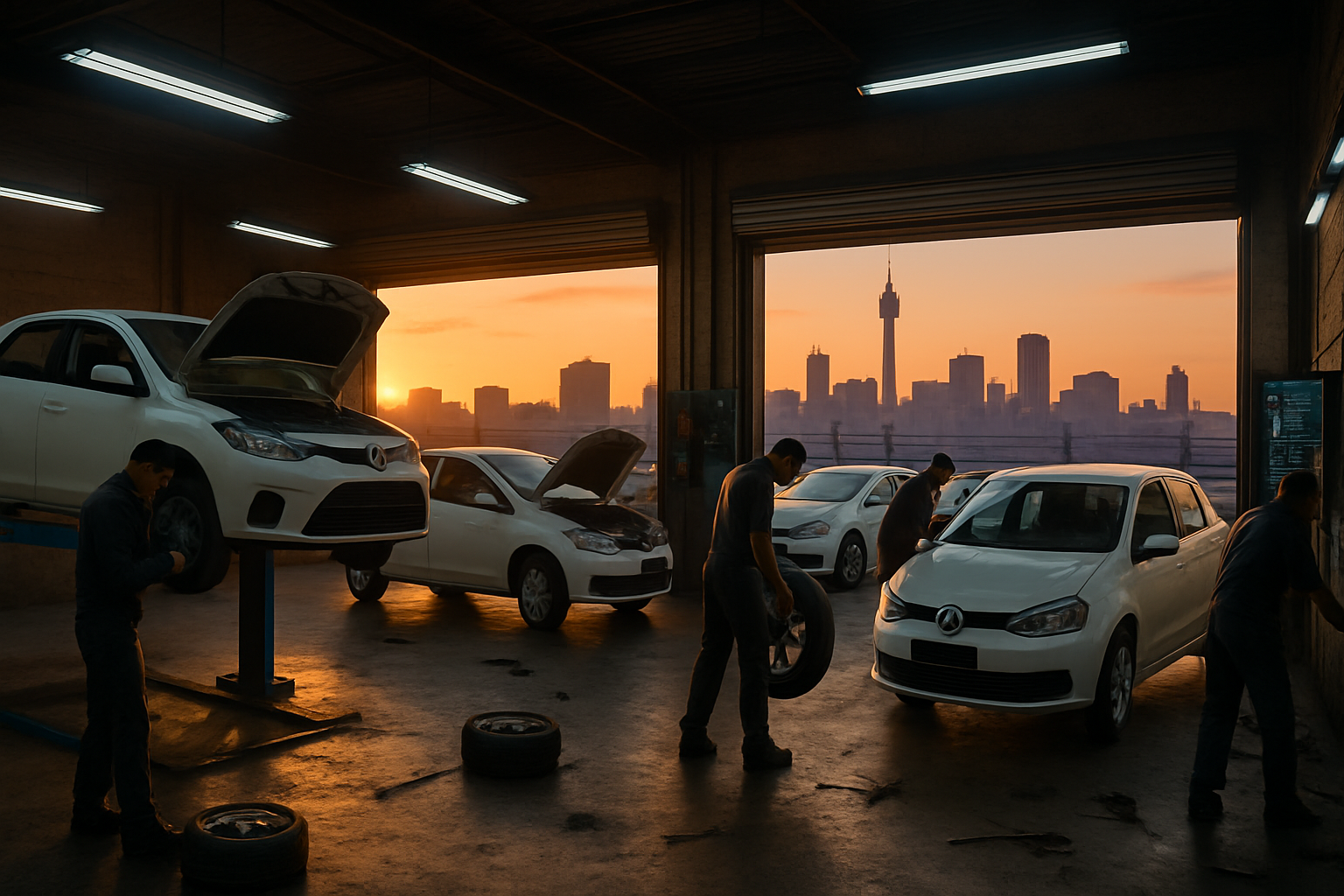
Rashid has run the workshop on Albert Road in Woodstock, Cape Town, for fifteen years. Clutches, gearboxes, CV joints, diagnostics. The building used to be a bakery in the seventies; his father converted it to an auto shop in 1988 and Rashid took over the keys in 2010. Three mechanics, a tea lady who runs the counter, regulars from Observatory and Salt River, a few from the Muslim community in Bo-Kaap, Uber drivers who need cheap clutches for Toyota Avanza fleet cars. The shop carries the RMI decal on the roller door — Motor Industry Workshop Association (MIWA) divisional membership, paid in full for twelve years running.
Wednesday, 10:15 a.m. An envelope arrives with the courier from King Williams Town — the Motor Industry Ombudsman of South Africa (MIOSA) has its main office there. Inside: an Assistance Request Form, MIOSA reference 2026/WC/03148, and a covering letter. "Please find attached a complaint received from Mr K. Adams on 7 February 2026 regarding services rendered by your establishment on 4 November 2025. In accordance with the South African Automotive Industry Code of Conduct, you are afforded ten (10) working days to respond in writing to the allegations set out in the Assistance Request Form. Your response should address each of the complainant's allegations in sequence, attach all supporting documentation, and be returned to this office by the date indicated below."
The complainant — Toyota Hilux, registration CA 428 922 — says Rashid's workshop charged R9,800 to replace the clutch, flywheel and slave cylinder three months earlier, that the workshop claimed to have resurfaced the flywheel when (according to a later dealer inspection) it was merely cleaned, that the vehicle now judders under load and slips under acceleration, and that the complainant has paid R15,200 at a Toyota franchise dealership in Bellville for a full replacement of the work. Amount claimed: R25,000 — refund of the original R9,800 plus consequential damages of R15,200.
Rashid has the job card in a spiral-bound pad. He has WhatsApp messages where the customer wrote "please proceed, whatever is needed" in response to his voice note summarising the work. He has the VAT invoice printed on A4 with the CIPC number, VAT number and totals correctly filled in. The invoice satisfies SARS for VAT purposes and nothing else. It carries none of the five lines MIOSA works through when adjudicating a motor-industry dispute.
Rashid has two instincts competing. The first is to fight — the job was done correctly, the flywheel was in fact resurfaced, the dealer's diagnosis is wrong. The second is to settle — MIOSA disputes are public within the RMI, and a finding against him affects his accreditation renewal. He has ten days to respond, and he needs to understand how MIOSA works before he chooses.
Why MIOSA is actually the best possible news
Most workshops dread a MIOSA letter. That instinct is wrong. Compared to what would have happened if the customer had not approached MIOSA first, MIOSA is the least bad venue for the workshop. Here is the comparison.
Without MIOSA, the complainant's path would have gone: initial demand letter from the customer's attorney (R3,500 to R6,000 in letters from the firm), summons issued in the Magistrate's Court or — if damages were high enough — the High Court, a notice of intention to defend (R2,500 to R5,000), a plea (R8,000 to R15,000), a trial preparation phase (R15,000 to R35,000), the trial itself, and in most cases a costs order on the party-and-party or attorney-client scale added to the judgment. For the complainant, the cost of pursuing is substantial; for the workshop, the cost of defending is comparable. A R25,000 claim that runs to judgment can cost each side R20,000 to R40,000 in legal fees regardless of who wins.
With MIOSA, the process is: Assistance Request Form (free to the complainant), 10 days for the workshop to respond (no lawyer required for the response), 30 days from complete documentation for MIOSA to issue a determination, the determination is written and reasoned, and the RMI Code of Conduct commits RMI-accredited workshops to implement MIOSA determinations in good faith. No attorneys on either side by default. No filing fees. No court appearance. The entire matter is concluded in about six weeks, not six months.
MIOSA is recognised under section 82 of the Consumer Protection Act 68 of 2008 as an accredited industry ombud. Its determinations draw on the same statutory framework — CPA sections 15, 54, 55, 56 and 57 — that a Magistrate's Court would apply, but the ombud is typically a motor-industry specialist with decades of technical experience, and the determination reads with that expertise. The ombud knows what a resurfaced flywheel looks like. The Magistrate does not.
For a workshop with clear written documentation, MIOSA is a fast path to vindication. For a workshop without, MIOSA is a fast path to a finding — but the finding still costs less than any litigated judgment. Either way, the workshop gets certainty in weeks, not months.
What MIOSA actually asks — and what decides the determination
The MIOSA Assistance Request Form has standard categories. The ombud works through them in sequence when reading the workshop's response.
1. Was the work done per the customer's written authorisation? Under section 15 of the CPA, the customer must have pre-authorised the work in one of three forms (written quotation, maximum price, carte blanche). The ombud expects to see the written authorisation attached. A WhatsApp exchange is weighed but is weaker than a signed quotation. Rashid's "please proceed, whatever is needed" is closer to section 15(c) carte blanche than 15(a) written quotation — which in practice helps him on the scope question but not on price.
2. Was the work completed to the standard described, with the parts described? If the quotation says "resurface flywheel" and the ombud's technical consultant (MIOSA draws on the RMI's Technical Advisory Panel for specialist input) concludes the flywheel was not resurfaced, the ombud will find a deviation from the quoted scope and attach consequential liability. Documentation that supports the standard — photos of the flywheel before and after resurfacing, the grinding machine's setup sheet, a receipt from a flywheel-machining shop if sublet — is decisive. Absent documentation, the ombud weighs the complainant's dealer evidence against the workshop's assertion; the dealer typically wins this on the balance of probabilities.
3. Did the workshop honour the statutory warranty under sections 56 and 57? Six months CPA-wide implied warranty of quality (section 56), three months on parts-and-labour (section 57). If the customer returned within those windows with a verified failure, the workshop's opportunity to repair or make good must have been offered. A customer who goes straight to a dealership without affording the original workshop a chance to remedy faces a possible deduction from the consequential-damages claim — but only if the workshop documented the offer of re-inspection.
4. Did the workshop behave ethically under the RMI Code of Conduct? The Code requires members to deal fairly, not misrepresent services, not charge for work not performed, and respond promptly to complaints. A workshop that ignored the customer's initial complaint email for two weeks, or brushed off the voice message request to bring the vehicle back, fails this test independently of the technical merits. The ombud can make a finding on conduct even when the technical case is unclear.
5. What remedy fits the facts? The ombud can recommend: partial or full refund of the workshop's charge, contribution to the complainant's remedial costs, re-performance of the work, specific performance, or no relief. The ombud cannot award punitive damages or attorney-client costs (that's court territory), which is another reason MIOSA tends to be cheaper than litigation for both sides.
The five lines every Western Cape workshop's quotation should already carry
1. Full business identification — including RMI membership number and division
Registered business name, CIPC number, VAT number, physical address, phone, email, and — the line that matters most for MIOSA — RMI membership number, division and region. "Member of the Retail Motor Industry Organisation — MIWA, Western Cape Region — Membership No. WC-04827 — Accredited member of the Motor Industry Ombudsman of South Africa (MIOSA) dispute resolution process." The line signals to the customer (and later to the MIOSA ombud) that the workshop trades under the industry code of conduct. It also surfaces the MIOSA off-ramp explicitly — which some customers prefer over court because it is free and fast. Printing the MIOSA reference is good marketing and good risk management.
2. Written quotation under CPA section 15 — scope, parts, labour, total, signature
Same content as required in Gauteng or anywhere else in the country — customer details, vehicle details, itemised scope, parts with unit prices, labour hours × rate, VAT 15%, grand total, validity period, customer signature. What matters for the MIOSA determination is that the scope is written in a way that a technical consultant can later verify against the work actually performed. "Replace clutch" is too vague; "Replace clutch kit (pressure plate, friction plate, release bearing); resurface flywheel; renew slave cylinder and bleed system" is specific enough for the ombud to check each element. Specificity protects the workshop.
3. Additional-work authorisation clause — CPA s.15 and RMI Code compliance
A permanent clause on every quotation: "Any additional parts or labour identified during repair will be notified to the customer in writing (WhatsApp, SMS or email acceptable) with revised cost and, if applicable, revised completion date. Customer's written acceptance will be obtained before the additional work commences. No additional work will be charged without documented customer authorisation." MIOSA reads the authorisation trail when assessing the scope question and treats documented authorisation as definitive. A claim for work beyond the scope of the original quotation falls flat when the workshop can produce the authorisation thread.
4. Statutory warranty statement + RMI Code complaints contact
Place on both quotation and invoice: "Warranty: parts and labour are warranted for 3 months under section 57 of the Consumer Protection Act; all goods delivered are subject to the implied 6-month warranty of quality under section 56, with the consumer's elected remedy of repair, replacement or refund. In case of any concern, please contact the workshop first within the warranty period. As an RMI-accredited workshop, disputes that cannot be resolved directly may be referred to the Motor Industry Ombudsman of South Africa (MIOSA) — www.miosa.co.za — at no cost to the customer." Three short paragraphs. They meet CPA sections 56 and 57, reflect the RMI Code's good-faith complaints requirement, and pre-empt any claim that the workshop failed to offer a first-instance opportunity to remedy.
5. Customer sign-off at release — with photographic and technical evidence
Standard release line on the invoice: "Vehicle received in running condition consistent with the work performed. I acknowledge the warranty above and the MIOSA escalation path. Customer signature: ____________." Plus — this is the critical evidentiary habit for MIOSA — add technical photos to the job record for each major component: a before photo of the worn part, an after photo of the installed part, a photo of any machining operation (flywheel face post-resurfacing, bearing housing post-honing), and a short audio of the vehicle running at operating temperature without abnormal noise. File to the customer's record. The ombud's technical consultant reads these photos as definitive evidence that the work was performed to the standard described. The dealership's later diagnosis has to overcome what the photos show.
What happens now in Rashid's file
Rashid has ten working days. He drafts a response to MIOSA addressing each allegation in sequence: he attaches the job card (handwritten, but legible and signed by his foreman), the signed customer quotation (which does list "resurface flywheel" specifically), the VAT invoice, the WhatsApp exchange including the "please proceed" authorisation, and — critically — the three photos his foreman took during the job (the old clutch plate next to the new one, the flywheel on the resurfacing machine mid-operation, the reassembled bellhousing before the transmission went back on). He explains the discrepancy with the dealer's finding (dealers often re-skim flywheels as part of a warranty claim and report the skim as evidence that the original workshop's skim was inadequate — a known pattern that MIOSA's technical panel recognises). He offers to inspect the customer's vehicle himself at no charge, which he was never asked to do before the dealer was engaged.
MIOSA's ombud reviews the file. The technical panel reviews the photos. On the balance of the documentary evidence — signed quotation with "resurface flywheel" explicit, photos of the resurfacing operation, customer authorisation, VAT invoice — the ombud issues a determination: the workshop performed the work as authorised; the customer's decision to engage a dealership without first affording the workshop an opportunity to inspect under warranty reduces the consequential-damages claim significantly. Final determination: R3,500 partial refund as a goodwill contribution (not as acknowledgement of fault) and no recommendation on the dealership's R15,200. Dispute closed in 33 days from the original Assistance Request Form.
Direct cost to Rashid: R3,500, about eight hours of his own time drafting the response and chasing photos, no attorney fees, no court appearance. His RMI accreditation remains unaffected. His Google Business profile is untouched (MIOSA determinations are published in summary form on the MIOSA website without workshop identity in most cases). The customer receives a reasoned determination that supports her against the workshop for the goodwill amount and does not support her against the workshop for the consequential damages; she can still pursue the dealership's R15,200 in court if she chooses, but the MIOSA determination becomes persuasive evidence against that claim succeeding.
Had Rashid not been able to produce the photos and the signed specific quotation? The determination would likely have gone against him — perhaps R15,000 to R20,000 in refund and goodwill. Still cheaper than a High Court defence. Still resolved in six weeks. Still better than a SAFLII-published judgment with his workshop's name in the heading.
Cost of having printed the five lines on every quotation for the past fifteen years? Five minutes of template work. Once. For the next four thousand jobs.
The quotation and invoice you are already writing
Mekavo prints all of the above — full business identification with RMI and MIOSA reference, CPA section 15 written quotation with specific scope, additional-work clause, sections 56 + 57 warranty plus RMI Code MIOSA escalation path, customer release sign-off with integrated photo capture — on every quotation and tax invoice, automatically. When the MIOSA Assistance Request Form arrives three months later, the workshop's response packet is already assembled: signed quotation, photo-attached job record, authorisation thread, warranty statement. Ten days is comfortable rather than frantic.
MIOSA is the motor industry's gift to itself. Fast, cheap, technically literate, binding in practice on RMI members. Every Western Cape workshop that trades under the RMI decal operates in its shadow — and the shadow is shelter, not threat, when the paperwork is in order. Five lines. Print them once. Keep them on every job.
Official resources
- Motor Industry Ombudsman of South Africa (MIOSA) — official portal
- MIOSA — How to complain (process and Assistance Request Form)
- RMI — MIOSA and alternative dispute resolution
- Retail Motor Industry Organisation (RMI) — membership + Code of Conduct
- Consumer Protection Act 68 of 2008 (s.82 recognises MIOSA)
- National Consumer Commission — oversees industry codes and ombuds
Last updated: April 2026. The statutes, industry codes and ombudsman procedures cited were in force at the date of publication. For an active MIOSA Assistance Request with response deadline approaching, or a determination that requires implementation or objection, consult the MIOSA case officer first; for matters that have escalated beyond MIOSA to court, consult an attorney admitted to practise in the applicable jurisdiction with consumer-protection experience.
Note on scenarios: The shops, names, addresses, and case reference numbers in this article are fictional and used solely to illustrate how the cited statutes operate in practice. Any resemblance to actual shops, owners, or events is coincidental. The statutes, regulations, and agency procedures cited are real and current as of publication.