English
 Español
 Deutsch
 FI
FI
 PT
PT
 BR
BR
 FR
FR
 AR
AR
 ZH
ZH
 UR
UR
 TL
TL
 TH
TH
 TR
TR
 PL
PL
 RO
RO
 BG
BG
 ID
ID
 MS
MS
 LT
LT
 IT
IT
 NL
NL
 CS
CS
 SK
SK
 SL
SL
 ET
ET
 SV
SV
 NB
NB
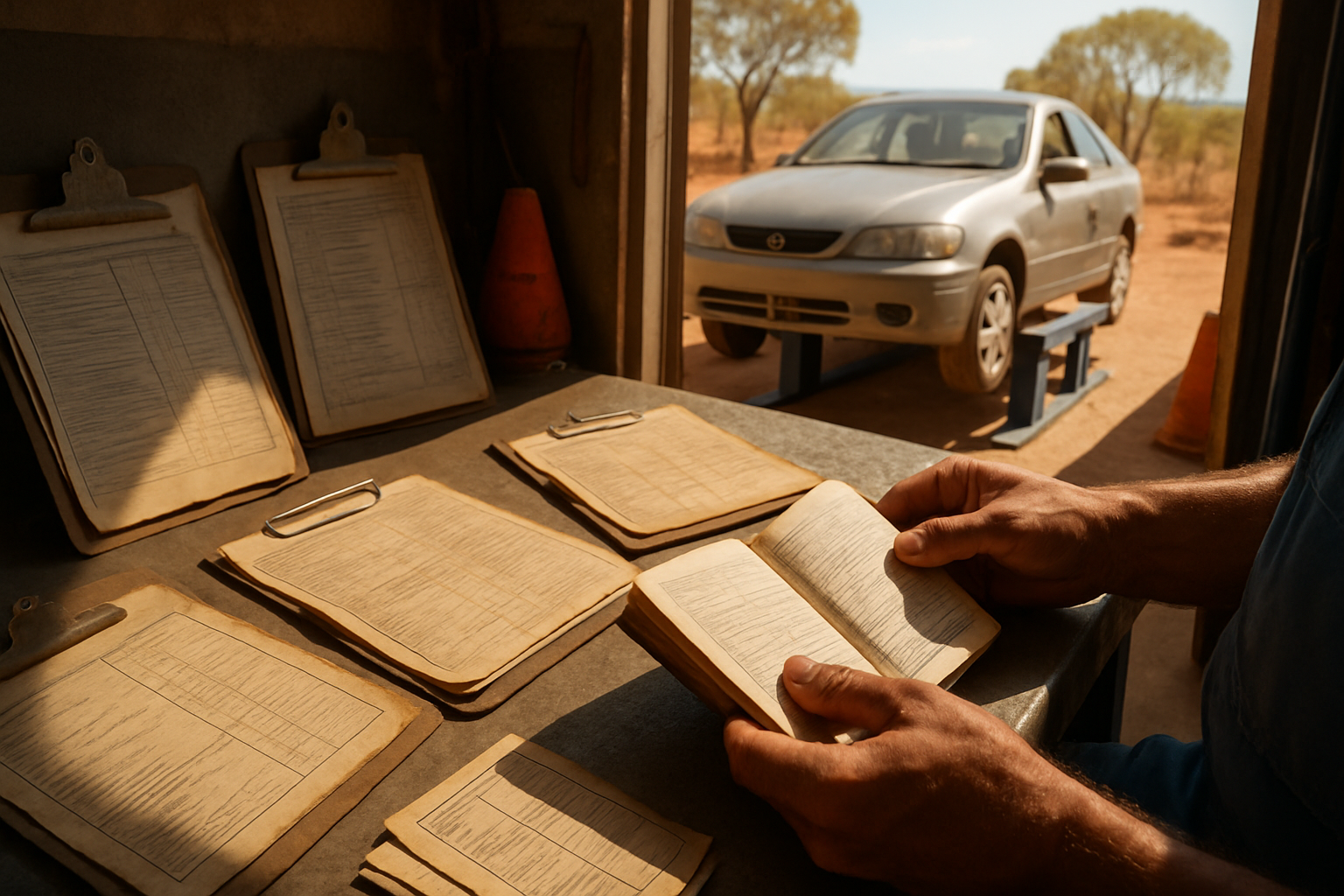
Every Aussie has scrolled Carsales and seen the same lines: "Ex-fleet, well maintained." "Ex-lease, all logbooks." "One owner from new." "Ex-rental, low km."
Each of these badges tells a different story about how the car actually lived its first 3-5 years. Some are great deals waiting to happen. Some are warning signs. Knowing the difference saves you thousands.
Here is the honest breakdown of every common "ex-" badge in the Australian used market.
"Ex-Fleet" — What It Actually Means
"Fleet" is a broad term. It usually means the car was owned by a business, government department or large company that ran multiple vehicles. Common fleet operators in Australia:
- Government departments (state, federal, council)
- Telcos (Telstra, Optus field service vehicles)
- Tradies and contractors at scale (utility companies, building groups)
- Sales reps with company cars
- Large delivery operators (Australia Post, courier companies)
The good: fleet vehicles are typically maintained on a strict schedule (the fleet manager has a contract with a service provider, services happen on time). Logbooks are usually intact. Repairs are paid by the company, not deferred.
The bad: fleet vehicles often had multiple drivers who did not own the asset. People drive company cars harder than their own. Interior wear is high. Engines were often left running ("I'll only be 5 minutes" 200 times a year). Towing was often above-rated.
The honest discount: ex-fleet vehicles typically sell 10-20% below equivalent private-owner cars in the same condition. The risk is real but the maintenance discipline often offsets it. Worth considering, especially for higher-mileage years (4-6 years old).
"Ex-Lease" — Subtly Different from Fleet
Ex-lease usually means the vehicle was on a novated lease or operating lease — typically driven by a single individual (the leasing employee) for the full lease term (3-4 years).
The good: usually one driver, often a corporate professional who treated it like their own car. Maintained at the leasing company's schedule (strict). Insured comprehensively.
The bad: novated lease drivers often hand the car back at end-of-term with minor issues unaddressed, knowing the leasing company will catch them but not pay for. Sometimes interior is rougher than expected because the driver knew they were giving it back.
The honest discount: ex-lease cars typically sell 5-15% below equivalent private. Often a great buy if you can identify the actual single driver and check the service history closely.
"Ex-Rental" — The One Most People Get Wrong
Ex-rental means the car was used by a hire-car company (Hertz, Avis, Budget, Europcar, Thrifty, etc.). Different rules apply.
The good:
- Manufacturer warranty almost always intact
- Services done on schedule (hire companies have strict policies)
- Often low-ish km for age (rental cars typically do 30,000-50,000 km/year)
- Comprehensive insurance throughout life
- Often sold relatively young (1-3 years old)
The bad:
- Many drivers, none of whom owned the asset. Hundreds of strangers may have driven the car. Some treated it as a sports car. Some failed to engage handbrakes properly. Some did burnouts.
- Cosmetic damage is common — kerbed wheels, scuffed bumpers, interior staining
- Major mechanical wear: clutches in manuals are often hammered; auto transmissions can show jerky shifts from misuse; suspension bushes worn early from harsh driving
- Some specific incidents (rolled, written off and rebuilt by the rental company) may not show on PPSR if no insurance claim was filed
The honest discount: ex-rental cars typically sell 15-25% below equivalent private-history. Still buyable for the right discount, but pre-purchase inspection is mandatory. Avoid manuals (clutch wear) and high-performance variants (driven hard by every rental customer who wanted to "test it").
"One Owner from New" — Sounds Great, Verify It
Often genuinely great. Sometimes a half-truth. Always verify with the V5 / registration record.
The PPSR / state vehicle record will show the number of registered owners. If the listing says "one owner" but the record shows three, the seller is being dishonest. If it shows one consistent owner for the entire history of the car, the listing is real.
Risk: a single elderly owner who only drove 2,000 km/year sounds like a dream, but cars with extremely low mileage have their own issues — seals dry out, brake calipers seize from disuse, fuel system gummed from sitting. Check that the maintenance was kept up despite low km.
"Two Owners, Full Service History" — The Goldilocks Zone
Often the sweet spot in the Australian used market. Two owners over 5-7 years usually means: original owner kept the car carefully through warranty, sold to a private buyer who continued maintenance properly. No fleet abuse, no rental hammering, real consistent ownership.
Combined with full service history, often the best value-for-condition in the entire used market.
"Demo" — Demonstrator Vehicles
A demo car was used by a dealership for test drives. Usually very low mileage (under 10,000 km), 6-12 months old, full warranty intact, sometimes still under "new car finance" rates.
The good: minimal use, dealer-maintained, often heavily discounted from new (10-25%)
The bad: hundreds of strangers drove it as a test drive — cold starts straight to highway speeds, hard launches, sometimes off-road tests. Brake bedding may be uneven. Treat the discount as compensation for unknown wear.
"Ex-Mining" — A Specific Australian Category
Mining-region utes (Pilbara, Kalgoorlie, Hunter Valley, Bowen Basin) are often sold cosmetically pristine because they were washed daily at mine site wash bays. But they accumulated brutal wear:
- Constant idling between shifts (engine wear without km accumulation)
- Heavy dust exposure (air filters and intake systems work hard)
- Short-trip operation (DPF problems on diesels)
- Rough access roads (suspension wear)
- Multiple drivers, often 24/7 fly-in fly-out crews
The honest discount: mining utes should be 20-30% below equivalent. Pre-purchase inspection is essential. Avoid if you cannot get a written history confirming maintenance regime.
"Ex-Government" — Often a Good Buy
State or federal government fleet vehicles. Tend to be conservatively driven (especially department of health, education, transport vehicles). Maintained on strict government contracts. Usually petrol passenger cars or small vans.
The honest discount: 10-15% below equivalent private. Often genuinely good buys, particularly small sedans and SUVs.
The Universal Rules That Apply to All Ex- Vehicles
- Always run a paid PPSR check ($2) — covered in our PPSR explainer
- Get a paid pre-purchase inspection from NRMA, RACV, RACQ, RAC or RAA ($150-$350) — non-negotiable for any ex- vehicle over $20,000
- Verify owner count against state registration history
- Look at the service history pattern — strict regular intervals (likely fleet/lease) vs erratic intervals (likely private)
- Check the seller is the registered owner on the V5/rego — fleet sales sometimes go through dealers; lease end-of-term sales sometimes through the leasing company itself
- Negotiate hard — the discounts above are starting points, not final positions
The Honest Take
Ex- vehicles are not bad. They often offer 10-25% saving versus equivalent private-owner cars. The savings can be real — but only if you discount appropriately for the specific risk profile of that ex- category, and only if you do the due diligence (PPSR, inspection, history verification).
The Aussie used market is one of the more competitive globally. A genuine ex-lease Mazda CX-5 with full service history at a 12% discount is often a better buy than a same-spec private-owner car at full price. A poorly-maintained ex-rental Hyundai i30 at a 10% discount is a worse buy than a private equivalent at full price.
Sources & Further Reading
- PPSR — finance + security check for any used vehicle ($2)
- ACCC — used vehicle consumer rights, dealer obligations, mandated disclosures
- NRMA — pre-purchase inspection and used-car buying guides
- RACV — vehicle inspection service (Victoria)
- RACQ — Queensland used-vehicle buyer guidance
- ANCAP — independent crash safety ratings
- Carsales — primary used-car listing site (filter by previous ownership type) — carsales.com.au
- Drive — used-car listings and buyer guides — drive.com.au
- RedBook — pricing benchmarks by ownership history — redbook.com.au
- Pickles — auction sales (often where fleet and ex-lease cars are dispersed) — pickles.com.au
Why We Care
My Mekavo is free for Australian car owners. Once you buy an ex-fleet, ex-lease or ex-rental car, start your own owner record from day one — every service, every receipt, every km. By year 3 of your ownership, the car's "ex-" badge is balanced by 3 years of clean transparent history under your name. Better resale, better trust, better story.
Note on scenarios: The shops, names, addresses, and case reference numbers in this article are fictional and used solely to illustrate how the cited statutes operate in practice. Any resemblance to actual shops, owners, or events is coincidental. The statutes, regulations, and agency procedures cited are real and current as of publication.