English
 Español
 Deutsch
 FI
FI
 PT
PT
 BR
BR
 FR
FR
 AR
AR
 ZH
ZH
 UR
UR
 TL
TL
 TH
TH
 TR
TR
 PL
PL
 RO
RO
 BG
BG
 ID
ID
 MS
MS
 LT
LT
 IT
IT
 NL
NL
 CS
CS
 SK
SK
 SL
SL
 ET
ET
 SV
SV
 NB
NB
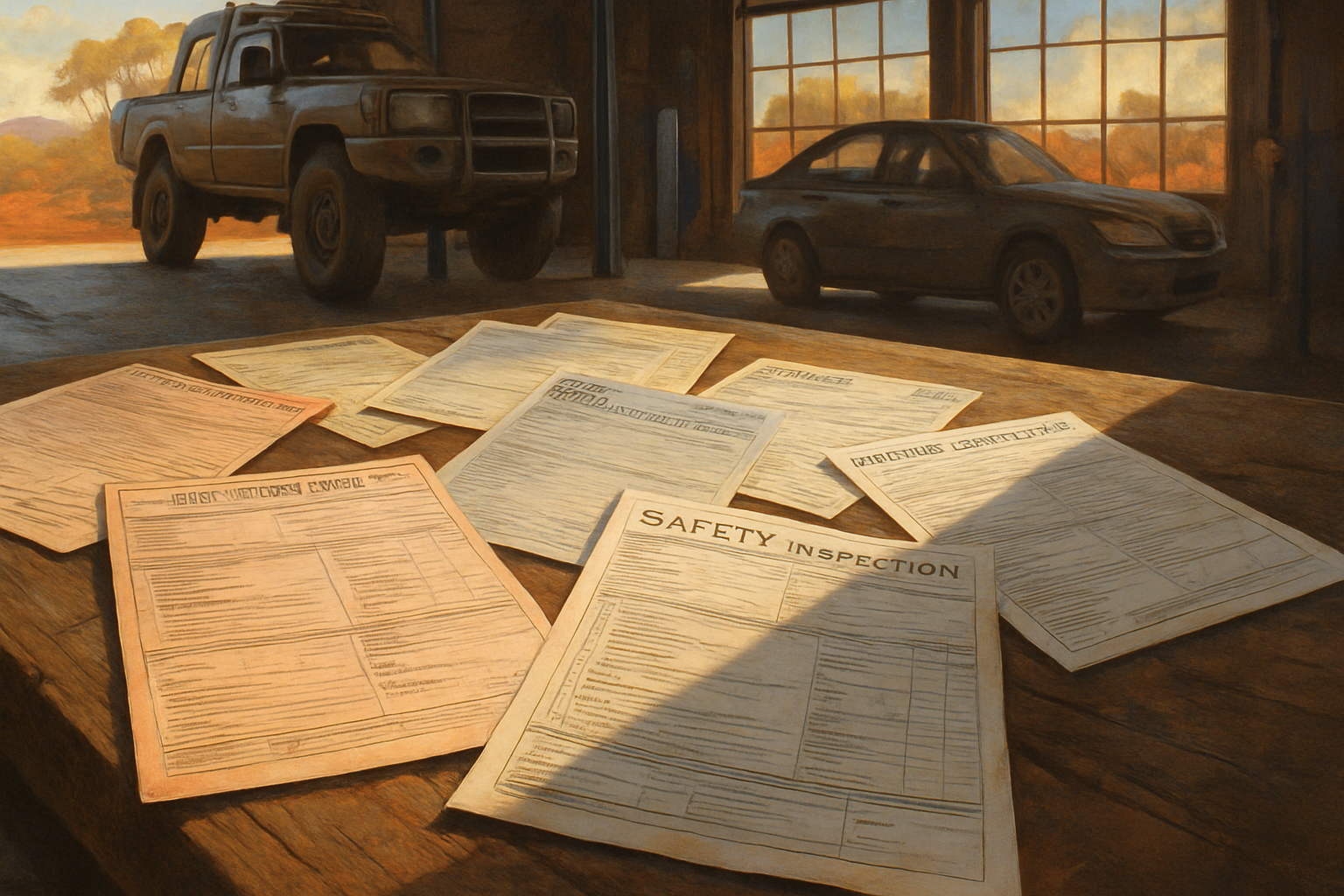
Buy a used car in NSW and you need a pink slip from the seller. Buy the same car in Victoria and the seller owes you a roadworthy certificate. Buy in Queensland and it is a safety certificate. Buy in Western Australia private sale and there is no inspection requirement at all — caveat emptor in the truest sense.
Australia has eight states and territories, and used-car inspection rules vary across all eight. The result: confused buyers, surprised sellers when they move interstate, and disputes when expectations do not match.
Here is the honest state-by-state guide — what you actually need, when, and who pays.
The Quick Reference Table
| State / Territory | What it is called | When required | Who pays (private sale) |
|---|---|---|---|
| NSW | eSafety Inspection Report (Pink Slip) | Annual rego renewal for vehicles 5+ years old, AND at sale | Seller for sale; owner for renewal |
| NSW (out-of-state) | Authorised Unregistered Vehicle Inspection (Blue Slip) | Importing vehicle from another state, or rego lapsed 3+ months | Buyer / new registrant |
| VIC | Roadworthy Certificate (RWC) | At sale of registered vehicle (not for renewal) | Seller |
| QLD | Safety Certificate | At sale of registered vehicle | Seller |
| WA | None for typical private sales of registered vehicles. Required for newly registered, salvage, and out-of-state imports. | Specific cases only | Buyer / new registrant |
| SA | None for private sale of registered vehicles. Required for unregistered vehicles, out-of-state imports, salvage | Specific cases only | Buyer / new registrant |
| TAS | None for typical private sales. Required for unregistered or out-of-state vehicles. | Specific cases only | Buyer / new registrant |
| ACT | Roadworthy Inspection Report | For vehicles 6+ years old at sale and at re-registration | Seller for sale |
| NT | Annual roadworthy inspection for vehicles 3+ years old (private) | Annually + at sale | Owner |
NSW — Pink Slip and Blue Slip Explained
Pink Slip (eSafety Inspection Report)
Required to renew registration annually for any NSW-registered light vehicle 5 years or older. Also required when selling.
- Where: any Authorised Inspection Station (AIS) — service stations, garages displaying the AIS sign
- Cost: $42-$60 light vehicles, $96+ heavy. Set by the state government but charged by the AIS.
- What is checked: brakes, steering, suspension, tyres, lights, body, windscreen, exhaust emissions (visual), seat belts, structural integrity
- Validity: 6 months for the registration renewal
- If you fail: fix the items, return for a free re-inspection within 14 days at the same AIS (after that, full charge again)
Blue Slip (Authorised Unregistered Vehicle Inspection)
Required when:
- Vehicle has been unregistered for 3+ months
- Vehicle is being registered in NSW for the first time after coming from another state
- Vehicle has been written off and is being re-registered after rebuild (combined with Written Off Vehicle Inspection)
- Vehicle has had major modifications
- Where: only Authorised Unregistered Vehicle Inspection Stations — fewer than AIS, harder to find
- Cost: $96-$170, more for non-standard vehicles
- Stricter than pink slip: covers vehicle identity verification, structural integrity, modification compliance
- Buyer typically pays: the new owner trying to register the car
VIC — Roadworthy Certificate (RWC)
- Required: at sale, at re-registration, after major modification
- Where: any Licensed Vehicle Tester (LVT) — many garages, RACV branches, dedicated testing stations
- Cost: $150-$350 (varies by tester)
- Validity: 30 days from issue date — buyer must register within this window
- What is checked: brakes, suspension, steering, lights, tyres, body integrity, seatbelts, windscreen, emissions equipment
- What is NOT checked: cosmetic items, mechanical reliability, accessory function
- Seller typically pays: it is the seller's legal obligation to provide
QLD — Safety Certificate
- Required: at sale of any light vehicle that is registered in QLD, by the seller before transfer of registration
- Where: Approved Inspection Station (AIS) — usually displayed on garage signage
- Cost: $80-$140 light vehicles
- Validity: 2 months OR 2,000 km, whichever comes first — buyer must register within this
- What is checked: similar to other states — brakes, steering, suspension, tyres, lights, body, windscreen
- Seller pays: standard practice
WA, SA, TAS — Generally No Inspection at Private Sale
In WA, SA and TAS, a registered vehicle being sold privately to another resident of the same state generally does NOT require a safety inspection at point of sale. The vehicle's annual rego is treated as the safety check (and even that is a paperwork renewal, not a physical inspection).
Exceptions where inspection IS required:
- Vehicle is being registered for the first time
- Vehicle has been unregistered for an extended period
- Vehicle is coming from another state or country
- Vehicle is salvage / has been written off
- Vehicle has major modifications
The buyer-beware reality: in these states, you have less regulatory protection. Pre-purchase inspection from an independent mechanic ($150-$300) is even more important.
ACT — Roadworthy Inspection Report
- Required: at sale for vehicles 6+ years old; at re-registration; for vehicles changing major details
- Where: Access Canberra approved inspection stations
- Cost: $80-$170
- Validity: 4 weeks for registration transfer
NT — Annual Roadworthy
The Northern Territory is the strictest regime. Most private vehicles 3+ years old need annual roadworthy inspection at registration renewal. Plus inspection at any sale.
- Where: MVR (Motor Vehicle Registry) approved inspection stations
- Cost: varies, typically $100-$200
The Crossover Trap: Buying Interstate
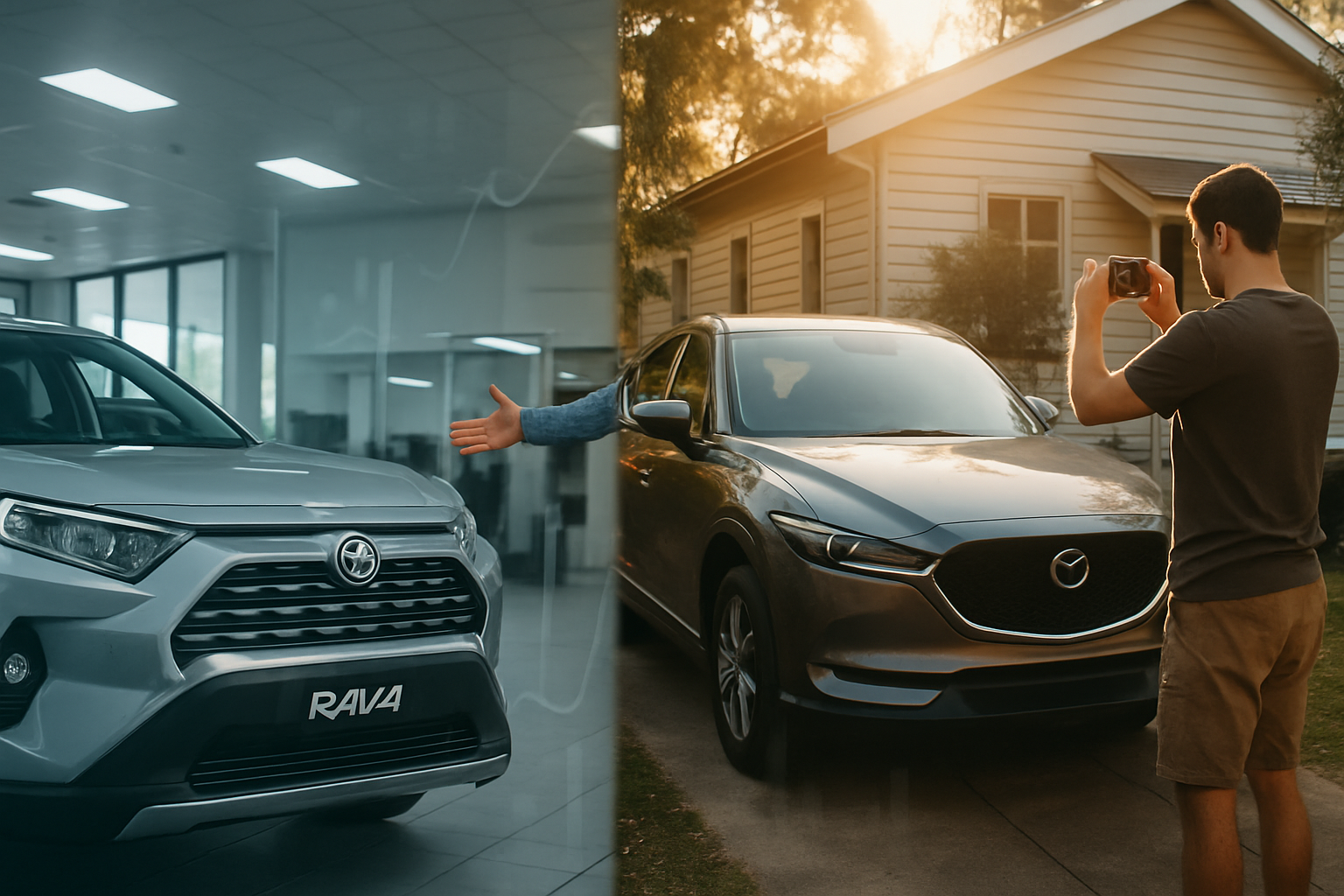
This catches many Australians. You see a deal on Carsales for a 2018 Mazda CX-5 in Adelaide. You live in Sydney. You drive over, buy it, drive back.
To register that car in NSW, you need a NSW Blue Slip — not the SA paperwork. Cost: $96-$170 plus any remedial work. Time: usually 1-2 days because Blue Slip stations are less common.
Same trap reversed: buying in Queensland to use in Victoria requires a Victorian RWC after arrival. SA buyer importing to WA needs WA inspection. Always check the destination state's rules before the deal.
Inspection Is Not Maintenance
None of these inspections are a substitute for actual maintenance. A roadworthy or pink slip is a snapshot — pass / fail on safety-critical items at one moment. Tyres that pass at 3mm tread today are below the legal minimum (1.5mm) in 6 months at typical Aussie driving distances.
The owner who proactively tracks oil, brakes, tyres and battery age never fails an inspection unexpectedly. The owner who waits for the inspection to surface issues pays in larger lumps.
If You Move Interstate
- Check the destination state's registration requirements before arriving (most have a 30-90 day window)
- Book the inspection ASAP after arriving — good slots fill up
- If the inspection finds remediable issues, you are NOT obligated to use the inspecting station for repairs — shop around
- Update insurance to reflect the new state (CTP rates vary significantly: NSW often most expensive, lower in TAS and NT)
- Surrender old state plates within the timeframe to avoid double-registration fees
Sources & Further Reading
- Service NSW — pink slip, blue slip, registration enquiry
- VicRoads — roadworthy certificate requirements (Victoria)
- Transport and Main Roads Queensland — safety certificate (Queensland)
- Department of Transport Western Australia — registration and inspection rules
- Government of South Australia — vehicle registration
- ACCC — used vehicle consumer rights, dealer obligations
- NRMA — pre-purchase inspection service across NSW + ACT
- RACV — Victorian inspections and roadworthy guidance
- RACQ — Queensland safety-certificate inspections
- Carsales — listings often state inspection status — carsales.com.au
- Drive — used-car listings and state-by-state buyer guides — drive.com.au
Why We Care
My Mekavo is free for Australian car owners. Log your inspections — pink slip dates, RWC results, advisories noted. When you move interstate, you have the full inspection history ready. When you sell, the buyer sees a clean transparent record. No surprises, no shrugs.
Note on scenarios: The shops, names, addresses, and case reference numbers in this article are fictional and used solely to illustrate how the cited statutes operate in practice. Any resemblance to actual shops, owners, or events is coincidental. The statutes, regulations, and agency procedures cited are real and current as of publication.